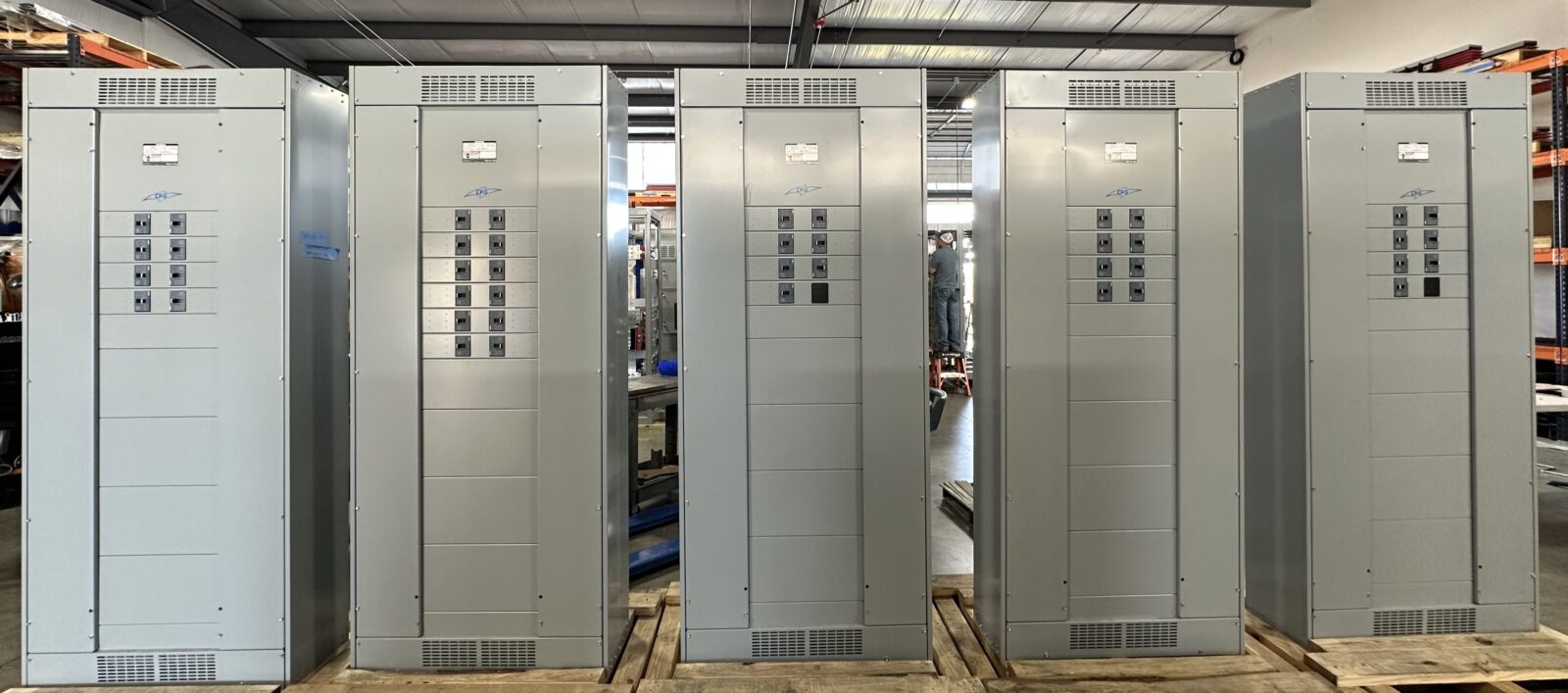
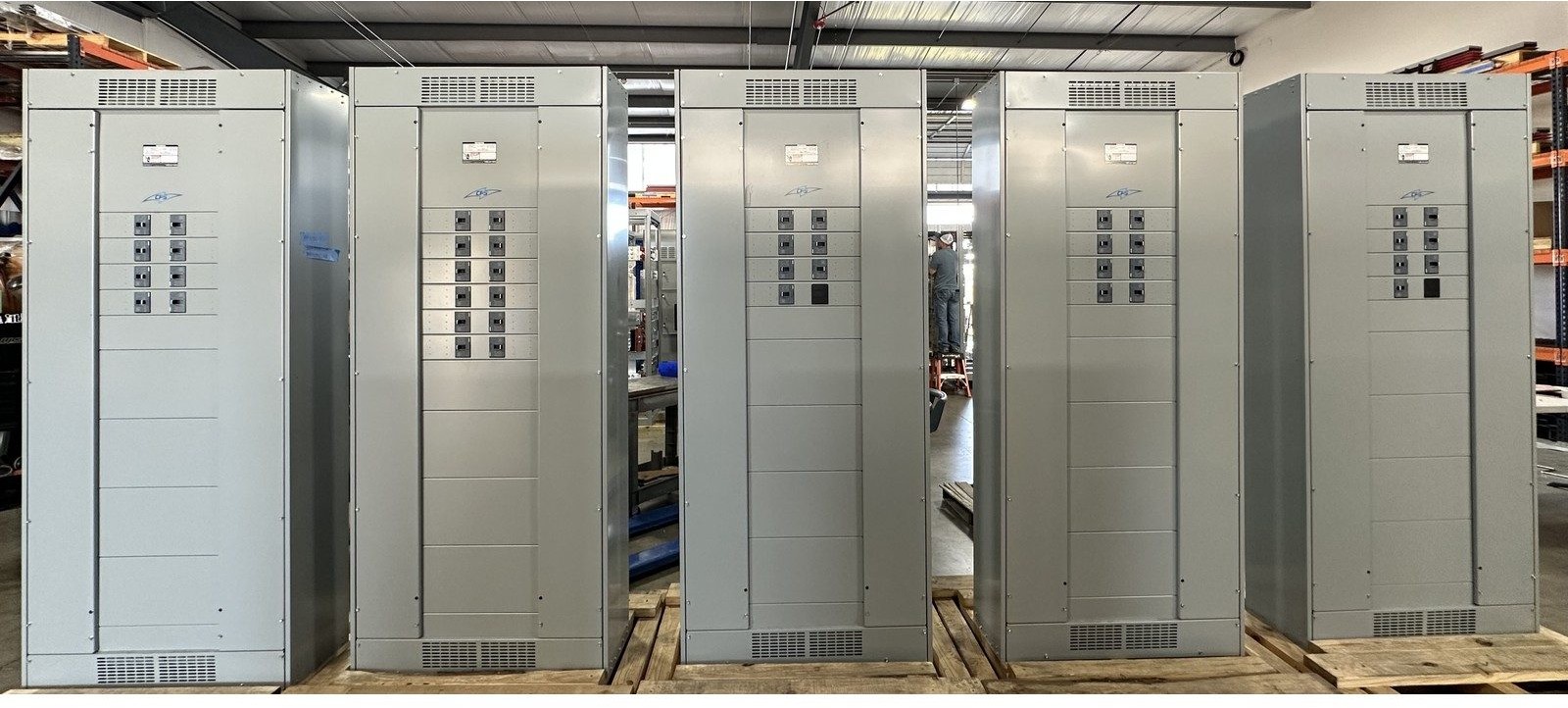
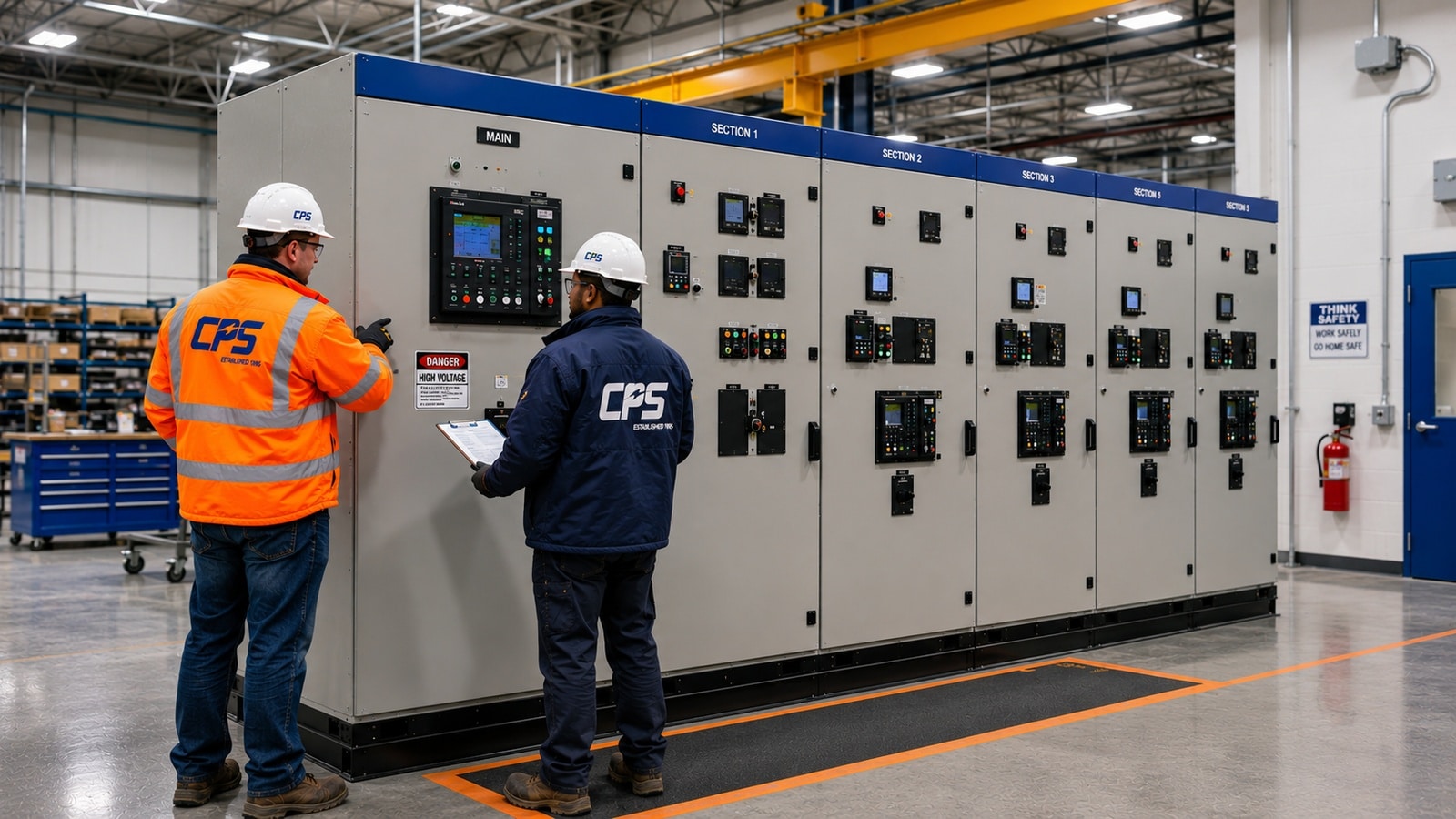
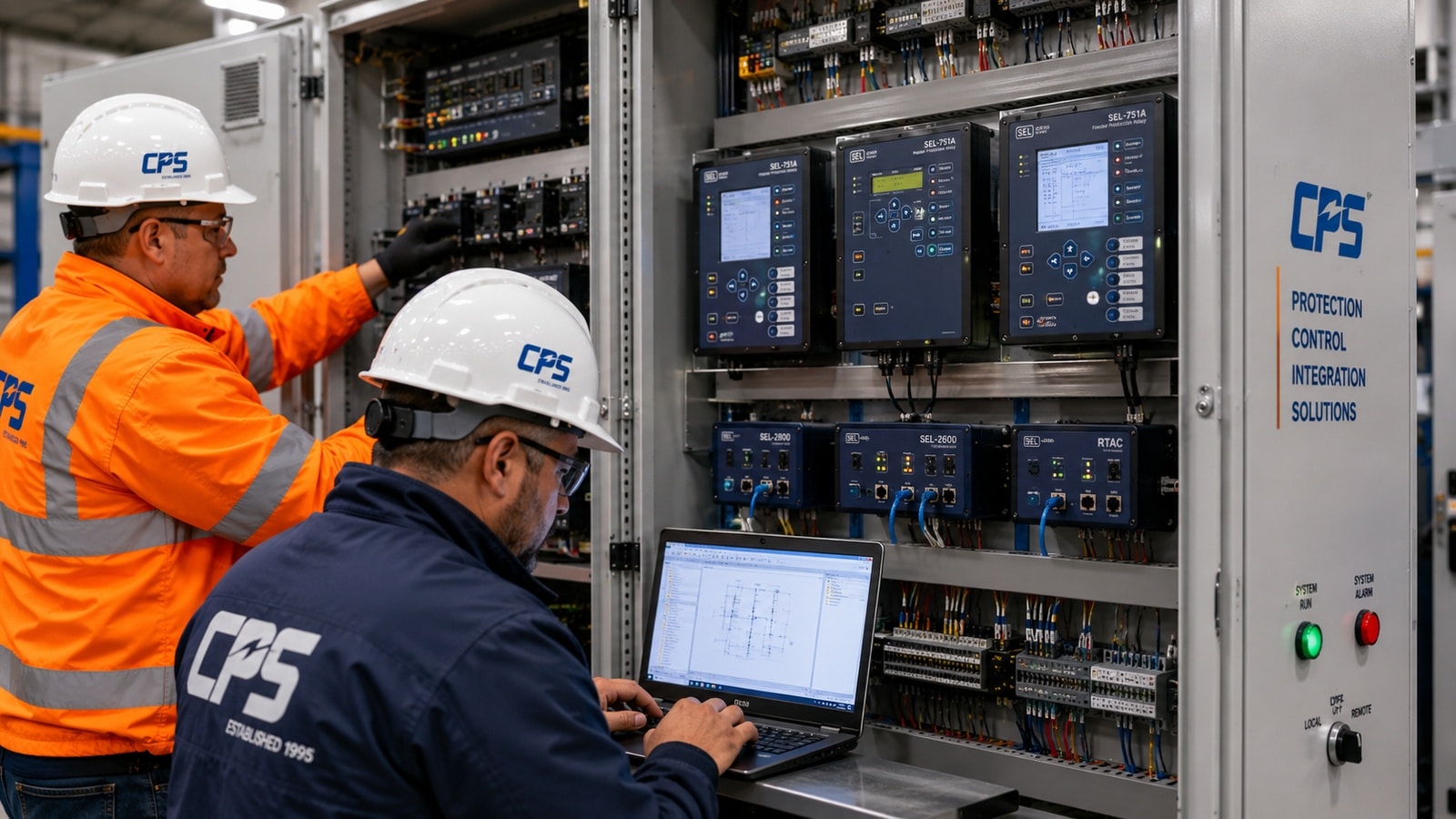
Industrial Circuit Breakers – Sales, Repairs, Retrofits & Parts

INDUSTRIAL CIRCUIT BREAKERS

Hard-to-find, obsolete, new, and reconditioned industrial circuit breakers backed by expert repair, refurbishment, testing, and modernization services for industrial facilities, utilities, data centers, power generation plants, and EPC projects.


Low Voltage Industrial Circuit Breakers

CPS is your specialist for new and reconditioned industrial circuit breakers. With decades of experience, Coastal Power Systems knows virtually every circuit breaker down to lock washer sizes and contact pressure ranges. With the help of our technicians and technical sales staff, CPS consults with you to determine whether your insulated case should be:

  • Repaired
  • Reconditioned or Restored
  • Replaced
  • Upgraded to a New Retrofit or Retrofill

For all New and Reconditioned Circuit Breakers our certified technicians will perform primary injection testing, function testing of all devices and accessories, and an overall visual inspection prior to shipping. This ensures that your breaker is ready to plug and play upon arrival.

Each breaker will be shipped with a Power DB generated test report and secondary wiring diagram upon request. These may also be supplied to the customer electronically.
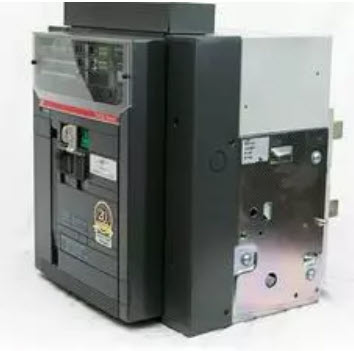

Insulated Case Circuit Breaker
#image_title

Insulated Circuit Breakers

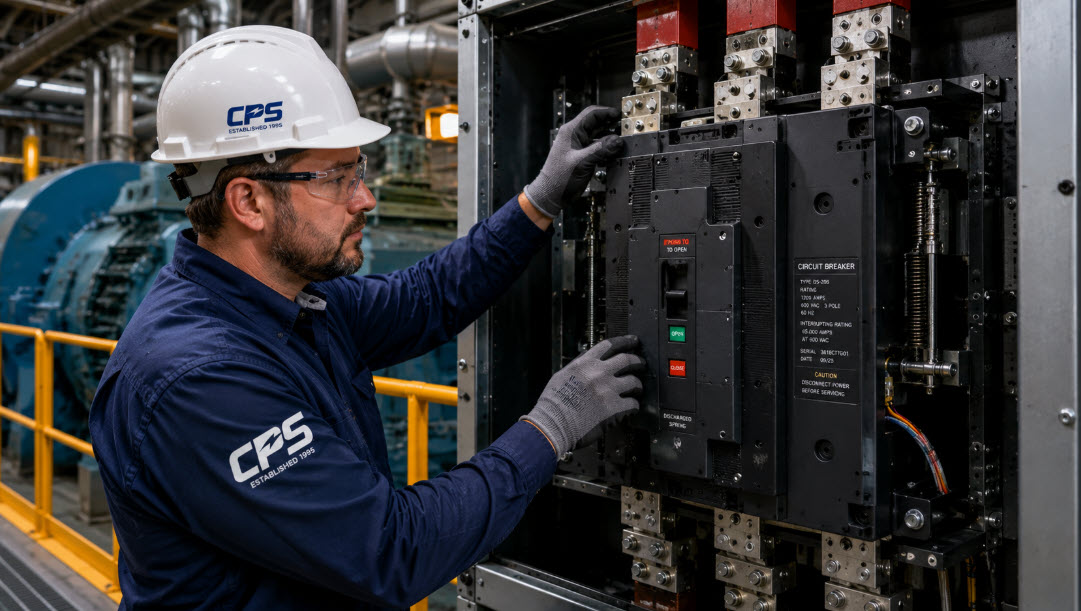
Insulated Case Circuit Breakers are molded-case breakers using a glass-reinforced insulating material, such as fiberglass for dielectric strength. In addition, they have a push-to-open button, rotary/ratchet-operated low torque handles with independent spring-charged mechanism providing quick connect/quick disconnect operation.

Insulated Case Applications

The Coastal Power Systems team has expertise in a wide range of systems that incorporate insulated case circuit breakers. We recognize that each system might have its own unique designs that allow it to work with the original circuit breakers installed. These systems include Ross Hill, NOV, GE (both Salem and Houston designs), GE Microdrill, IPs, Main-Tie-Main configurations, Communication and Zone Interlocking Scheme, Kirk Key Protected Schemas, and countless others.


Molded Case Circuit Breakers
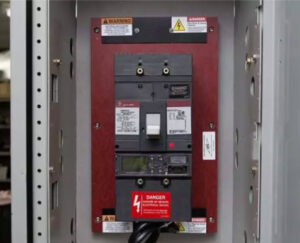
Molded Case Circuit Breaker
#image_title

For all new and reconditioned molded case circuit breakers, Coastal Power Systems will provide a test report. Each breaker will undergo CPS’ Primary Injection Testing, Function Testing of all devices, and Visual/Quality Inspection. Every Molded Case Circuit Breaker leaves our facility with a minimum 12 Month Warranty and Power DB generated Test Reports. Electronic copies of these reports will be available upon request.


Zone Interlocking

Zone interlocking improves selective coordination by allowing the circuit breaker closest to a fault to trip first while preventing unnecessary operation of upstream breakers. This helps minimize the extent of power outages and improves overall system reliability.

Bluetooth Communication

Bluetooth connectivity allows authorized personnel to communicate wirelessly with compatible trip units for configuration, diagnostics, monitoring, and maintenance activities without opening energized equipment.

Solid-State Protection

Solid-state trip units use electronic current sensing and microprocessor-based protection to detect overloads, short circuits, and ground faults with greater accuracy, flexibility, and reliability than traditional thermal-magnetic trip mechanisms.

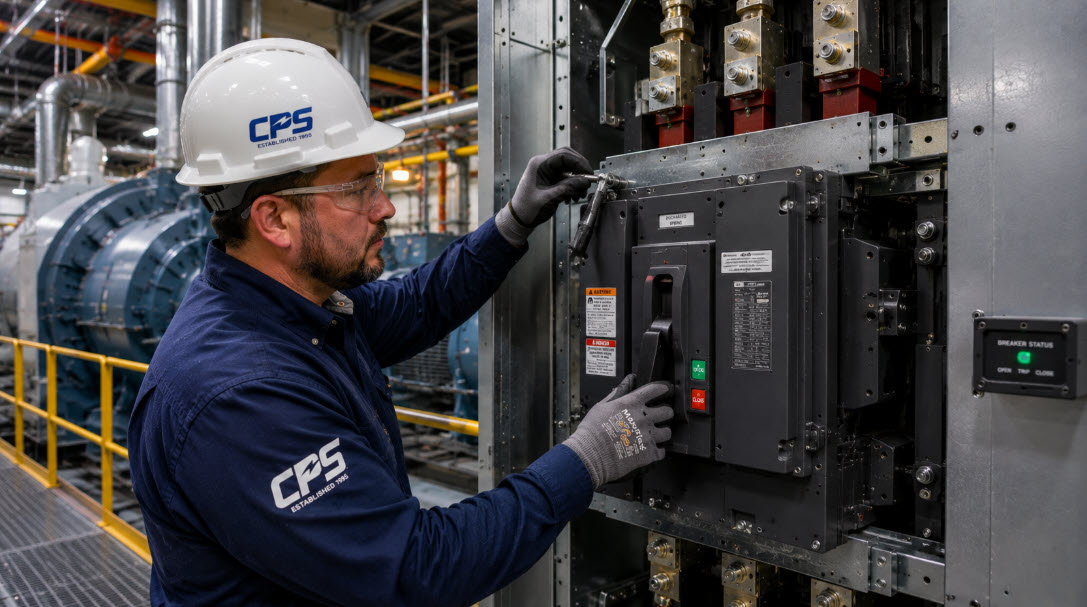
Molded Case Circuit Breakers are characterized as a breaker that employs spring operated, stored-energy mechanisms for quick connect/quick disconnect manual or electrical operation to make or break the flow of electricity. Unlike air or vacuum type, molded case circuit breakers utilize insulation as a barrier to the disruption of the flow of electricity. Molded Case circuit breakers can be used in various applications that include small compact areas, switchboards, motor control center buckets and various other locations.

For all new and reconditioned molded case circuit breakers, Coastal Power Systems will provide a test report. Each breaker will undergo CPS’ Primary Injection Testing, Function Testing of all devices, and Visual/Quality Inspection. Every Molded Case Circuit Breaker leaves our facility with a minimum 12 Month Warranty and Power DB generated Test Reports. Electronic copies of these reports will be available upon request.

Coastal Power Systems also can provide hard to find parts and devices for all Molded Case Circuit Breakers.
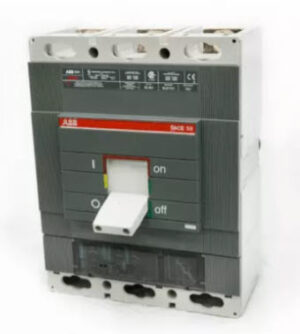
Molded Case Circuit Breaker
#image_title

These parts include:

  • Electric Operators
  • Shunt Trips
  • Under Voltage Releases
  • Auxiliaries
  • Operator Handles
  • Lug Kits
  • Plug-In Mounting Assemblies
  • Trip Units
  • Other Replacement Components

Molded Case Technology

CPS understands the customer’s growing need for smaller more compact circuit breakers, without giving up appropriate protections. We gladly offer Molded Case Circuit Breaker Solutions that provide:

  • Solid State Protection
  • Arc Flash Reduction Capabilities
  • Blue Tooth interaction
  • Metering and Communications
  • Zone Interlocking
  • Compact Frame Size
  • Remote Operating Capabilities


Air Frame Circuit Breakers

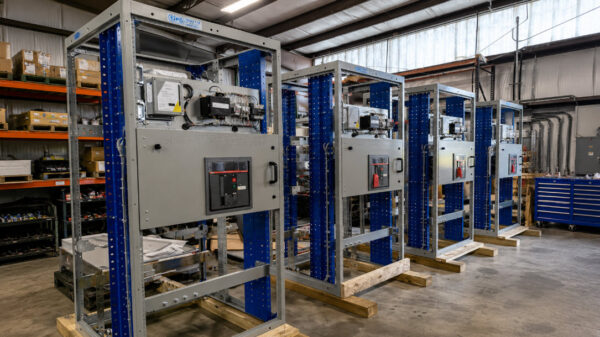
Coastal Power Systems works with all major manufacturers to provide our customers with the latest available Air Frame Circuit Breakers. We also stock a large inventory of Low Voltage and Medium Voltage Air Frame Circuit Breakers and devices. Check out the brands we partner with below for Air Frames.

Air Frame Circuit Breakers are characterized as a breaker that employs spring operated, stored-energy mechanisms for quick connect/quick disconnect manual or electrical operation to make or break the flow of electricity. Unlike insulated or vacuum type circuit breakers, Air Frames utilize air gaps as an insulation barrier from the disruption of the flow of electricity. Air Frame circuit breakers can be used in various applications that do not warrant protection from outside contaminants such as significant amounts of dust, dirt, metal particles etc.

Air Frame Components

Coastal Power Systems also can provide hard to find parts and devices for all Air Frame Circuit Breakers. The parts include:

  • Programmers
  • Electric Operators
  • Shunt Trips
  • Under Voltage Releases
  • Bell Alarms
  • Close Coils
  • Auxiliaries
  • Any additional hard to find parts

Geared Toward Safety

Coastal Power Systems has the knowledge of upcoming trends such as switching from older “Iron-Clad Switchgear” Air Frame Circuit Breakers to newer more compact “Insulated Case” Air Frame Circuit Breakers. The new industry standard is:

  • Solid State Protection
  • Arc Flash Reduction Capabilities
  • Blue Tooth interaction
  • Metering and Communications
  • Zone Interlocking
  • Compact Frame Size
  • Remote Operating Capabilities


Our Manufacturing Partners

ABB Logo GE Logo Schneider Electric Logo Eaton Logo Toshiba Logo Siemens Logo


Medium Voltage Circuit Breakers

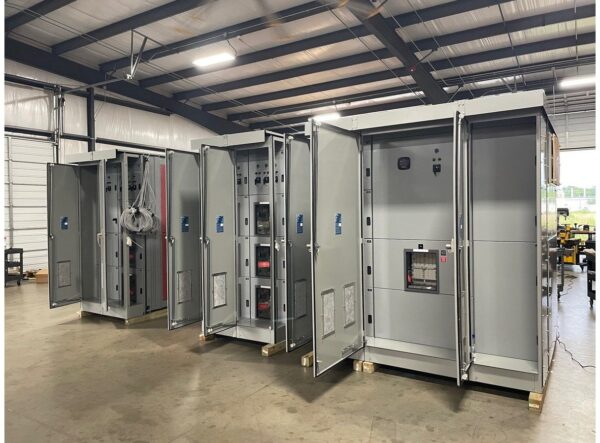
With industries now increasing the need for more production, performance, and power, while decreasing space usage and safety hazards, the need for medium voltage products is on the rise. Changing technology such as vacuum bottles and smaller breakers/contactors with greater withstand ratings has allowed industries to take advantage of smaller designs with increased production.

Air Type

Coastal Power Systems has been a trusted OEM air frame circuit breaker supplier since 1995. We work with all major manufacturers, including GE, Siemens, ABB, Eaton, Square D, and Toshiba, to stock new and reconditioned low-voltage air frame circuit breakers for power utilities, manufacturing facilities, data centers, mining operations, and renewable energy projects.

Whether you need a single unit quickly or a long-term supply partner, CPS provides the product, technical expertise, and support needed to keep your electrical system operating reliably.
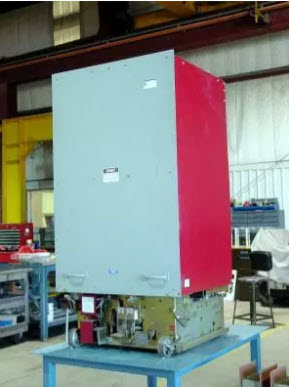
Industrial air frame circuit breaker in an electrical equipment workshop.
#image_title

Vacuum Type

Coastal Power Systems offers servicing, retrofitting, replacement, and supply solutions for vacuum circuit breakers to support reliable medium-voltage system performance.

If you manage a medium-voltage power system in an industrial plant, manufacturing facility, mining operation, commercial complex, or critical infrastructure facility, vacuum circuit breakers may perform much of the system protection required to interrupt electrical faults safely.

Vacuum circuit breakers use a sealed vacuum chamber to extinguish the electrical arc when the contacts separate. This technology provides fast, clean interruption without oil or insulating gas. VCBs are compact, dependable, and generally require less maintenance over their operating life than many older breaker technologies.

As an OEM vacuum circuit breaker supplier, Coastal Power Systems has serviced and retrofitted vacuum circuit breakers since 1995. CPS carries new and reconditioned units for major OEM brands, including GE, Siemens, Eaton, ABB, Square D, and Toshiba.

CPS also provides repair services and custom-designed retrofit solutions when a direct replacement is unavailable or when modernization offers a better long-term solution.
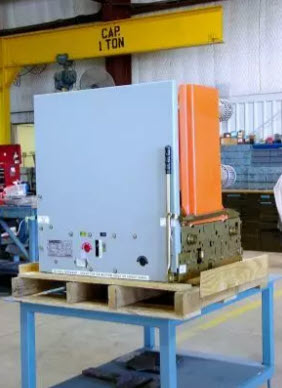
Industrial vacuum circuit breaker used in a medium-voltage electrical power system.
#image_title

Field Services

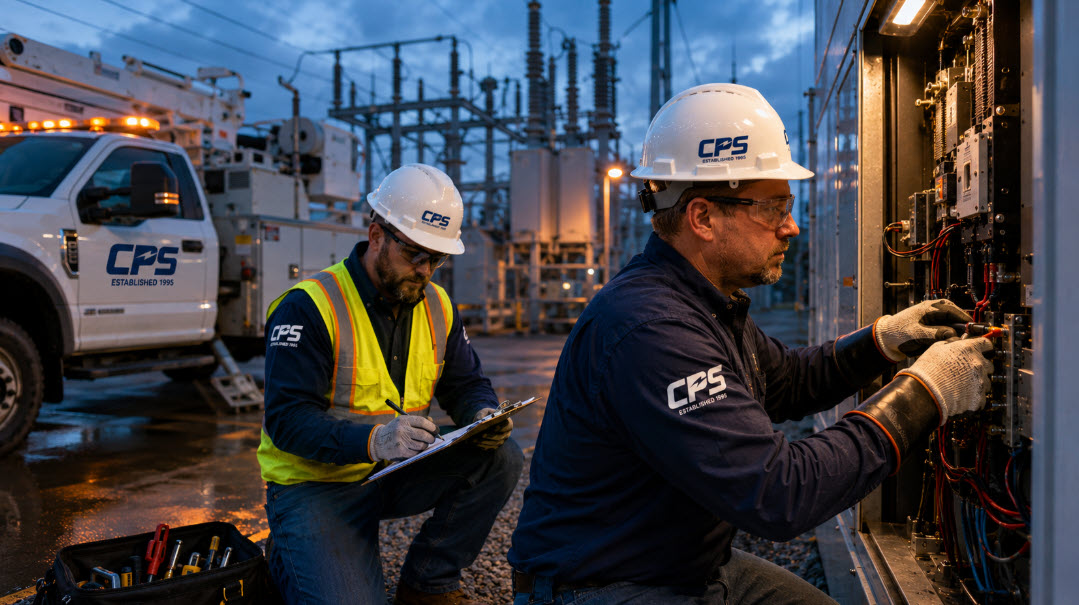
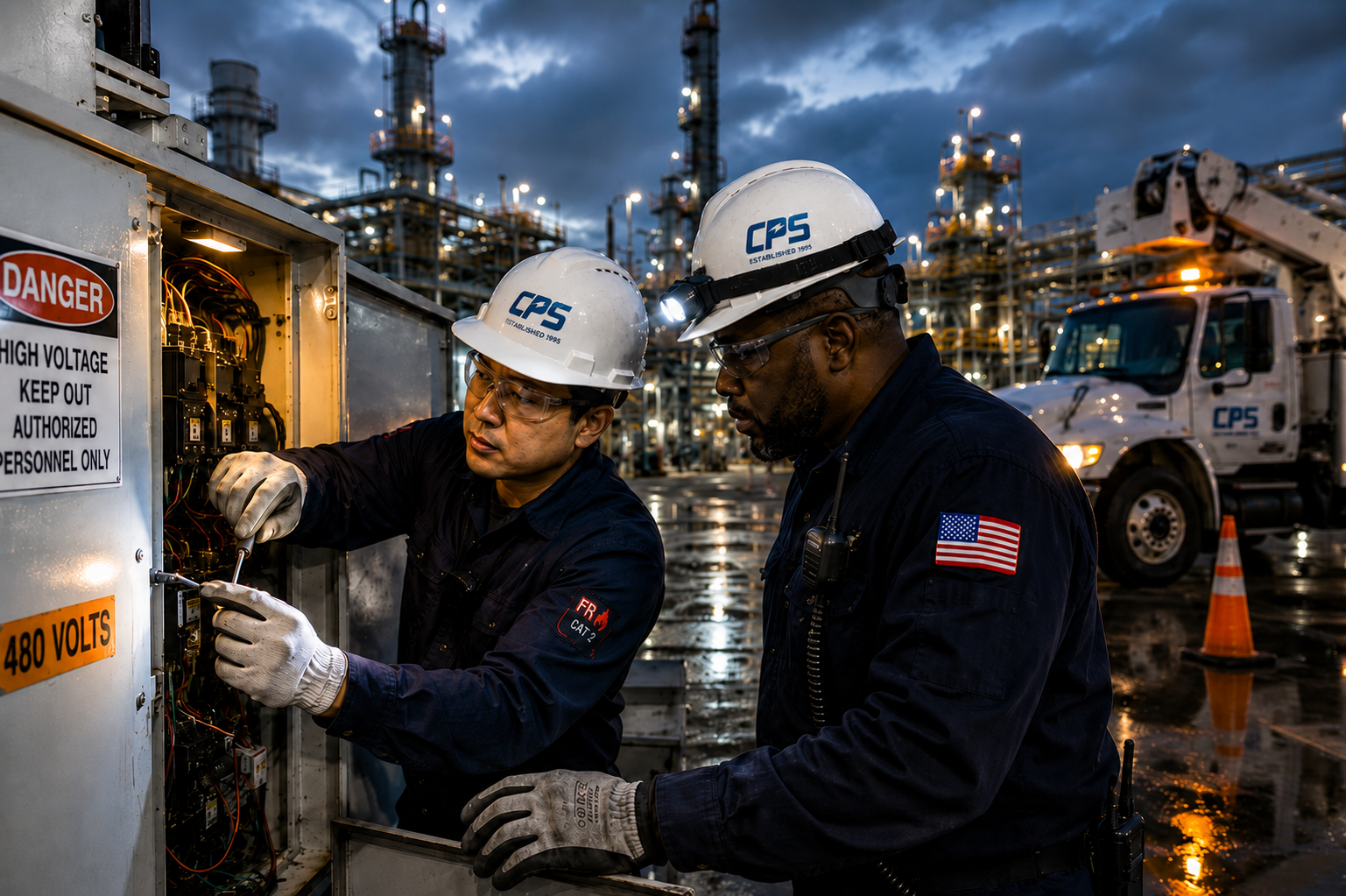
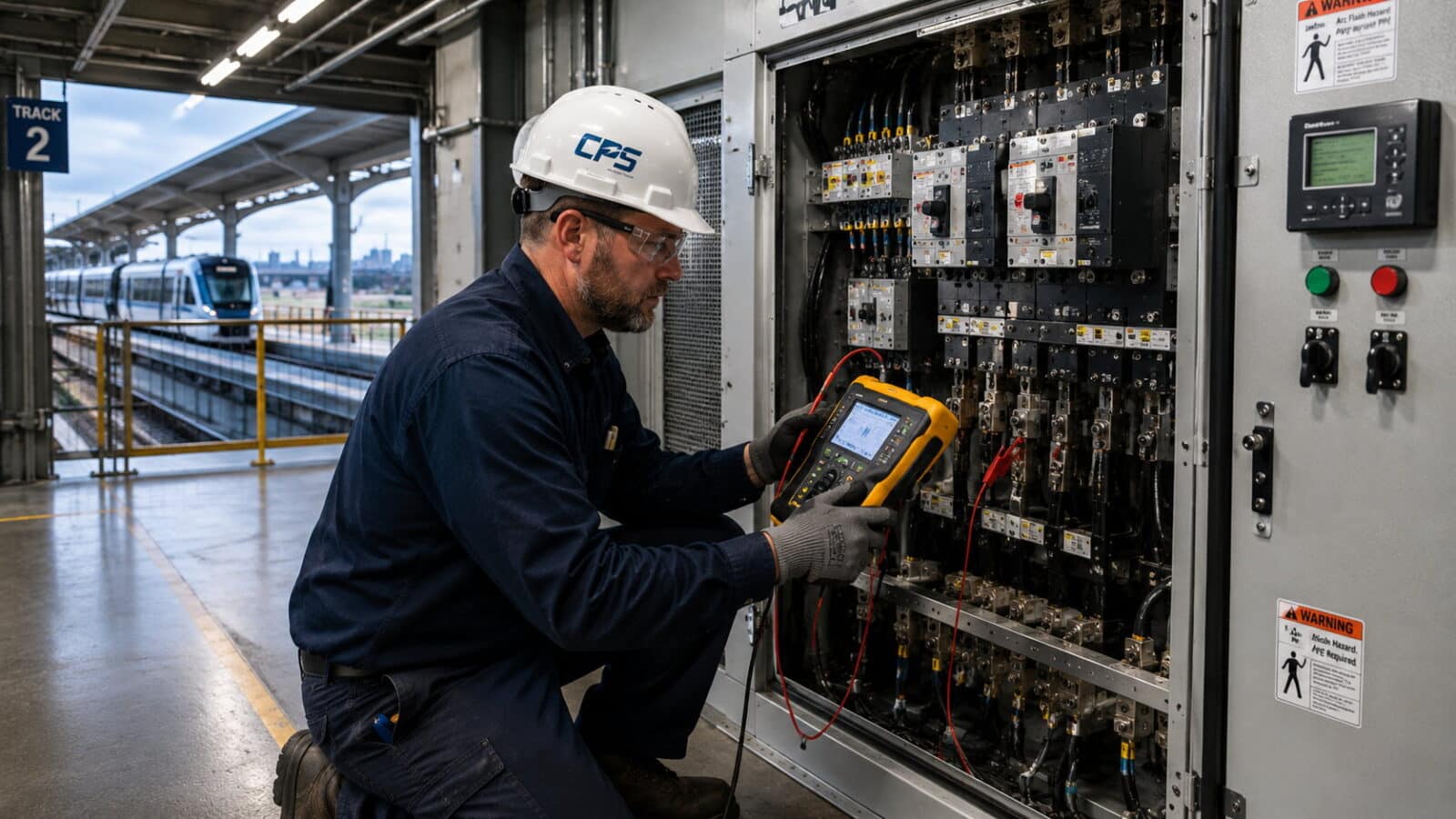
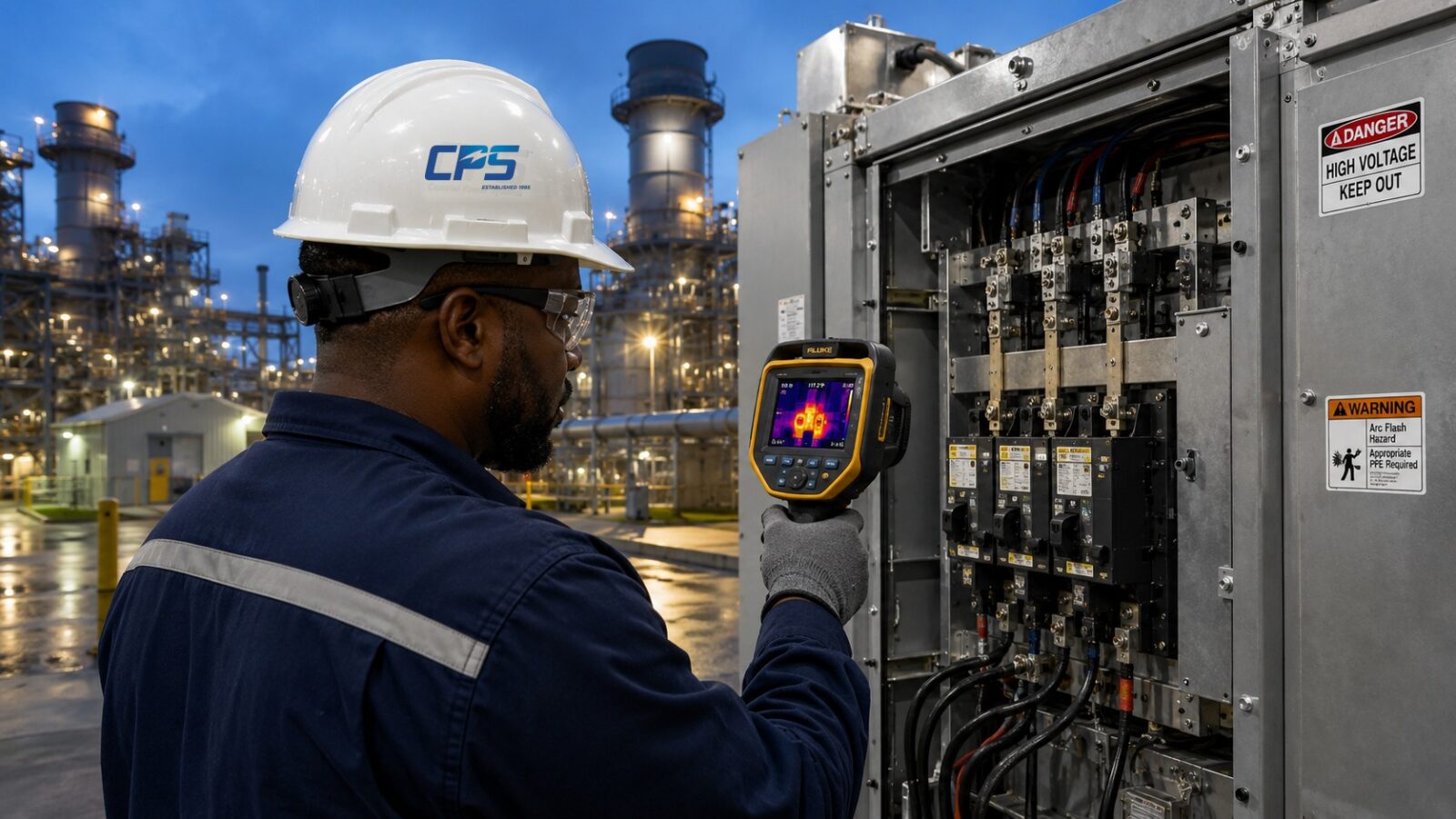
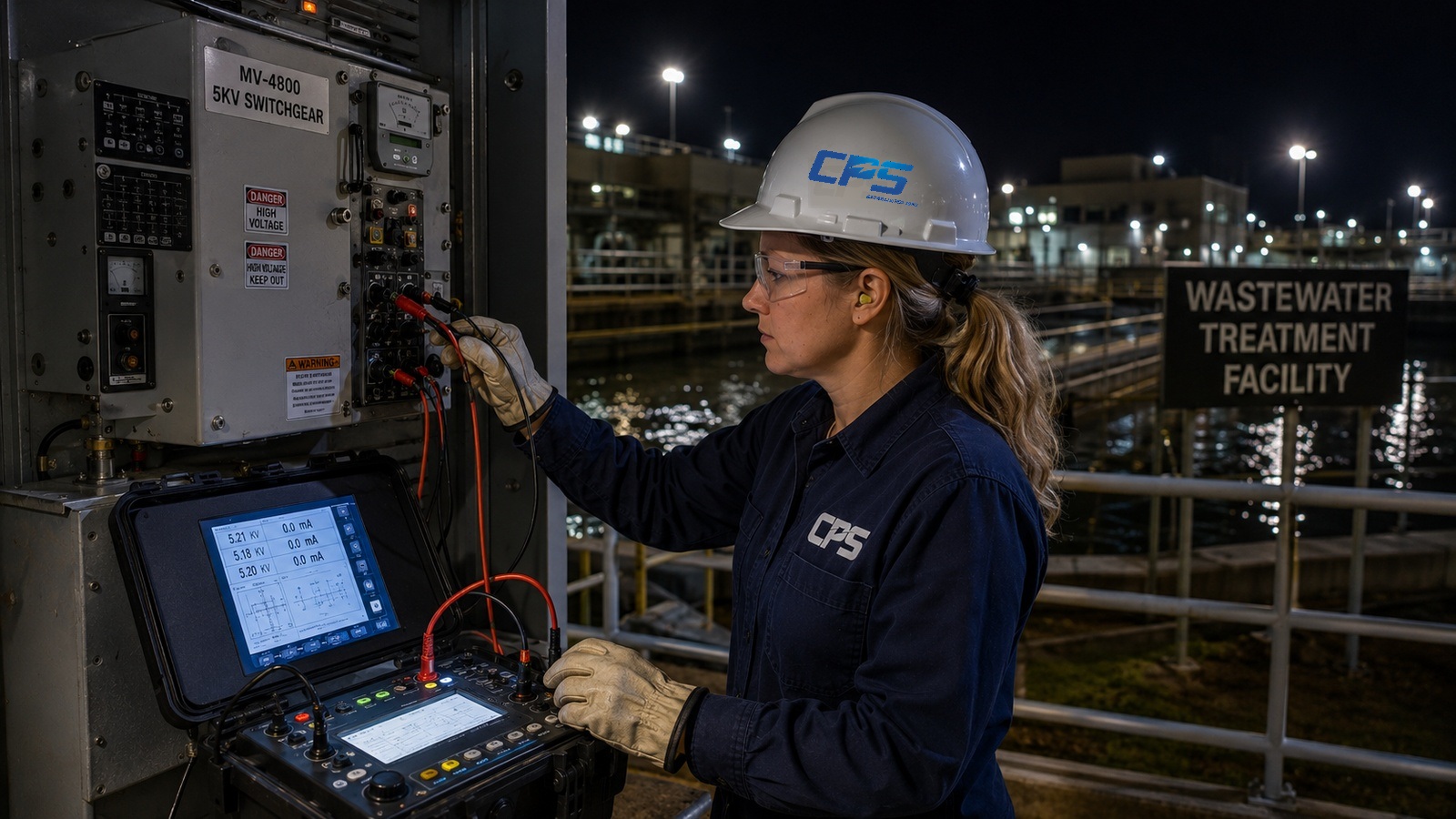
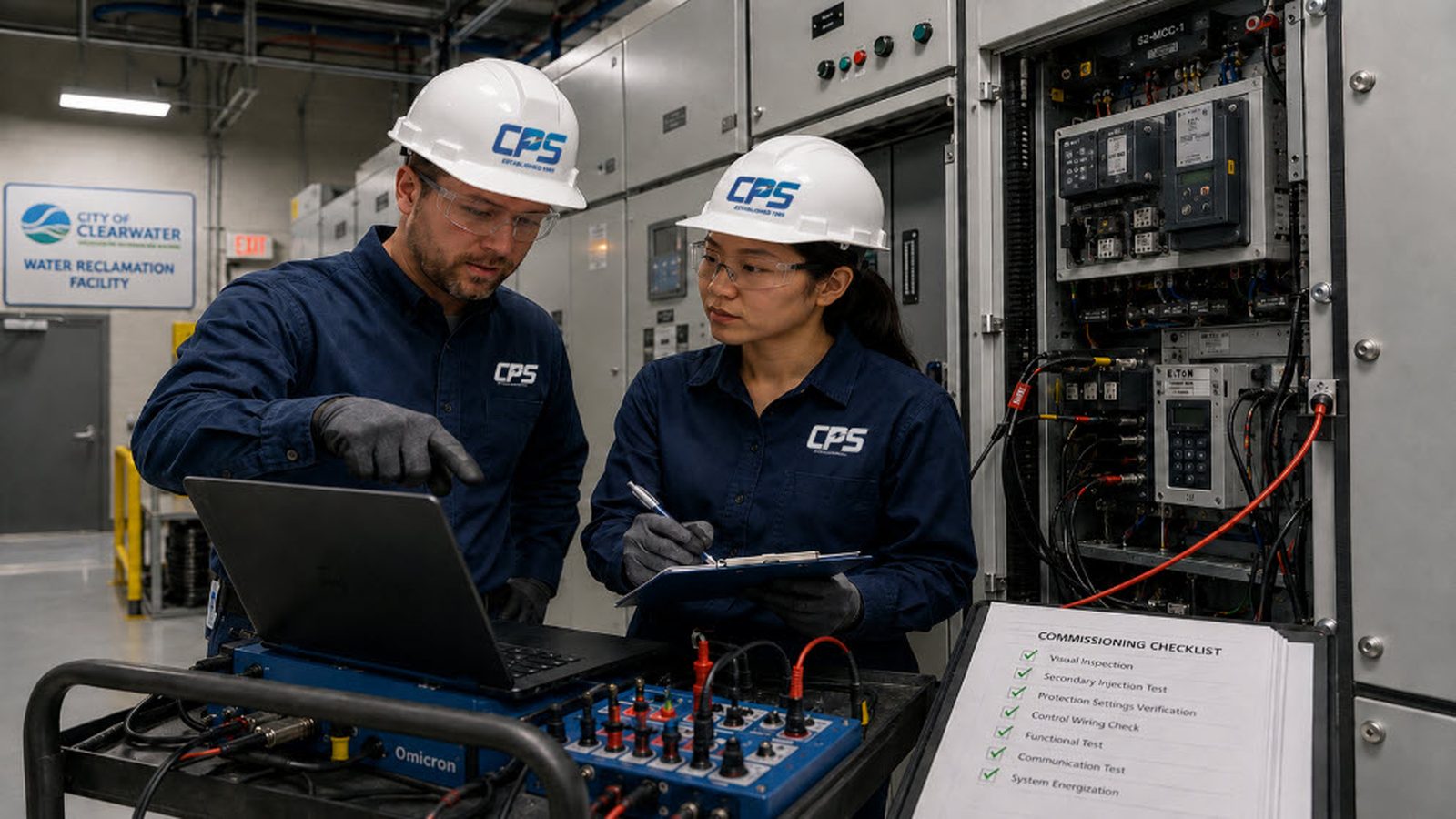
Coastal Power Systems provides on-site testing, inspection, commissioning, maintenance, and troubleshooting services for medium-voltage relays, current transformers (CTs), contactors, and circuit breakers. Our experienced field technicians have a wide variety of certification and credentials and can support planned maintenance outages, emergency response, and commissioning projects at industrial facilities, utilities, power generation plants, data centers, and on- or offshore operations throughout North America and select international locations. Equipped with portable testing equipment and specialized tools, CPS is prepared to respond quickly when reliable field support is needed.

Parts and Repair

Coastal Power Systems maintains an extensive inventory of medium-voltage circuit breaker and contactor parts, replacement components, and repair services. Our service facility is equipped to inspect, test, repair, and refurbish medium-voltage breakers and contactors using procedures based on applicable ANSI/NETA standards. Typical turnaround for testing and certification is one to two business days, and our experienced technicians can often locate hard-to-find replacement parts and devices for obsolete and legacy equipment.


Reconditioned Medium-Voltage Circuit Breakers

Many facilities continue to operate dependable medium-voltage equipment that is no longer manufactured or supported by the original equipment manufacturer. Coastal Power Systems helps customers extend the service life of these assets by supplying professionally reconditioned medium-voltage circuit breakers and contactors that have been inspected, tested, and prepared for reliable operation. CPS also supports customers transitioning to newer technologies while maintaining compatibility with existing electrical systems.

Coastal Power Systems offers reconditioned medium-voltage circuit breakers and contactors from leading manufacturers, including:

ABB

  • ADVAC
  • V-MAX

GE

  • POWERVAC
  • SECOVAC

Siemens

  • SION
  • 3AH4
  • 3AH47
  • 3AH5
  • 3AH3

Cutler-Hammer

  • VCP-W


New, Reconditioned and Remanufactured Circuit Breaker Replacement Parts

Maintaining reliable electrical equipment often depends on the availability of quality replacement parts. Coastal Power Systems supplies new, reconditioned, and remanufactured replacement components for low- and medium-voltage circuit breakers, helping customers repair existing equipment, replace worn or obsolete components, and extend the service life of critical power infrastructure.
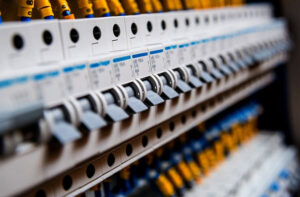
Circuit Breaker Devices & Accessories
#image_title

Whether supporting routine maintenance, equipment refurbishment, modernization projects, or emergency repairs, CPS works with customers to identify compatible replacement parts that improve system reliability, safety, and long-term performance. Our extensive inventory includes hard-to-find and obsolete components for many legacy circuit breakers that are no longer supported by the original manufacturer.

From individual replacement devices to complete breaker renewal programs, Coastal Power Systems provides the parts, technical expertise, and responsive support needed to keep electrical distribution systems operating safely and reliably. Contact our technical sales team to discuss your application or request a quotation.

Circuit Breaker Devices & Accessories

Coastal Power Systems maintains an extensive inventory of new, reconditioned, and obsolete circuit breaker devices and accessories to support maintenance, repairs, modernization projects, and emergency replacement needs. With decades of inventory development and product knowledge, CPS supplies components for molded case, insulated case, air frame, and medium-voltage circuit breakers from all major manufacturers.

Our inventory includes many hard-to-find and discontinued parts that are no longer readily available through original equipment manufacturers. Whether you need a single replacement device or components for a complete breaker refurbishment, CPS can help identify the correct part for your application.

In addition to supplying replacement components, Coastal Power Systems designs and manufactures custom aftermarket solutions to meet unique customer requirements. Our engineering and manufacturing capabilities include custom Kirk Key assemblies, interlock systems, mounting hardware, and other specialized circuit breaker accessories designed to integrate with existing electrical equipment.


Available Replacement Components

Coastal Power Systems maintains an extensive inventory of replacement components for current and obsolete circuit breakers. Our inventory includes the following parts and accessories:

Accessories & Trip Devices

  • Shunt trips
  • Under-voltage releases (UVR)
  • Auxiliary switches
  • Bell alarms
  • Electric operators
  • Remote close devices
  • Neutral CTs
  • Trip units and programmers
  • Rating plugs
  • Second shunt trips

Circuit Breaker Components

  • Current transformers (CTs)
  • Movable contacts
  • Stationary contacts
  • Arcing contacts
  • Operating mechanisms
  • Escutcheons
  • Pole units
  • Handle operators
  • Back plates
  • Carriage assemblies
  • Primary and secondary disconnects
  • Substructures and cradle assemblies
  • Shutter assemblies
  • Many other replacement parts


Trip Unit Retrofit Kits
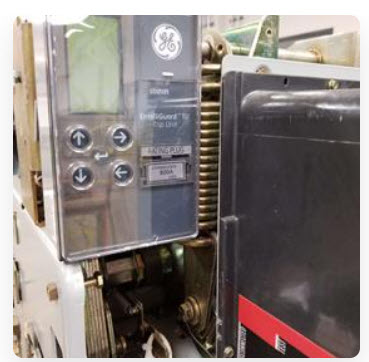
Trip Retrofit Kits
#image_title

Coastal Power Systems helps customers extend the service life of low-voltage circuit breakers by replacing outdated trip units with modern solid-state protection systems. Our experienced technicians and technical sales specialists can recommend retrofit trip unit kits that improve circuit breaker performance while maintaining compatibility with existing equipment.

Why Upgrade Your Trip Unit?

Modern trip unit retrofit kits replace aging or obsolete protection systems with programmable solid-state technology that improves electrical system protection, monitoring, and operational flexibility. These upgrades provide adjustable protection settings, enhanced fault detection, improved selective coordination, and advanced diagnostic capabilities while extending the useful life of existing circuit breakers.

Coastal Power Systems specializes in trip unit retrofit solutions that help customers modernize existing electrical equipment without the expense of complete breaker replacement. Each retrofit is selected to meet the application requirements while minimizing installation time and supporting current safety and performance expectations.

Trip unit retrofit solutions may provide:

  • Improved reliability and operating performance
  • Arc-flash mitigation and maintenance safety modes
  • Metering, diagnostics, and communication capabilities
  • Faster operating and closing cycle performance
  • Enhanced current sensing and protection accuracy
  • Reduced nuisance tripping through adjustable protection settings
  • Secondary injection testing to verify proper trip unit operation after installation


Protective Relay Systems
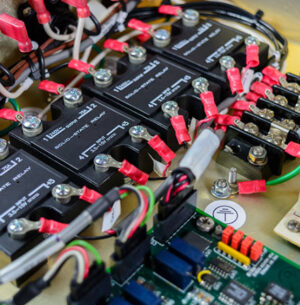
Protective Relay Systems
#image_title

CPS defines a relay as: 

A switch that is used to control a circuit or multiple circuits by utilizing low powered signal or signals. There is isolation between the control circuit and the controlled circuit, which allows low voltage wiring and devices to control higher voltage and current devices. There are a variety of purposes, specific functions, mounting styles, operating characteristics, and user customizations available.

Protective relays play a critical role in safeguarding electrical power systems by continuously monitoring system conditions and initiating protective actions when abnormal operating conditions occur. By detecting faults such as overloads, short circuits, ground faults, and other system disturbances, protective relays help isolate affected equipment, minimize damage, and improve the reliability and safety of the overall electrical distribution system.

Protective relays use low-power control signals to monitor and control one or more electrical circuits while maintaining electrical isolation between the control circuit and the power circuit. Modern relay systems are available in a wide range of technologies, mounting configurations, operating characteristics, and communication capabilities to meet the requirements of virtually any power system application.

Protective Relay Services

Coastal Power Systems provides complete protective relay services for new installations, modernization projects, preventive maintenance programs, and emergency repairs. Our experienced engineers and technicians support protective relay systems throughout their entire lifecycle, including:

  • Assistance specifying and procuring general-purpose and protective relays
  • Installation in new or existing switchgear
  • Protective relay upgrades to improve safety, performance, and system reliability
  • Evaluation and repair of relays at the CPS service facility
  • On-site testing for preventive maintenance programs
  • Startup, commissioning, and acceptance testing
  • Protective device coordination studies
  • Arc-flash hazard reduction and mitigation support
  • Support for GE Multilin, Schweitzer (SEL), Siemens SIPROTEC, ABB, and other major manufacturers
  • Fixed-mounted and draw-out relay applications
  • Electromechanical, solid-state, and microprocessor-based relay technologies

How Protective Relays Operate

When a fault or abnormal operating condition occurs, a protective relay detects the condition and initiates a predetermined response, such as issuing an alarm or commanding a circuit breaker to isolate the affected portion of the electrical system. This rapid response helps protect equipment, improve personnel safety, and reduce the likelihood of widespread outages.

The Institute of Electrical and Electronics Engineers (IEEE) defines a relay as “an electric device that is designed to respond to input conditions in a prescribed manner and, after specified conditions are met, to cause contact operation or similar abrupt change in associated electric control circuits.” Inputs are typically electrical but may also include mechanical, thermal, or other monitored conditions (IEEE C37.90).

General-Purpose Relay Systems

General-purpose relays are designed to perform a wide variety of control and switching functions across industrial and commercial electrical systems. Depending on their construction and ratings, they can be used in both standard and hazardous environments and are available in numerous mounting configurations to support existing equipment and new installations.

Common configurations include:

  • Octal-base relays
  • Square-base relays
  • Flange-mounted relays
  • Miniature relays
  • Hermetically sealed relays

Whether replacing obsolete relay technology, modernizing protection systems, or supporting new electrical infrastructure, Coastal Power Systems provides the engineering expertise, products, testing, and field services needed to keep protective relay systems operating safely and reliably.


GE Insulated Case Breaker Repair Services
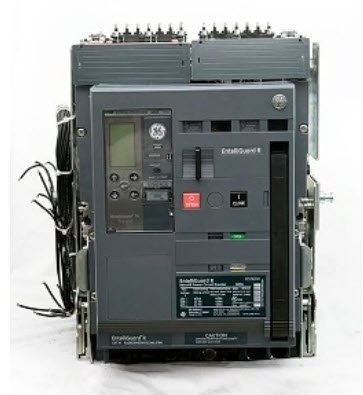
GE Insulated Circuit Breakers
#image_title

Coastal Power Systems supplies new, surplus, and professionally reconditioned GE insulated case circuit breakers for industrial, commercial, utility, offshore, and other critical power applications. Whether you are replacing a failed breaker, maintaining aging equipment, or supporting a modernization project, CPS provides the products, technical expertise, and responsive service needed to keep your electrical system operating reliably.

Our extensive inventory and experienced technical staff help customers identify compatible replacement breakers, locate obsolete models, and develop practical solutions for extending the service life of existing GE electrical equipment.


GE Power Break I & II Circuit Breakers

Coastal Power Systems maintains a large inventory of GE insulated case circuit breakers covering a wide range of frame sizes, mounting configurations, interrupting ratings, and amperages. Whether your application requires a fixed-mounted replacement breaker, a draw-out assembly, or a professionally reconditioned unit, CPS can help identify the appropriate solution.


GE Power Break I & II Circuit Breakers

Coastal Power Systems maintains a large inventory of GE insulated case circuit breakers covering a wide range of frame sizes, mounting configurations, interrupting ratings, and amperages. Whether your application requires a fixed-mounted replacement breaker, a draw-out assembly, or a professionally reconditioned unit, CPS can help identify the appropriate solution.

GE Power Break I Series

  • TC
  • THC
  • TP
  • THP
  • TCMM
  • THCMM
  • TPMM
  • THPMM
  • TUPMM
  • TCL
  • TCVV
  • THCVV
  • TPVV
  • TPVVF
  • THPVV
  • THPVVF
  • TPVF
  • THPVF
  • TPYY
  • TPY
  • THPYY
  • TPR
  • TPRR
  • TPS
  • TPSS

GE Power Break II Series

  • SSF
  • SHF
  • SSD
  • SHD
  • SSB
  • SHB

If you need assistance identifying a breaker model or verifying compatibility with your existing equipment, our technical sales team can help.

Repair, Modernization, and Life-Extension Services

In addition to supplying replacement circuit breakers, Coastal Power Systems provides a complete range of repair, refurbishment, modernization, and lifecycle support services for GE insulated case circuit breakers. Our experienced technicians evaluate existing equipment and recommend practical solutions based on equipment condition, application requirements, and long-term reliability goals.

Services include:

  • Circuit breaker repairs and restoration
  • Breaker refurbishment and reconditioning
  • Retrofit and retrofill solutions
  • Replacement parts and operating devices
  • Custom configurations and modifications
  • Modernization and upgrade solutions for legacy GE equipment

Even if your breaker model is obsolete or not listed above, Coastal Power Systems can often locate a replacement, supply hard-to-find components, or professionally recondition your existing breaker. Every new and reconditioned circuit breaker is inspected, tested, and verified before shipment to help ensure reliable operation in the field.


Download GE Breaker Manuals & Resources

Looking for more information? We’ve made it easy to evaluate the right GE insulated case breaker for your needs. Download technical manuals, product specs, and compatibility guides directly from our website.


Siemens Circuit Breaker Upgrade & Repair Services
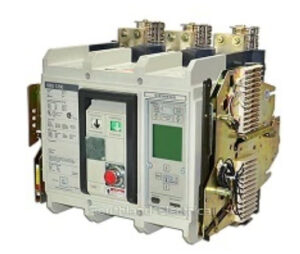
Siemens Circuit Breakers
#image_title

Coastal Power Systems supplies new, surplus, and professionally reconditioned Siemens insulated case circuit breakers for replacement, maintenance, modernization, and emergency outage support. Our experienced technicians inspect, test, repair, refurbish, and certify circuit breakers to help customers extend equipment life, improve reliability, and minimize downtime.

Whether you need a direct replacement breaker, repair services, replacement parts, or a complete retrofit solution, CPS works with you to identify the most practical option based on your existing equipment, operating requirements, and long-term maintenance objectives.

Every new and reconditioned circuit breaker is inspected, functionally tested, and verified before shipment to help ensure reliable field performance.

Support for Legacy Allis-Chalmers & ITE Circuit Breakers

Many industrial facilities, utilities, and offshore operations continue to operate legacy Allis-Chalmers and ITE insulated case circuit breakers that are no longer manufactured or supported by the original equipment manufacturer. Coastal Power Systems helps customers maintain and modernize these systems by supplying replacement breakers, hard-to-find parts, repair services, and professionally reconditioned equipment whenever available.

When maintaining existing equipment is no longer practical, CPS can engineer retrofit and retrofill solutions that allow customers to upgrade to modern Siemens circuit breakers while minimizing modifications to the existing switchgear lineup.

Our services include:

  • Testing, repair, and refurbishment of legacy Allis-Chalmers and ITE circuit breakers
  • New, surplus, and professionally reconditioned replacement breakers
  • Hard-to-find replacement parts and operating devices
  • Retrofit and retrofill solutions using modern Siemens circuit breakers
  • Technical support for equipment identification and compatibility

Whether replacing a failed breaker, sourcing an obsolete unit, or planning a phased modernization project, CPS can recommend solutions that balance reliability, safety, and long-term operating costs.

Siemens Circuit Breaker Solutions for Critical Power Applications

Coastal Power Systems supports Siemens circuit breaker applications across a wide range of industries, including:

  • Industrial manufacturing facilities
  • Oil and gas operations
  • Petrochemical facilities
  • Offshore drilling and production platforms
  • Utilities
  • Power generation plants
  • Data centers
  • Commercial and institutional facilities

To support these critical power environments, CPS provides:

  • Extensive inventory of Siemens, Allis-Chalmers, and ITE circuit breakers
  • Repair, refurbishment, and life-extension services
  • On-site testing, maintenance, and retrofit installation
  • Primary injection testing and functional verification before shipment
  • 24/7 emergency response for critical power applications
  • Hard-to-find replacement parts for obsolete equipment


Siemens Insulated Case Circuit Breaker
Models Supported

Coastal Power Systems supports a broad range of Siemens insulated case circuit breakers, including the following SB and WL Series models:

Siemens SB Series

  • SB
  • SBS
  • SBA

Siemens WL Series

  • WLS1
  • WLS2
  • WLL1
  • WLL2
  • WLL3
  • WLC2
  • WLC3
  • WLN2
  • WLH2
  • WLH3
  • WLM3
  • WLF2
  • WLF3


ABB, BBC & ITE Circuit Breakers

ABB Circuit Breakers
#image_title

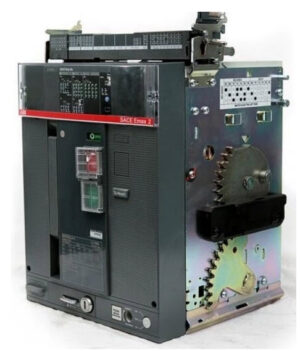
Coastal Power Systems supplies new, surplus, and professionally reconditioned ABB SACE circuit breakers, replacement components, and operating devices for low-voltage power distribution applications. Our extensive inventory includes current and obsolete ABB breaker models, including Emax and Emax 2 circuit breakers, as well as legacy BBC and ITE equipment.

Whether you are planning routine maintenance, replacing a failed breaker, or restoring aging electrical equipment, CPS can help identify compatible breakers, parts, and modernization options. Our technical sales team supports planned projects and urgent outage requirements with equipment identification, inventory verification, repair services, testing, and responsive technical assistance.

Critical Components for Planned and Emergency Requirements

We maintain an extensive inventory of ABB, BBC, and ITE circuit breakers, operating devices, accessories, and replacement components. This inventory allows CPS to support routine maintenance, equipment upgrades, breaker restoration projects, and urgent repairs involving equipment that may no longer be readily available from the original manufacturer.

If a direct replacement is unavailable, CPS can evaluate the existing equipment and help determine whether repair, reconditioning, component replacement, retrofit, or retrofill provides the most practical solution. Emergency response and technical support are available for critical outage requirements.


ABB Circuit Breaker Models Supported

Coastal Power Systems maintains a broad inventory of current and legacy ABB insulated case circuit breakers. If you need help identifying an existing breaker or confirming compatibility, our technical sales team can assist with model identification, ratings, mounting configurations, and replacement options.

ABB Emax Series
  • E1B
  • E2B
  • E2N
  • E2S
  • E2L
  • E3N
  • E3S
  • E3H
  • E3V
  • E3L
  • E4S
  • E4H
  • E4V
  • E6H
  • E6V
ABB Emax 2 Series
  • E1.2B
  • E1.2N
  • E1.2S
  • E2.2B
  • E2.2N
  • E2.2S
  • E2.2H
  • E2.2V
  • E4.2S
  • E4.2H
  • E4.2V
  • E4.2L
  • E4.2X
  • E6.2H
  • E6.2V
  • E6.2L
  • E6.2X

Download ABB Emax Circuit Breaker Manual


ABB Circuit Breaker Repair and Restoration

Coastal Power Systems provides in-house repair, reconditioning, and restoration services for ABB insulated case circuit breakers. Each breaker is evaluated to determine its mechanical condition, electrical performance, component availability, and suitability for continued service.

Depending on the breaker’s condition and application requirements, the restoration process may include contact replacement, insulation replacement, mechanism repairs, component cleaning, adjustment, reassembly, and electrical testing. CPS documents the completed work and supplies applicable test results with the restored breaker.

Our circuit breaker repair and restoration process may include:

  • Complete breaker disassembly and inspection
  • Cleaning of external and internal components
  • Evaluation and replacement of worn or damaged parts
  • Replacement of contacts, arc chutes, and insulation materials when required
  • Mechanism adjustment and lubrication
  • Reassembly using proper torque values and alignment procedures
  • Dielectric testing to verify insulation integrity
  • Mechanical and electrical functional testing
  • Final quality inspection and documentation of test results


ABB, BBC & ITE Breaker Applications

Coastal Power Systems supports ABB, BBC, and ITE circuit breaker applications across industrial facilities, utilities, power generation plants, data centers, commercial buildings, offshore operations, marine vessels, and other critical power environments.

These breakers are used in electrical distribution systems supporting manufacturing operations, process facilities, institutional campuses, communications infrastructure, shopping centers, renewable energy facilities, and other applications where dependable overcurrent protection and equipment availability are essential.

Whether you need a replacement breaker, hard-to-find component, repair service, or modernization solution, CPS can help evaluate the available options and recommend a practical approach based on compatibility, reliability, project schedule, and long-term equipment requirements.


Hyundai Insulated Case Circuit Breakers

Coastal Power Systems supplies new, surplus, and professionally reconditioned Hyundai insulated case circuit breakers, replacement components, and modernization solutions for industrial and commercial electrical distribution systems. Whether you are replacing a failed breaker, maintaining existing equipment, or planning a switchgear modernization project, CPS provides the products, technical expertise, and responsive support needed to keep critical power systems operating reliably.

Our experienced technicians support the complete lifecycle of Hyundai insulated case circuit breakers through inspection, testing, repair, refurbishment, replacement, retrofit, and retrofill services designed to extend equipment life while minimizing downtime.
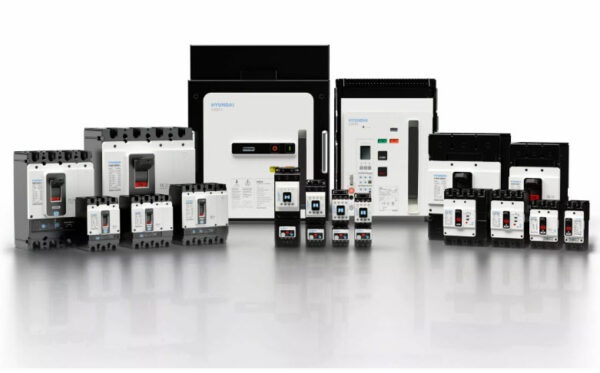
Hyundai Circuit Breakers
#image_title


Hyundai Circuit Breaker Services

For decades, Coastal Power Systems has supported customers worldwide with Hyundai circuit breaker replacement, repair, and modernization services. Our technical staff assists with equipment identification, compatibility verification, replacement part selection, and engineering solutions for both current and obsolete Hyundai breaker models.

Services include:

  • Inspection, testing, and refurbishment of Hyundai insulated case circuit breakers
  • New, surplus, and professionally reconditioned replacement breakers
  • Hard-to-find replacement parts and operating devices
  • Primary injection testing and functional verification
  • Circuit breaker retrofit and retrofill solutions
  • Technical support for equipment identification and compatibility

Whether replacing a single breaker or supporting a facility-wide modernization project, CPS works with customers to identify practical solutions that improve reliability while preserving existing electrical infrastructure whenever possible.

Hyundai HGN Retrofit Solutions

Many facilities continue to operate Hyundai HiAN and HiAS insulated case circuit breakers that are no longer manufactured or readily supported. Rather than replacing an entire switchgear lineup, Coastal Power Systems offers HGN retrofit solutions that replace obsolete Hyundai breakers with modern GE EntelliGuard G™ retrofill assemblies while maintaining compatibility with the existing equipment.

Each retrofit solution is engineered for the specific application and may include:

  • Factory-installed mounting hardware for simplified installation
  • Custom bus modifications designed for the existing switchgear
  • Trim plate kits for proper fit and finish
  • Modern solid-state protection and monitoring capabilities
  • Improved long-term equipment support and parts availability

Retrofit solutions allow customers to modernize aging electrical equipment, improve system reliability, and extend switchgear service life while reducing the cost and operational impact of complete equipment replacement.

Repair, Replacement, and Modernization Services

Coastal Power Systems provides complete repair, replacement, and modernization services for Hyundai insulated case circuit breakers. Whether your project involves routine maintenance, emergency replacement, obsolete equipment, or long-term asset management, CPS can evaluate your existing equipment and recommend the most practical approach based on system compatibility, equipment condition, operating requirements, and lifecycle cost.

Our goal is to help customers maximize equipment reliability, minimize downtime, and extend the useful life of their electrical distribution systems through proven engineering, testing, repair, and modernization solutions.


Why Coastal Power Systems?

Coastal Power Systems combines field maintenance, shop repair, equipment restoration, testing, engineering, manufacturing, modernization, and emergency response capabilities. This integrated approach allows you to work with one experienced organization throughout multiple stages of the equipment lifecycle rather than coordinating multiple service providers.

Field and Shop Capabilities

Equipment can be inspected, tested, and maintained on site or transferred to a CPS service facility for more extensive repair, restoration, fabrication, and testing.

Legacy Equipment Knowledge

CPS supports current, obsolete, and hard-to-find circuit breakers, switchgear, controls, and motor control center equipment from major manufacturers.

Testing and Documentation

Maintenance, repair, and restoration services can include functional and electrical testing supported by documented test results.

Practical Lifecycle Decisions

CPS helps determine when equipment should be maintained, repaired, restored, modernized, or replaced based on condition, application, and long-term reliability.

Integrated Modernization Support

CPS provides breaker retrofits, trip unit upgrades, control modifications, replacement equipment, and custom power distribution solutions.

Critical Infrastructure Experience

CPS supports facilities where electrical reliability, personnel safety, outage duration, and operational continuity are essential.


Talk to Coastal Power Systems

Whether you need replacement industrial circuit breakers, repair services, retrofit solutions, technical support, or help identifying obsolete equipment, Coastal Power Systems is ready to assist. Our experienced team can help you evaluate your options, answer technical questions, and recommend the most practical solution for your application. Contact us today to discuss your project or request a quote.

Contact Us


Frequently Asked Questions

Can obsolete industrial circuit breakers still be repaired?

In many cases, yes. Coastal Power Systems repairs, restores, and tests numerous obsolete circuit breaker models that are no longer supported by the original manufacturer. After inspection, our technicians can recommend repair, restoration, retrofit, or replacement based on the equipment’s condition, availability of parts, and long-term reliability goals.

Do you provide testing for repaired circuit breakers?

Yes. Circuit breakers repaired or restored by CPS can undergo mechanical and electrical testing to verify proper operation before being returned to service. Testing may include insulation resistance, contact resistance, timing, functional operation, and other procedures appropriate for the breaker type and application.

Can you help identify an unknown or obsolete circuit breaker?

Absolutely. Our technical sales team can often identify circuit breakers using manufacturer information, catalog numbers, photographs, nameplates, or equipment drawings. Once identified, we can recommend repair services, replacement components, retrofit options, or complete replacement solutions.

Do you stock replacement industrial circuit breakers?

Yes. Coastal Power Systems maintains inventory of many low- and medium-voltage circuit breakers, replacement parts, accessories, and related equipment. Inventory availability varies by manufacturer and model, so our team can quickly determine available options for your application.

When should a circuit breaker be replaced instead of repaired?

The answer depends on the equipment’s physical condition, availability of replacement parts, maintenance history, reliability requirements, and modernization objectives. CPS evaluates each breaker individually and provides recommendations based on technical and economic factors rather than automatically recommending replacement.

Can circuit breaker upgrades improve electrical system reliability?

Yes. Upgrading trip units, controls, operating mechanisms, and other components can improve breaker performance while extending equipment life. Modernization may also enhance protection, simplify maintenance, improve parts availability, and reduce the risk of unexpected failures.

Do you provide field service for industrial circuit breakers?

Yes. CPS performs field inspection, maintenance, testing, troubleshooting, repairs, and commissioning for industrial circuit breakers and associated power distribution equipment. When extensive repairs are required, equipment can also be serviced at one of our repair facilities.

Which manufacturers does Coastal Power Systems support?

Coastal Power Systems supports equipment from many of the industry’s major manufacturers, including both current and obsolete product lines. Contact our technical sales team with your equipment information, and we’ll help determine available repair, replacement, retrofit, or modernization options.


Field Services for Critical Power Infrastructure

FIELD SERVICES

Field service support for testing, commissioning, maintenance, repair, refurbishment, and engineering activities that help industrial and mission-critical facilities improve reliability, reduce downtime risk, and keep electrical power systems operating safely.


Field Services for Critical Power Infrastructure

Coastal Power Systems provides electrical field services for facilities that depend on reliable power distribution equipment and coordinated system performance. Our field capabilities support equipment startup, system verification, preventive maintenance, troubleshooting, repair, refurbishment, and lifecycle support for industrial, utility, commercial, and mission-critical electrical infrastructure.

Our Field Services

  • Primary and secondary injection testing
  • Medium voltage pot testing
  • Vacuum bottle integrity testing
  • Electrical commissioning
  • Engineering studies
  • Electrical equipment repairs
  • Maintenance and cleaning
  • Equipment refurbishment
  • Device and accessory installation
  • Protective relay testing

Field Services That Support the Full Electrical Equipment Lifecycle

Electrical field service work is often required at several stages of the power system lifecycle. New equipment may need startup support, functional verification, relay testing, and commissioning before it is placed into service. Existing equipment may need preventive maintenance, cleaning, testing, repairs, device upgrades, or refurbishment to reduce the risk of failure and extend useful service life.

Coastal Power Systems supports these requirements with field services that connect directly to our manufacturing, engineering, testing, commissioning, maintenance, modernization, and emergency response capabilities. This allows customers to work with one technical resource for both equipment and field execution, reducing coordination gaps between the shop, the engineer, the contractor, and the facility maintenance team.

Primary and Secondary Injection Testing

Primary and secondary injection testing help verify that circuit breakers, trip units, protective devices, current transformers, relays, and associated control circuits are operating as intended. These tests are commonly performed during acceptance testing, commissioning, maintenance, troubleshooting, and equipment upgrades. The goal is to confirm proper operation before equipment is placed into service or returned to service.

Primary injection testing evaluates the complete current path by injecting high current through the equipment. Secondary injection testing verifies trip units, relays, and protective logic at the control level. Together, these methods help identify issues with calibration, wiring, device response, protection settings, and system coordination before failures occur under load.

Medium Voltage Pot Testing and Vacuum Bottle Integrity Testing

Medium voltage equipment requires careful testing because insulation condition, interrupter integrity, contamination, and mechanical condition can directly affect system reliability and safety. Pot testing is used to evaluate insulation integrity in medium voltage cables, bus, and related equipment where applicable. Vacuum bottle integrity testing helps confirm that vacuum interrupters in medium voltage breakers remain capable of performing their interrupting function.

These services are especially important for facilities with aging medium voltage switchgear, maintenance backlogs, recent equipment repairs, or planned outages. Field testing can help identify equipment that requires cleaning, repair, refurbishment, replacement, or additional investigation before it creates a more serious outage risk.

Commissioning and Startup Support

Commissioning verifies that electrical equipment and systems are installed, connected, configured, and operating according to project requirements. Field commissioning may include visual inspections, mechanical checks, insulation testing, functional testing, control circuit verification, relay testing, breaker testing, point-to-point checks, and documentation review.

Coastal Power Systems supports commissioning activities for new installations, equipment replacements, expansions, retrofits, and modernization projects. Proper commissioning reduces the risk of startup delays, nuisance trips, wiring errors, protection problems, and equipment failures after energization.

Engineering Studies and Field Evaluation

Engineering studies help facilities understand system capacity, fault current levels, equipment ratings, coordination requirements, arc flash exposure, and protection settings. Field service work often supports these studies by collecting equipment data, verifying nameplate information, documenting existing conditions, and identifying discrepancies between drawings and installed equipment.

Coastal Power Systems can support engineering studies as part of larger reliability, modernization, maintenance, or expansion projects. This helps customers make informed decisions about equipment replacement, breaker upgrades, relay settings, short circuit withstand requirements, and long-term electrical infrastructure planning.

Repairs, Maintenance, and Cleaning

Electrical equipment maintenance helps reduce the risk of unplanned outages caused by contamination, loose connections, mechanical wear, insulation deterioration, overheating, corrosion, or neglected components. Maintenance and cleaning services may include inspection, cleaning, torque checks, breaker exercise, lubrication where appropriate, contact evaluation, control wiring review, and functional testing.

When defects are found, repair work may be needed to restore equipment condition and reduce operational risk. Coastal Power Systems supports repairs for power distribution equipment, breakers, accessories, controls, and related components depending on the equipment type, condition, and available replacement parts.

Refurbishment, Device Installation, and Accessory Upgrades

Refurbishment and device installation can help extend the service life of existing equipment when full replacement is not practical, not immediately available, or not required. This may include replacing worn components, installing updated accessories, improving control functionality, adding monitoring devices, upgrading protective devices, or supporting breaker and switchgear modernization work.

These services are especially useful for facilities with aging switchgear, obsolete components, limited outage windows, or equipment that remains mechanically serviceable but needs targeted upgrades. Field-installed devices and accessories can improve maintainability, safety, operational visibility, and long-term reliability.

Protective Relay Testing

Protective relays are critical to fault detection, equipment protection, and system coordination. Relay testing helps verify that relays respond correctly to simulated fault conditions and operate according to the intended settings and protection scheme. Testing may include pickup verification, timing checks, input and output testing, trip circuit verification, and review of relay function within the broader system.

Relay testing is commonly performed during commissioning, maintenance, system upgrades, troubleshooting, and protection setting changes. Proper testing reduces the risk of nuisance trips, failure to trip, coordination problems, and equipment damage during abnormal electrical conditions.

Why Coastal Power Systems?

Coastal Power Systems combines manufacturing, engineering, testing, commissioning, maintenance, modernization, repair, refurbishment, and emergency response capabilities to support the full lifecycle of critical electrical infrastructure. This integrated approach allows customers to work with a single partner for field service support, equipment evaluation, testing, repair, modernization, and long-term asset planning.

CPS understands that field service decisions must be based on equipment condition, system requirements, operational risk, safety, and outage limitations. By combining engineering knowledge with practical field experience, CPS helps customers evaluate electrical equipment, verify performance, identify problems, complete repairs, and reduce the risk of future failures.

Whether supporting testing, commissioning, relay verification, maintenance, cleaning, refurbishment, device installation, or troubleshooting, CPS provides field services focused on improving reliability and supporting long-term power system performance.

Power Distribution Equipment Experience

Field service support for switchgear, switchboards, panelboards, breakers, protective devices, control systems, and related power distribution equipment.

Testing & Commissioning Support

Primary injection testing, secondary injection testing, relay testing, commissioning, startup support, and system verification for electrical infrastructure.

Maintenance, Cleaning & Repair

Support for preventive maintenance, electrical equipment cleaning, troubleshooting, repairs, component replacement, and return-to-service activities.

Medium Voltage Field Testing

Support for medium voltage pot testing, vacuum bottle integrity testing, insulation evaluation, and equipment condition assessment.

Refurbishment & Device Installation

Field support for equipment refurbishment, accessory installation, protective device upgrades, modernization work, and lifecycle extension projects.

Engineering & Reliability Focus

Engineering studies, field data collection, equipment evaluation, and recommendations that support safer, more reliable, and more maintainable power systems.

Frequently Asked Questions

What are electrical field services?

Electrical field services are on-site technical services performed on power distribution equipment and electrical systems. These services include testing, commissioning, maintenance, repairs, refurbishment, relay testing, engineering support, troubleshooting, and equipment upgrades.

When should electrical field services be performed?

Field services are commonly performed during new equipment installation, commissioning, scheduled maintenance outages, modernization projects, troubleshooting activities, emergency repairs, and before equipment is returned to service following maintenance or upgrades.

What is the difference between primary and secondary injection testing?

Primary injection testing verifies the complete current path by applying high current through the equipment, while secondary injection testing verifies the operation of protective relays, trip units, and associated control circuits using simulated signals. Both tests are important for confirming proper protection system performance.

Why is vacuum bottle integrity testing important?

Vacuum bottle integrity testing helps verify that medium voltage circuit breaker interrupters remain capable of safely interrupting fault current. Testing can identify deteriorated interrupters before they lead to equipment failure or unplanned outages.

Can field services help extend the life of existing electrical equipment?

Yes. Preventive maintenance, testing, cleaning, repairs, refurbishment, device installation, and engineering evaluations can help extend equipment service life, improve reliability, and identify modernization opportunities before failures occur.

Related CPS Services

Electrical field services connect directly to several Coastal Power Systems service areas. Customers often combine field testing, maintenance, repair, commissioning, modernization, and engineering support within the same project or outage window.


Emergency Response Services for Electrical Power Systems

EMERGENCY RESPONSE

Emergency electrical services designed to restore critical operations, reduce downtime, assess equipment damage, and help facilities recover quickly from outages, equipment failures, and power system emergencies.


Electrical Emergency Response Services

Electrical failures rarely occur at convenient times. A breaker fails during a weekend shutdown. A switchgear fault interrupts production in the middle of the night. A transformer problem takes critical equipment offline during peak operations. A utility disturbance damages electrical infrastructure. An arc flash event leaves facility personnel searching for answers while operations remain down. When these situations occur, every hour matters.

For many organizations, electrical downtime creates consequences that extend far beyond the electrical system itself. Production losses, missed customer commitments, regulatory concerns, safety risks, environmental impacts, and emergency repair costs can escalate rapidly. The pressure to restore operations quickly is often intense. However, restoring power without understanding the root cause of the failure can create additional problems and increase the likelihood of future outages.

Coastal Power Systems provides emergency response services for industrial facilities, utilities, data centers, power generation facilities, oil and gas operations, petrochemical plants, municipalities, and critical infrastructure operators. By combining engineering expertise, field services, testing capabilities, equipment manufacturing, modernization solutions, and lifecycle support, CPS helps customers recover from electrical emergencies while reducing future operational risk.

Our Emergency Response Services

Why Emergency Response Matters

Most electrical systems are designed with reliability in mind. Preventative maintenance programs, engineering studies, testing activities, and modernization projects all help reduce the likelihood of failures. However, no system is immune to unexpected events. Equipment failures, utility disturbances, severe weather, aging infrastructure, human error, and unforeseen operating conditions can still result in outages and equipment damage.

When failures occur, organizations need more than technical expertise. They need a structured response process that balances urgency with sound engineering judgment. Immediate actions must focus on personnel safety, equipment condition assessment, root cause identification, and operational recovery.

The quality of the response often determines how quickly a facility recovers and how effectively future problems are prevented.

The Cost of Delayed Recovery

Electrical outages can affect every aspect of an operation. Manufacturing facilities may lose production capacity. Data centers may face service interruptions. Utilities may experience customer outages. Power generation facilities may lose revenue-producing capacity. Petrochemical operations may require lengthy and expensive restart procedures.

As downtime increases, costs often grow exponentially. Emergency labor, temporary power, expedited shipping, replacement equipment, contractor mobilization, and lost production can quickly exceed the cost of the original equipment failure.

Rapid access to experienced technical support helps facilities make better decisions during critical situations while reducing overall recovery time.

Responding to Electrical Emergencies Safely

One of the most common mistakes during an electrical emergency is focusing exclusively on restoring power. While operational recovery is important, safety must remain the highest priority. Damaged switchgear, failed breakers, arc flash incidents, and faulted equipment can create hidden hazards that are not immediately visible.

Before attempting to re-energize equipment, facilities should evaluate the condition of the affected infrastructure, determine the cause of the failure, and verify that equipment can be operated safely. Failure to perform these evaluations can lead to additional equipment damage, repeat outages, or serious safety incidents.

CPS helps organizations assess these situations and develop recovery strategies based on sound engineering principles rather than assumptions.

Emergency Response Services for Critical Infrastructure

Critical facilities often face the greatest challenges during electrical emergencies because downtime carries substantial operational consequences. Data centers require continuous electrical availability to support customer operations. Utilities must restore service quickly to maintain customer confidence and system stability. Power generation facilities depend on electrical infrastructure to support revenue-generating assets.

Manufacturing plants, petrochemical facilities, transportation systems, municipalities, and water treatment facilities face similar pressures. In these environments, electrical failures can affect public services, production schedules, environmental compliance, and worker safety.

CPS supports these facilities by helping restore operations while maintaining a focus on reliability, safety, and long-term system performance.

Temporary Power and Operational Continuity

In many situations, permanent repairs cannot be completed immediately. Replacement equipment may require manufacturing lead times. Damage assessments may take time. Engineering evaluations may be necessary before repairs can begin. During these periods, facilities often need temporary solutions that allow critical operations to continue.

Temporary power strategies can help organizations maintain essential functions while long-term recovery plans are developed and implemented. Effective planning requires an understanding of facility loads, operational priorities, safety considerations, and available infrastructure.

Temporary power solutions often play a critical role in reducing the overall impact of major electrical failures.

Emergency Response and Long-Term Reliability

Every electrical failure creates an opportunity to improve reliability. While the immediate focus is restoring operations, long-term success depends on understanding why the failure occurred. Equipment assessments, testing activities, engineering studies, maintenance reviews, and root cause investigations often reveal opportunities for improvement.

In some cases, corrective actions may involve maintenance program enhancements. In others, modernization projects, equipment upgrades, relay improvements, arc flash mitigation measures, or asset management initiatives may be recommended. These efforts help reduce the likelihood of future failures while improving overall system performance.

The most effective emergency response programs focus on both recovery and prevention.

Supporting Facilities Through the Entire Recovery Process

Emergency response extends beyond troubleshooting and repairs. Facilities often require engineering support, equipment replacement planning, testing services, commissioning activities, modernization recommendations, and long-term reliability strategies. Coordinating these activities through multiple vendors can complicate recovery efforts and extend project timelines.

CPS combines engineering, testing, commissioning, manufacturing, maintenance, modernization, and emergency response capabilities within a single organization. This integrated approach helps streamline recovery efforts while ensuring that long-term reliability considerations remain part of the decision-making process.

The result is a more efficient path from initial failure through full operational recovery.

Why Coastal Power Systems?

Coastal Power Systems combines manufacturing, engineering, testing, commissioning, maintenance, modernization, and emergency response capabilities to support the entire lifecycle of critical electrical infrastructure. This integrated approach allows customers to work with a single partner from initial design and equipment selection through testing, maintenance, modernization, emergency recovery, and long-term asset management.

CPS understands that emergency response decisions must be made quickly, but they still require sound technical judgment. By combining engineering knowledge with field service experience, CPS helps customers assess equipment condition, identify likely failure causes, restore operations safely, and reduce the risk of repeat outages.

Whether supporting an unexpected outage, equipment failure, switchgear emergency, temporary power need, or critical infrastructure recovery effort, CPS provides emergency response services focused on reducing downtime and improving long-term power system reliability.

Custom Power Distribution Manufacturing

Manufacturing capabilities support emergency equipment replacement, custom solutions, and practical recovery options when standard equipment is not readily available.

Critical Infrastructure Expertise

Emergency response support for data centers, utilities, power generation, industrial facilities, and other mission-critical electrical systems.

Engineering, Testing & Commissioning Support

Integrated engineering, field testing, commissioning, troubleshooting, and startup support during emergency recovery and restoration projects.

Protection & Control System Integration

Support for protective relays, control systems, breaker operation, failure analysis, and system verification before equipment is returned to service.

Reliability & Lifecycle Management Focus

Emergency recommendations that address immediate recovery needs while supporting long-term reliability, maintenance planning, and risk reduction.

Modernization & Equipment Life Extension Solutions

Support for emergency replacements, breaker upgrades, switchgear modernization, obsolete equipment issues, and post-failure improvement planning.

24/7 Emergency Response & Field Services

Rapid field response, troubleshooting, emergency repairs, restoration support, and technical assistance when reliable power cannot wait.

Explore Our Emergency Response Services

Whether you are dealing with an unexpected outage, equipment failure, switchgear emergency, or critical infrastructure recovery effort, CPS can help restore operations while supporting long-term reliability objectives. Contact us to discuss emergency response requirements and learn how rapid technical support can help reduce downtime, restore operations, and improve long-term power system reliability.


Frequently Asked Questions

What should I do if my facility experiences an electrical outage?
The first priority is safety. Follow established emergency procedures, secure affected areas, assess personnel safety, and avoid re-energizing equipment until qualified personnel have evaluated the cause of the outage and verified that equipment can be operated safely.
How quickly can emergency switchgear be replaced?
Replacement timelines depend on equipment type, project complexity, available inventory, manufacturing requirements, and site conditions. In many cases, temporary power solutions and phased recovery plans can help maintain operations while replacement equipment is being prepared.
What temporary power options are available during an outage?
Temporary power options may include portable generators, temporary switchgear, alternate feeder configurations, load transfer strategies, mobile substations, and other solutions depending on facility requirements and operational priorities.
What causes unexpected switchgear failures?
Common causes include aging equipment, insulation deterioration, loose connections, breaker failures, contamination, moisture intrusion, inadequate maintenance, protection system issues, utility disturbances, and fault events.
Who provides 24/7 emergency electrical power system support?
Coastal Power Systems provides 24×7 emergency electrical support services for facilities experiencing outages, equipment failures, switchgear issues, breaker problems, and other critical power system emergencies.
Can aging equipment contribute to emergency outages?
Yes. Obsolete breakers, aging relays, deteriorating insulation systems, unsupported components, and deferred maintenance can significantly increase the likelihood of unexpected failures.
Can emergency response services help prevent future outages?
Yes. Root cause analysis, equipment evaluations, testing activities, engineering studies, modernization recommendations, and maintenance improvements can all help reduce future reliability risks.

Additional Resources

The following organizations publish widely recognized standards, technical guidance, and industry best practices related to low-voltage power distribution equipment, switchboards, electrical safety, testing, engineering, and equipment design.


Modernization and Life Extension

MODERNIZATION & LIFE EXTENSION

Electrical modernization and life extension solutions designed to improve reliability, enhance safety, reduce operational risk, and maximize the value of existing power distribution assets.


Electrical Modernization & Life Extension Services

Many facilities operate electrical equipment that was installed decades ago. While much of this equipment remains structurally sound, aging circuit breakers, obsolete protection systems, unsupported components, and changing operational requirements can create reliability, safety, and maintenance challenges. Facility owners are often faced with a difficult question: should the equipment be replaced, modernized, or kept in service through targeted upgrades?

Complete replacement is not always the most practical answer. In many cases, electrical infrastructure can continue operating safely and reliably for years when supported by the right modernization strategy. Circuit breaker retrofits, retrofills, protection system upgrades, arc flash mitigation improvements, reliability enhancements, and asset life extension programs often provide substantial benefits while avoiding the cost, downtime, and disruption associated with complete equipment replacement.

Coastal Power Systems helps facility owners, utilities, data centers, power generation companies, oil and gas operators, petrochemical facilities, and industrial manufacturers evaluate modernization opportunities and develop practical solutions that align with operational objectives, reliability requirements, and capital budgets.

Our Modernization & Life Extension Services 

Why Modernization Matters

Electrical equipment often outlasts the technologies originally installed within it. Switchgear structures may remain mechanically sound for decades while circuit breakers, relays, controls, communication systems, and protection technologies become obsolete. As manufacturers discontinue parts and technical support becomes more difficult to obtain, maintaining reliability becomes increasingly challenging.

Many facilities continue operating equipment long after original manufacturer support has ended. Spare parts become scarce. Maintenance costs increase. Reliability concerns grow. Safety standards evolve. At some point, facility owners must determine whether continued maintenance remains practical or whether modernization provides a better long-term solution.

Modernization allows organizations to address these concerns while preserving the value of existing infrastructure.

The Challenge of Aging Electrical Infrastructure

Aging electrical equipment creates several challenges beyond normal wear and tear. Obsolete breakers may no longer have available replacement parts. Electromechanical relays may lack modern protection capabilities. Arc flash hazards may exceed current safety objectives. Communication systems may not support modern monitoring and asset management programs.

These challenges can increase operational risk even when the equipment continues to function. Facilities may find themselves vulnerable to longer outage durations, increased maintenance costs, reduced reliability, and limited modernization options if proactive action is not taken.

A structured modernization strategy helps organizations address these issues before they become critical operational problems.

Modernization Versus Replacement

One of the most important decisions facing facility owners is determining whether equipment should be modernized or replaced. While complete replacement is sometimes necessary, it is often not the most economical solution. Existing switchgear structures, bus systems, enclosures, and supporting infrastructure may still provide many years of useful service.

Modernization projects focus on replacing the components most likely to affect reliability, safety, and maintainability while preserving the portions of the system that remain serviceable. This approach often reduces project costs, shortens outage durations, minimizes facility disruption, and accelerates project schedules.

The key is identifying which assets remain viable and which components present the greatest operational risk.

Improving Reliability Through Modernization

Reliability improvements represent one of the primary reasons organizations pursue modernization projects. Modern circuit breakers provide enhanced performance, improved diagnostics, and greater maintainability. Digital protection systems offer faster fault detection, more accurate protection, and improved event reporting. Modern communication platforms improve system visibility and support predictive maintenance initiatives.

These upgrades help facilities reduce the likelihood of unexpected failures while improving troubleshooting capabilities and operational confidence. In many cases, modernization projects can significantly improve system performance without requiring complete infrastructure replacement.

For facilities focused on reliability, modernization often delivers one of the strongest returns on investment available.

Supporting Arc Flash Reduction Initiatives

Many modernization projects are driven by electrical safety concerns. Older electrical systems were often designed before today’s arc flash analysis methods and mitigation technologies became widely available. As facilities perform arc flash studies and evaluate workplace safety risks, opportunities for improvement frequently emerge.

Modern trip units, digital relays, maintenance switches, zone-selective interlocking schemes, differential protection systems, and other technologies can help reduce incident energy levels and improve worker safety. Modernization projects provide an opportunity to implement these solutions while improving overall system performance.

Addressing safety and reliability together often produces the greatest long-term value.

Extending Asset Life Without Compromising Performance

Many organizations assume that aging equipment automatically requires replacement. In reality, equipment age alone rarely determines whether an asset should remain in service. Condition, maintainability, reliability performance, operational requirements, and modernization opportunities are often more important factors.

Life extension programs focus on preserving valuable infrastructure while upgrading the components most likely to affect reliability. This strategy allows organizations to maximize the return on previous capital investments while avoiding unnecessary replacement costs.

When properly planned and executed, life extension programs can add many years of useful service to existing electrical assets.

Modernization for Critical Infrastructure

Utilities, power generation facilities, data centers, petrochemical operations, manufacturing plants, water treatment facilities, and transportation systems often depend on electrical infrastructure that has been operating for decades. Replacing these systems can be expensive and operationally disruptive.

Modernization programs allow these organizations to improve performance while maintaining continuity of operations. By upgrading equipment strategically, facilities can reduce risk, improve safety, and support future operational requirements without undertaking large-scale replacement projects.

This approach is particularly attractive when budgets, outage windows, or facility constraints limit replacement options.

Engineering and Planning Considerations

Successful modernization projects begin with a thorough understanding of existing equipment condition, operational requirements, protection systems, and long-term facility objectives. Engineering studies, equipment assessments, reliability evaluations, and maintenance history reviews help identify the most effective modernization opportunities.

Not every asset requires modernization. Not every modernization project requires replacement. Understanding the available options allows facility owners to make decisions based on risk, reliability, lifecycle cost, and operational value.

CPS helps customers evaluate these factors and develop modernization strategies tailored to their specific objectives.

Why Coastal Power Systems?

Coastal Power Systems combines manufacturing, engineering, testing, commissioning, maintenance, modernization, and emergency response capabilities to support the entire lifecycle of critical electrical infrastructure. This integrated approach allows customers to work with a single partner from initial design and equipment selection through testing, maintenance, modernization, and long-term asset management.

CPS understands that modernization decisions must be evaluated in the context of equipment condition, system reliability, maintenance limitations, safety objectives, outage constraints, and long-term asset value. By combining engineering knowledge with practical field experience, CPS helps customers identify modernization opportunities that improve performance without unnecessary replacement.

Whether supporting aging switchgear, obsolete breakers, relay upgrades, arc flash mitigation, or asset life extension planning, CPS provides modernization services focused on reducing risk and improving long-term electrical system reliability.

Custom Power Distribution Manufacturing

Manufacturing experience helps CPS evaluate existing equipment, replacement options, retrofit opportunities, and long-term support requirements.

Critical Infrastructure Expertise

Modernization and life extension services for data centers, utilities, power generation, industrial facilities, and mission-critical electrical systems.

Engineering, Testing & Commissioning Support

Integrated engineering, field testing, commissioning, troubleshooting, and startup support for modernization and equipment upgrade projects.

Protection & Control System Integration

Support for relay upgrades, control system improvements, trip unit modernization, protection coordination, and arc flash mitigation strategies.

Reliability & Lifecycle Management Focus

Modernization recommendations that help improve uptime, reduce operational risk, extend equipment life, and support long-term asset planning.

Modernization & Equipment Life Extension Solutions

Support for breaker retrofits, retrofills, switchgear modernization, obsolete equipment programs, and asset life extension strategies.

24/7 Emergency Response & Field Services

Rapid field response, troubleshooting, emergency repairs, replacement support, and restoration services when aging equipment creates urgent reliability issues.

Explore Our Modernization & Life Extension Services

Whether you are evaluating aging switchgear, planning a breaker replacement program, reducing arc flash exposure, or developing a long-term asset management strategy, CPS can help identify modernization opportunities that improve reliability and maximize asset value. Contact Us to discuss your modernization objectives and learn how strategic upgrades can improve reliability, reduce risk, and extend the life of your electrical infrastructure.


Frequently Asked Questions
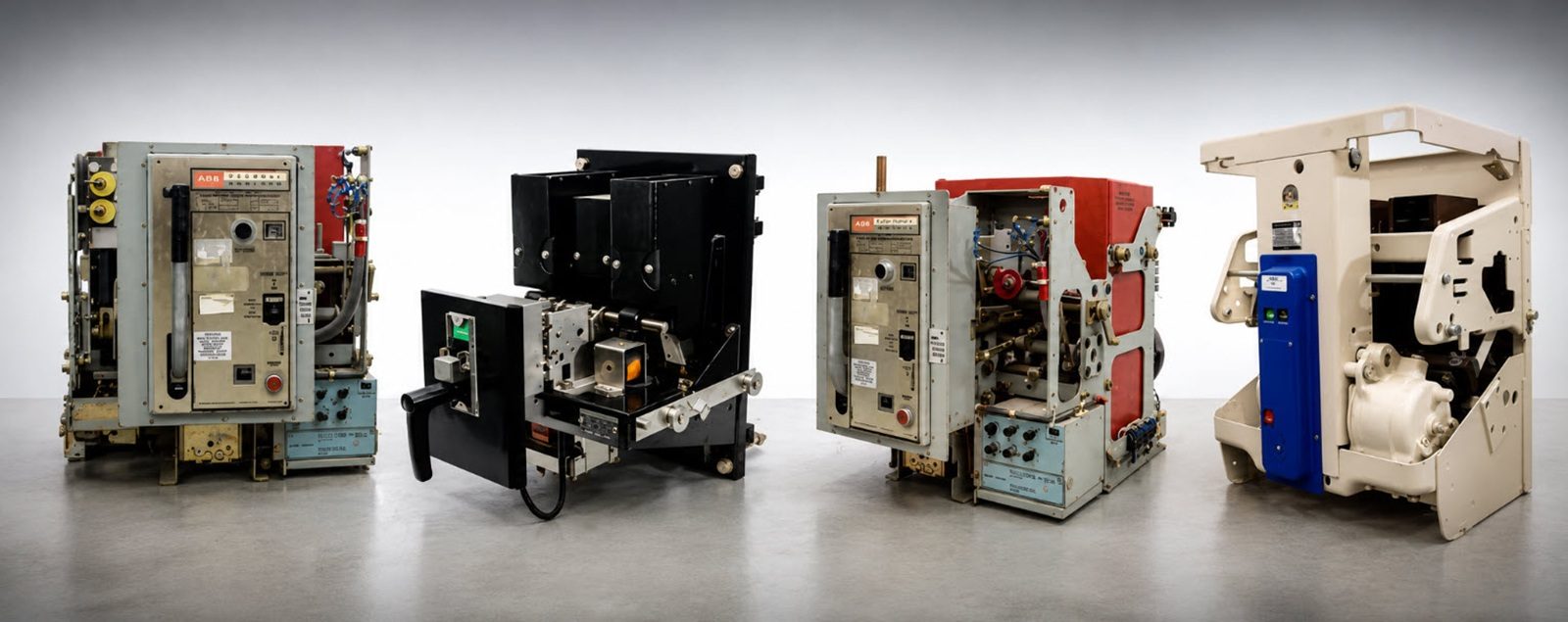
When should switchgear be modernized instead of replaced?
Switchgear is often a good candidate for modernization when the structure and bus system remain in good condition but breakers, relays, controls, or support components have become obsolete, difficult to maintain, or less reliable.
What is a circuit breaker retrofit?
A circuit breaker retrofit replaces the operating components of an existing breaker while preserving portions of the original switchgear infrastructure. Retrofits can improve reliability, maintainability, and protection performance while reducing replacement costs.
What is a circuit breaker retrofill?
A retrofill typically involves replacing an entire breaker assembly with a modern breaker specifically designed to fit within the existing switchgear structure. Retrofills often provide significant reliability and performance improvements while minimizing disruption to the facility.
How can arc flash hazards be reduced in existing equipment?
Arc flash hazards can often be reduced through modern trip units, digital relays, maintenance mode switches, zone-selective interlocking, differential protection schemes, protection coordination improvements, and other arc flash mitigation technologies.
How can aging electrical equipment be kept in service longer?
Equipment life can often be extended through preventative maintenance, refurbishment, breaker retrofits, relay upgrades, modernization projects, asset management programs, and reliability-focused maintenance strategies.
When does equipment become obsolete?
Equipment generally becomes obsolete when replacement parts, manufacturer support, technical expertise, or maintenance resources become difficult to obtain or when reliability risks become unacceptable.
Can modernization improve reliability?
Yes. Modernization projects frequently improve protection performance, reduce maintenance requirements, enhance diagnostics, improve safety, and reduce the likelihood of unexpected failures.

Additional Resources

The following organizations publish widely recognized standards, technical guidance, and industry best practices related to low-voltage power distribution equipment, switchboards, electrical safety, testing, engineering, and equipment design.


Maintenance and Reliability Services

MAINTENANCE AND RELIABILITY

Electrical maintenance and reliability services designed to reduce unplanned downtime, extend equipment life, improve safety, and support the long-term performance of critical power distribution infrastructure.


Coastal Power Systems provides electrical maintenance and reliability services that help industrial and commercial facilities improve equipment performance, reduce unplanned downtime, extend asset life, and enhance electrical system safety. Our capabilities include preventive maintenance, circuit breaker repair and restoration, switchgear and motor control center maintenance, infrared thermography, electrical testing, equipment cleaning, troubleshooting, and long-term asset management for both current and obsolete electrical systems.

By combining field services with in-house engineering, manufacturing, repair, restoration, modernization, and testing capabilities, CPS offers a comprehensive approach to maintaining critical power distribution infrastructure. We evaluate equipment condition, identify developing problems, recommend practical solutions, and perform the maintenance, repairs, upgrades, and testing needed to keep electrical systems operating safely and reliably.

Whether supporting a data center, utility, power generation facility, petrochemical plant, manufacturing operation, water and wastewater facility, or other critical infrastructure, Coastal Power Systems delivers maintenance and reliability solutions focused on improving uptime, reducing operational risk, and maximizing the long-term value of your electrical assets.


Our Maintenance and Reliability Services

CPS supports electrical equipment throughout its operating life with preventive maintenance, condition assessments, field troubleshooting, shop repair, restoration, testing, cleaning, and lifecycle planning. Services can be provided individually or combined into a maintenance program based on your equipment, operating environment, outage schedule, and reliability requirements.


Protecting the Reliability of Existing Electrical Equipment

Electrical equipment rarely fails without warning. Loose connections can generate excess heat. Insulation can deteriorate because of age, moisture, contamination, or repeated thermal stress. Circuit breaker mechanisms can become difficult to operate as lubrication hardens and mechanical components wear. Contacts, arc chutes, coils, wiring, relays, and control devices can also deteriorate gradually while the equipment remains in service.

A structured maintenance program helps identify these conditions before they develop into equipment damage or an unplanned outage. The right program does not treat every asset the same. Maintenance activities should reflect the type of equipment, operating environment, service history, criticality, loading, available redundancy, and consequences of failure.

CPS combines equipment knowledge, field experience, testing capabilities, repair services, and manufacturing support to help you make practical decisions about aging electrical infrastructure. Depending on equipment condition and operational requirements, the appropriate solution may involve routine maintenance, component repair, complete restoration, modernization, or planned replacement.

Preventive and Condition-Based Maintenance

Preventive maintenance addresses known service requirements before deterioration affects equipment operation. Typical activities may include visual inspections, cleaning, lubrication, mechanical adjustments, torque verification, breaker exercise, contact evaluation, control wiring inspection, and functional testing.

Condition-based maintenance uses inspection and test results to determine where attention is most urgently needed. Infrared thermography, insulation testing, breaker testing, relay evaluation, operating history, and visual evidence of contamination or deterioration can help identify equipment requiring additional investigation.

Combining scheduled maintenance with condition-based information gives you a more useful picture of system health than relying on calendar intervals alone. It also helps you prioritize limited maintenance budgets and plan work during scheduled outages rather than responding after a failure.

Circuit Breaker Maintenance, Repair, and Restoration

Coastal Power Systems supports molded-case, insulated-case, low-voltage air, medium-voltage air, and vacuum circuit breakers from major current and legacy manufacturers. Services range from routine maintenance and troubleshooting to shop repair and complete circuit breaker restoration (see more info on our Circuit Breaker Repairs page).

Circuit Breaker Maintenance

Breaker maintenance may include inspection, cleaning, lubrication, mechanical adjustments, contact evaluation, accessory testing, trip unit evaluation, functional checks, and electrical testing appropriate for the breaker type and application.

Circuit Breaker Repair

When a breaker develops an operating problem, CPS can evaluate the equipment, identify damaged or worn components, provide repair recommendations, replace necessary parts, reassemble the breaker, and verify operation through functional and electrical testing.

Full Breaker Restoration

Complete restoration is intended for breakers requiring more than a limited repair. The process may include complete disassembly, cleaning, component evaluation, metal finishing, replacement of worn hardware, contact restoration, reassembly, adjustment, and final testing.

Testing and Documentation

Testing is selected according to the equipment and work performed. Services may include functional testing, primary injection testing, secondary injection testing, insulation testing, high-potential testing, vacuum bottle integrity testing, and documented test results.

Full Circuit Breaker Restoration Process

When a circuit breaker remains a suitable candidate for continued service but has significant mechanical deterioration, corrosion, contamination, or component wear, restoration may provide a practical alternative to immediate replacement. CPS evaluates the equipment before recommending restoration because not every breaker should be returned to service.

A full restoration project may include:

  • Complete disassembly to expose mechanical, electrical, and current-carrying components
  • Inspection of operating mechanisms, contacts, arc-control components, insulation, wiring, coils, and accessories
  • Cleaning and removal of contamination, hardened lubricant, corrosion, and accumulated debris
  • Powder coating of appropriate painted metal components
  • Metal plating of appropriate mechanical and conductive components
  • Replacement of worn, damaged, or unsuitable hardware
  • Replacement or repair of contacts, insulation, wiring, coils, and operating components as required
  • Reassembly using correct alignment, adjustment, and torque procedures
  • Mechanical operation and functional testing
  • Electrical testing appropriate for the breaker type and application
  • Final inspection and test documentation

Restoration should not be confused with cosmetic refinishing. The purpose is to return suitable equipment to dependable operating condition by addressing mechanical, electrical, and structural deficiencies throughout the breaker.

Switchgear and Switchboard Maintenance

Switchgear and switchboard maintenance requires more than servicing the individual circuit breakers. The complete assembly should be evaluated for contamination, loose or overheated connections, insulation deterioration, damaged barriers, control wiring issues, mechanical interlocks, grounding problems, moisture intrusion, and evidence of abnormal operation.

CPS can support planned maintenance outages with equipment inspection, cleaning, breaker maintenance, control troubleshooting, device installation, testing, and repair recommendations. Findings can be documented so you can separate immediate corrective actions from work that should be incorporated into future maintenance or modernization plans.

Maintenance services may include:

  • Visual and mechanical inspection
  • Interior and exterior equipment cleaning
  • Bus, connection, and insulation evaluation
  • Circuit breaker inspection and maintenance
  • Control wiring and accessory inspection
  • Mechanical and electrical interlock checks
  • Protective relay and control component evaluation
  • Infrared inspection of energized equipment when appropriate
  • Electrical testing based on equipment condition and maintenance scope
  • Identification of repair, upgrade, or replacement priorities

Motor Control Center Maintenance and Refurbishment

Motor control centers often remain in service for decades while individual buckets, starters, contactors, overload devices, wiring, and control components are repaired or replaced over time. This can create a mixture of current and obsolete equipment within the same lineup. CPS supports low- and medium-voltage motor control centers with field maintenance, bucket repair, shop refurbishment, component replacement, and modernization options.

MCC Field Maintenance

Field services may include inspection, cleaning, troubleshooting, starter and contactor evaluation, bucket maintenance, control testing, connection checks, and recommendations for repair or modernization.

MCC Bucket Repair

CPS can repair individual MCC buckets and replace worn or failed components, including contactors, starters, overload devices, control transformers, pilot devices, wiring, disconnect components, and mechanical hardware.

MCC Refurbishment

More extensive refurbishment may include disassembly, cleaning, metal finishing, new wire and cable, replacement hardware, repair or fabrication of panels and doors, insulation work, component upgrades, reassembly, and testing.

MCC Modernization Options

When existing components are obsolete or difficult to support, CPS can evaluate replacement starters, solid-state overload protection, retrofit buckets, controls, and other upgrades that preserve the usable portions of the lineup.

Field Maintenance and Troubleshooting

CPS field technicians support electrical maintenance and reliability work at industrial plants, utilities, power generation facilities, oil and gas operations, petrochemical facilities, data centers, transportation systems, water and wastewater facilities, and other critical infrastructure sites.

Because the same equipment families may also be evaluated and repaired in CPS shop facilities, field teams can draw on practical equipment knowledge when diagnosing mechanical, electrical, and control problems. Field service scopes may include:

  • On-site equipment surveys and condition assessments
  • Circuit breaker and switchgear maintenance
  • Motor control center maintenance
  • Electrical troubleshooting and limited field repairs
  • Control component and accessory troubleshooting
  • Protective relay testing and evaluation
  • Primary and secondary injection testing
  • Medium-voltage insulation and vacuum bottle integrity testing
  • Retrofit and retrofill installation support
  • Trip unit and accessory installation
  • Planned inspection and maintenance programs

Startup and acceptance testing for newly installed systems should remain within the CPS Testing & Commissioning silo. Testing performed to evaluate the condition of existing equipment or verify maintenance work belongs within Maintenance & Reliability. Keeping that distinction clear will make the website easier for customers to understand.

Electrical Equipment Cleaning

Dust, dirt, metallic particles, oil residue, moisture, and process contamination can reduce insulation performance, interfere with mechanical operation, restrict ventilation, and make equipment condition more difficult to evaluate. Cleaning is therefore an important part of many electrical maintenance programs.

Cleaning methods must be selected according to equipment type, contamination, insulation materials, and site conditions. The goal is not simply to improve appearance. Proper cleaning helps technicians inspect the equipment, identify deterioration, restore mechanical movement, and reduce the risk associated with conductive or moisture-retaining contamination.

Depending on equipment condition, cleaning may be combined with inspection, lubrication, torque verification, breaker maintenance, insulation testing, control checks, and repair recommendations.

Infrared Thermography and Condition Monitoring

Infrared thermography can identify abnormal heat patterns while electrical equipment is energized and carrying load. These patterns may indicate loose connections, overloaded components, phase imbalance, high-resistance joints, deteriorating contacts, ventilation problems, or other conditions that warrant investigation.

Thermal findings should be evaluated within the context of equipment loading, ambient conditions, component type, and system design. An elevated temperature does not identify the cause by itself, but it provides valuable information for prioritizing inspections and corrective work.

Regular infrared surveys can be incorporated into a broader maintenance program so thermal trends can be compared over time and repairs can be verified during later inspections.

Electrical Asset Management and Lifecycle Planning

Maintenance decisions become more effective when you have accurate information about equipment age, condition, criticality, service history, replacement-part availability, and operational risk. Electrical asset management brings this information together so maintenance and capital projects can be prioritized logically.

CPS can help you evaluate whether aging equipment should be maintained, repaired, restored, modernized, or replaced. The decision may depend on:

  • Physical and electrical condition
  • Equipment criticality and available system redundancy
  • Failure history and maintenance requirements
  • Availability of breakers, parts, trip units, relays, and accessories
  • Ability to support the equipment during an emergency
  • Safety and protection limitations
  • Compatibility with planned system changes
  • Expected remaining service life
  • Cost and disruption associated with repair or replacement

This approach helps you avoid spending money on assets that should be replaced while also preventing unnecessary replacement of equipment that can continue to provide reliable service with appropriate maintenance or modernization.

Repair, Refurbishment, Modernization, or Replacement?

These terms describe different levels of work, and they should not be used interchangeably (see more info on our Circuit Breaker Repairs page).

Repair

Corrects a specific defect or operating problem by repairing or replacing the affected components.

Refurbishment or Restoration

Addresses the overall condition of the equipment through extensive disassembly, cleaning, component renewal, reassembly, and testing.

Modernization

Introduces current breakers, trip units, relays, controls, or other technology into an existing electrical system.

Replacement

Removes equipment that is no longer safe, practical, supportable, or economical to maintain and replaces it with new equipment.

CPS can help you compare these options based on equipment condition, risk, cost, outage limitations, and long-term operating requirements.

Why Coastal Power Systems?

Coastal Power Systems combines field maintenance, shop repair, equipment restoration, testing, engineering, manufacturing, modernization, and emergency response capabilities. This integrated approach allows you to work with one experienced organization throughout multiple stages of the equipment lifecycle rather than coordinating multiple service providers.

Field and Shop Capabilities

Equipment can be inspected, tested, and maintained on site or transferred to a CPS service facility for more extensive repair, restoration, fabrication, and testing.

Legacy Equipment Knowledge

CPS supports current, obsolete, and hard-to-find circuit breakers, switchgear, controls, and motor control center equipment from major manufacturers.

Testing and Documentation

Maintenance, repair, and restoration services can include functional and electrical testing supported by documented test results.

Practical Lifecycle Decisions

CPS helps determine when equipment should be maintained, repaired, restored, modernized, or replaced based on condition, application, and long-term reliability.

Integrated Modernization Support

CPS provides breaker retrofits, trip unit upgrades, control modifications, replacement equipment, and custom power distribution solutions.

Critical Infrastructure Experience

CPS supports facilities where electrical reliability, personnel safety, outage duration, and operational continuity are essential.


Explore Our Electrical Maintenance and Reliability Services

Learn more about the services CPS provides to maintain existing electrical equipment, identify developing problems, support repairs, and plan long-term equipment improvements.


Frequently Asked Questions
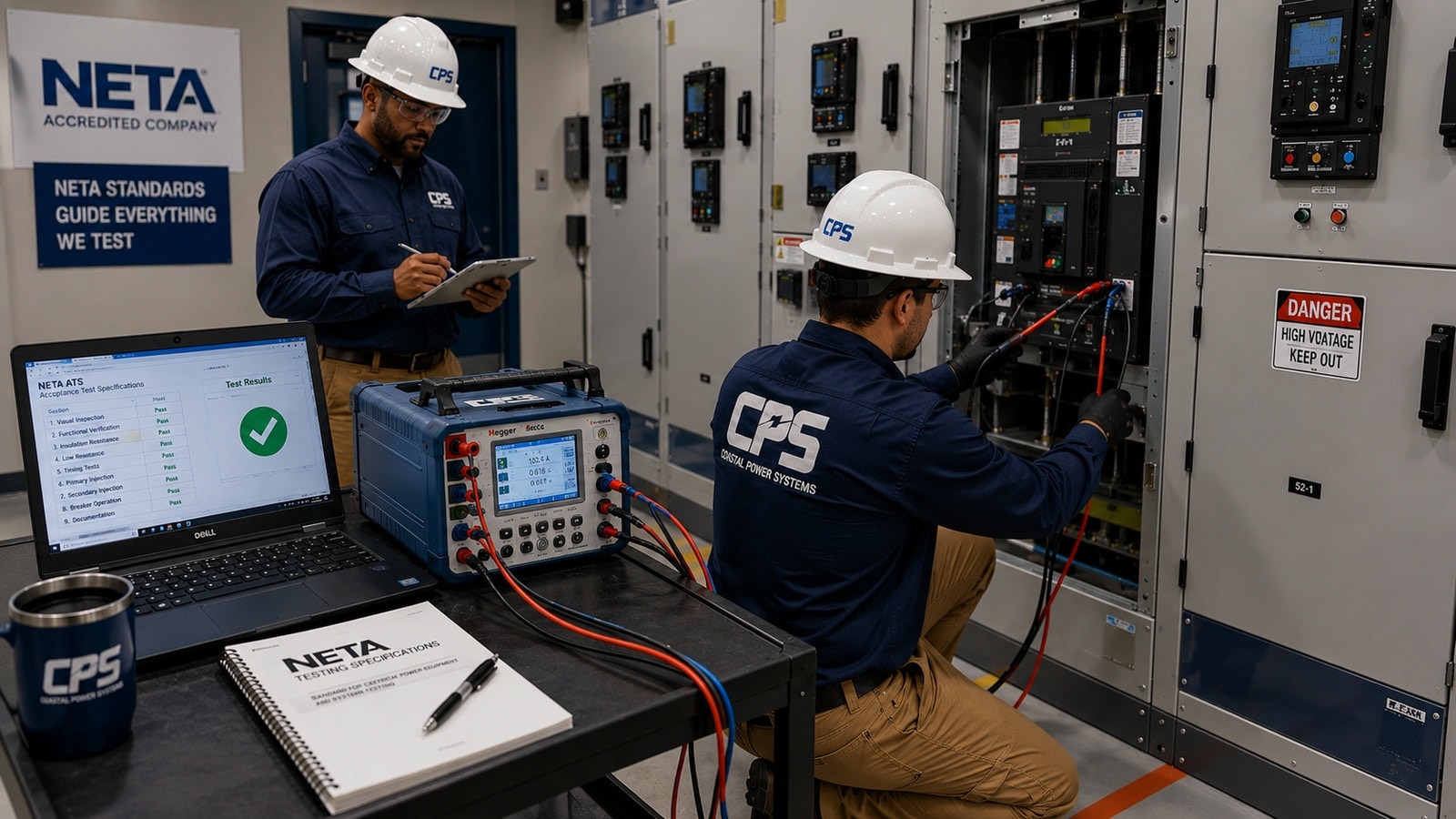
What does electrical preventive maintenance include?

Electrical preventive maintenance may include visual inspection, cleaning, lubrication, mechanical adjustments, torque verification, breaker maintenance, control checks, infrared thermography, functional testing, electrical testing, and equipment condition documentation. The appropriate scope depends on the equipment and operating environment.

How often should switchgear and circuit breakers be maintained?

Maintenance intervals depend on equipment type, age, operating environment, loading, service history, criticality, manufacturer recommendations, and previous inspection results. Equipment exposed to contamination, moisture, frequent operation, or severe duty may require more frequent attention.

What is the difference between circuit breaker repair and restoration?

Repair corrects a specific defect or failed component. Restoration is a more extensive process that may involve complete disassembly, cleaning, component renewal, metal finishing, reassembly, adjustment, and testing of the entire breaker.

Can obsolete circuit breakers and MCC components still be repaired?

Many obsolete breakers, MCC buckets, starters, contactors, and control components can be repaired or restored when suitable parts and materials are available. CPS can also evaluate retrofit or replacement options when continued repair is no longer practical.

What equipment can CPS maintain and repair?

CPS supports low- and medium-voltage circuit breakers, switchgear, switchboards, motor control centers, contactors, protective relays, control components, trip units, and related power distribution equipment from major current and legacy manufacturers.

Does CPS provide both field and shop repair services?

Yes. Some inspections, maintenance activities, troubleshooting, testing, and limited repairs can be completed on site. Equipment requiring extensive disassembly, restoration, fabrication, or controlled shop testing may be serviced at a CPS facility.

When should electrical equipment be refurbished instead of replaced?

Refurbishment may be appropriate when the equipment structure remains suitable, necessary components can be repaired or replaced, and the restored equipment can meet operational and safety requirements. Replacement may be preferable when condition, supportability, system limitations, or long-term risk make continued service impractical.

What problems can infrared thermography identify?

Infrared thermography can reveal abnormal heating associated with loose connections, overloaded components, phase imbalance, high-resistance joints, deteriorating contacts, ventilation problems, and other conditions requiring further investigation.

Can maintenance testing be performed during a planned outage?

Yes. Planned outages provide an opportunity to inspect, clean, maintain, test, and repair equipment under controlled conditions. The scope should be developed in advance so test equipment, replacement parts, technicians, and contingency plans are available when the outage begins.

How does asset management support electrical reliability?

Asset management organizes information about equipment condition, age, criticality, service history, supportability, and risk. This helps you prioritize maintenance, prepare for obsolete equipment, plan modernization projects, and direct capital spending toward the assets with the greatest operational impact.

Additional Information & Resources

The following organizations publish standards, recommended practices, and technical guidance related to electrical equipment maintenance, testing, safety, and power system reliability:


Testing & Commissioning

TESTING & COMMISSIONING

Electrical testing and commissioning services designed to verify equipment performance, identify potential issues before startup, improve system reliability, and reduce the risk of costly failures during operation.


Electrical Testing and Commissioning Services

Electrical systems are expected to perform reliably from the moment they are energized. Whether supporting a data center, utility substation, power generation facility, industrial manufacturing plant, petrochemical operation, or critical infrastructure project, owners expect equipment to operate safely and perform as designed. Unfortunately, many electrical failures occur during startup or shortly after commissioning because problems were not identified before the equipment was placed into service.

Manufacturing defects, installation errors, wiring mistakes, relay configuration issues, damaged components, improper settings, and transportation-related damage can all affect equipment performance. Even equipment that passes factory testing may develop issues during shipping, installation, or integration with the larger electrical system. Testing and commissioning services help identify these problems before they become operational failures.

Coastal Power Systems (CPS) provides comprehensive electrical testing and commissioning services for industrial facilities, utilities, data centers, power generation facilities, oil and gas operations, petrochemical plants, municipalities, and critical infrastructure operators. By combining testing expertise with engineering studies, equipment manufacturing, modernization services, maintenance programs, and lifecycle support, CPS helps customers improve reliability while reducing operational risk.

Why Electrical Testing and Commissioning Matter

Electrical equipment does not become reliable simply because it has been installed. Every component must be inspected, tested, configured, and verified before energization. A protection relay may be programmed incorrectly. A breaker may not operate within required tolerances. Current transformer wiring may be reversed. Protection settings may not match the coordination study. Any of these issues can compromise reliability, safety, or equipment performance.

Testing and commissioning provide the final verification that the electrical system will operate as intended. The process confirms equipment condition, validates protection system operation, verifies control sequences, and identifies potential issues before they affect facility operations.

For critical facilities where downtime carries significant consequences, testing and commissioning should be viewed as reliability investments rather than project expenses.

Testing Throughout the Equipment Lifecycle

While testing is often associated with new construction projects, it remains valuable throughout the life of an electrical system. Equipment modifications, facility expansions, modernization projects, maintenance activities, relay upgrades, breaker replacements, and protection system changes all create opportunities for new issues to develop.

Periodic testing helps verify that equipment continues to perform as expected and that protection systems remain properly configured. Testing also supports predictive maintenance strategies by identifying degradation before failures occur.

Facilities that incorporate regular testing into their maintenance programs often experience fewer unexpected outages and lower lifecycle operating costs.

Commissioning Is More Than Equipment Startup

Many people associate commissioning with the final stage of a construction project. While startup is certainly part of the process, effective commissioning begins much earlier. Equipment reviews, design verification, protection setting validation, testing procedures, communication checks, and operational sequence reviews all contribute to successful commissioning outcomes.

The objective is not simply to energize the equipment. The objective is to verify that the entire electrical system functions safely and reliably under both normal and abnormal operating conditions. This includes evaluating how protection systems respond to faults, how transfer schemes operate, and how operators interact with the system.

A comprehensive commissioning process helps reduce startup issues while improving long-term reliability.

Supporting Critical Power Infrastructure

Data centers, utilities, power generation facilities, petrochemical plants, manufacturing operations, transportation systems, and water treatment facilities often have very little tolerance for electrical failures. Startup problems, protection system errors, and equipment malfunctions can create significant operational and financial consequences.

Testing and commissioning services help reduce these risks by providing independent verification that systems perform as intended before they are placed into service. This verification becomes increasingly important as electrical systems become more complex and interconnected.

CPS supports critical infrastructure projects by helping owners, EPC firms, engineers, and operators validate system performance before energization and throughout the operational lifecycle.

Electrical Testing and Commissioning Services for EPC Firms

EPC contractors and consulting engineers face significant pressure to deliver projects on schedule while meeting technical specifications and performance requirements. Testing and commissioning activities often represent the final opportunity to identify and correct issues before project turnover.

Working with a qualified testing and commissioning partner helps reduce project risk while improving startup outcomes. Testing validates equipment performance. Commissioning confirms system functionality. Together, these activities support a smoother transition from construction to operations.

CPS works closely with EPC firms and project stakeholders to help ensure that electrical systems are ready for safe and reliable operation.

Connecting Engineering, Testing, and Operations

Engineering studies establish how a system should perform. Testing verifies that equipment meets those expectations. Commissioning confirms that the complete system operates correctly under real-world conditions. These activities are most effective when viewed as interconnected parts of a larger reliability strategy.

Protection coordination studies, arc flash studies, short circuit studies, relay testing, breaker testing, commissioning activities, and startup support all contribute to overall system performance. When these services are coordinated effectively, facilities gain greater confidence in both equipment condition and operational readiness.

This integrated approach helps improve reliability while reducing startup and operational risk.

Why CPS?

Coastal Power Systems combines electrical testing and commissioning expertise with engineering studies, equipment manufacturing, modernization services, maintenance programs, emergency response capabilities, and lifecycle support. This allows testing and commissioning activities to be performed within the broader context of overall power system performance.

CPS understands that successful testing involves more than generating reports. The ultimate objective is ensuring that electrical systems operate safely, reliably, and efficiently throughout their service life. By combining engineering knowledge with practical field experience, CPS helps customers identify issues, implement corrective actions, and improve long-term reliability.

Whether supporting new construction, facility expansions, modernization projects, or maintenance programs, CPS provides testing and commissioning services focused on reducing risk and improving operational performance.

Custom Power Distribution Manufacturing

Manufacturing experience helps CPS understand how equipment is built, configured, tested, and prepared for reliable field operation.

Critical Infrastructure Expertise

Testing and commissioning services for data centers, utilities, power generation, industrial facilities, and other mission-critical electrical systems.

Engineering, Testing & Commissioning Support

Integrated engineering, field testing, commissioning, troubleshooting, and startup support for complex electrical power systems.

Protection & Control System Integration

Support for protective relays, control circuits, device settings, functional testing, and system verification before energization.

Reliability & Lifecycle Management Focus

Testing recommendations that help improve reliability, document equipment condition, reduce operational risk, and support long-term asset planning.

Modernization & Equipment Life Extension Solutions

Testing and commissioning support for equipment upgrades, retrofits, replacements, and modernization projects involving existing electrical infrastructure.

24/7 Emergency Response & Field Services

Rapid field response, troubleshooting, emergency repairs, and restoration support when reliable power cannot wait.

Explore Our Electrical Testing & Commissioning Services

Whether you are preparing to energize new equipment, modernizing existing infrastructure, validating protection systems, or improving reliability, CPS can help ensure your electrical systems perform as intended. Contact us to discuss your testing and commissioning requirements and learn how comprehensive system verification can improve reliability, reduce risk, and support successful project outcomes.


Frequently Asked Questions
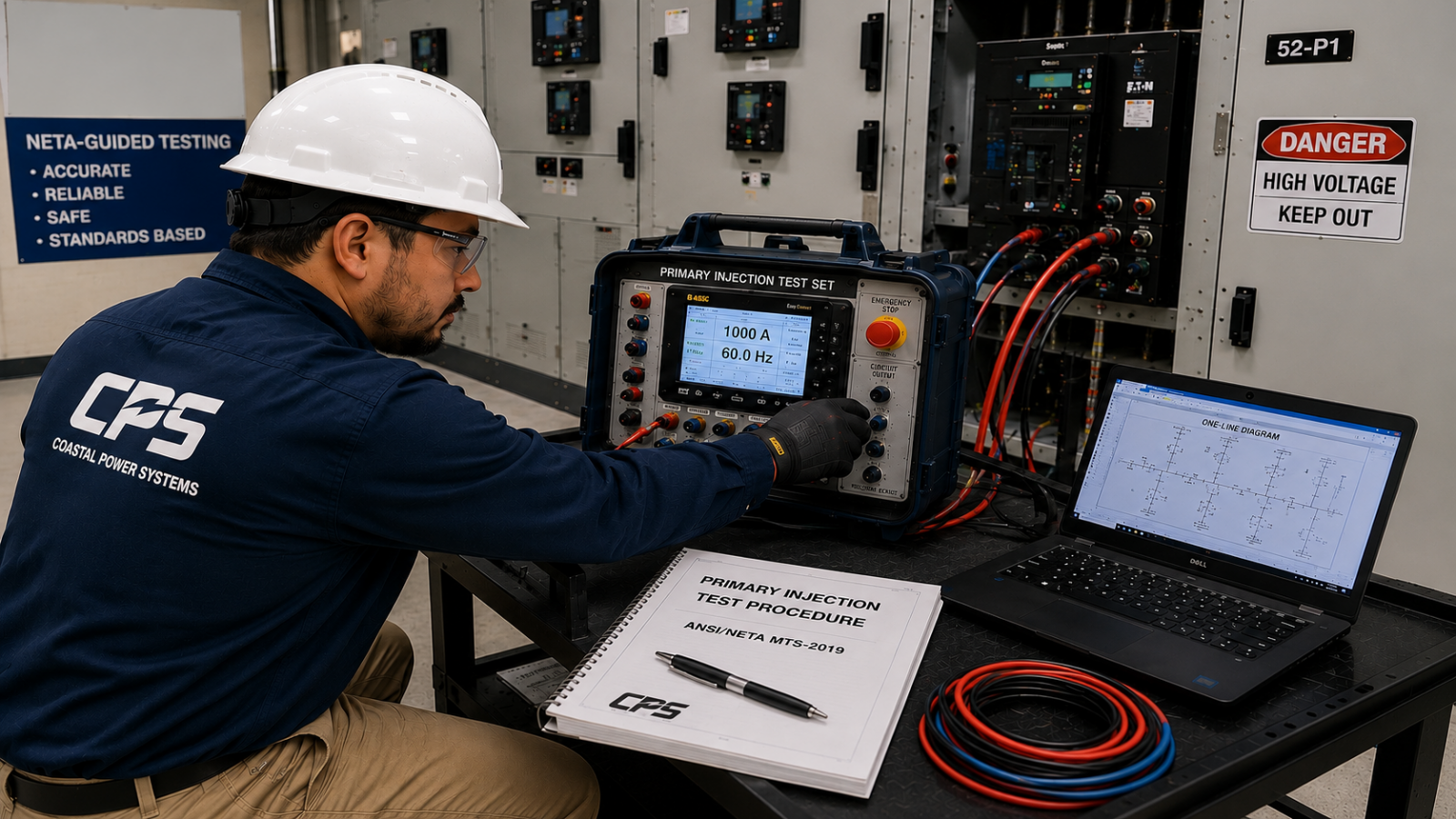
What is NETA testing?
NETA testing refers to electrical acceptance and maintenance testing performed in accordance with standards developed by the InterNational Electrical Testing Association (NETA). These standards establish procedures for evaluating equipment condition, verifying installation quality, and confirming operational performance.
When should electrical equipment be commissioned?
Electrical equipment should be commissioned before initial energization and after significant modifications, upgrades, or system changes. Commissioning verifies that equipment and systems perform as intended before being placed into service.
How often should protective relays be tested?
Testing frequency depends on equipment criticality, operating environment, utility requirements, maintenance strategies, and industry standards. Many facilities perform relay testing as part of scheduled preventive maintenance programs or following major system modifications.
What is the difference between primary injection testing and secondary injection testing?
Primary injection testing verifies the complete protection system by applying actual current through the primary equipment and associated protection devices. Secondary injection testing evaluates relay operation and protection settings by injecting signals directly into the relay without energizing primary equipment.
What electrical tests should be performed before energizing new equipment?
Typical pre-energization testing may include insulation resistance testing, breaker testing, relay testing, control circuit verification, wiring checks, transformer testing, protective device testing, grounding verification, and functional commissioning activities. Specific testing requirements depend on equipment type and application.
Why is commissioning important for electrical reliability?
Commissioning helps identify installation issues, configuration errors, protection system problems, and operational concerns before they result in equipment damage, outages, or safety incidents.
Can testing help reduce unexpected outages?
Yes. Testing can identify developing equipment problems, protection system issues, and installation defects before they affect operations, helping facilities improve reliability and reduce downtime.

Additional Resources

The following organizations publish widely recognized standards, technical guidance, and industry best practices related to low-voltage power distribution equipment, switchboards, electrical safety, testing, engineering, and equipment design.


Manufacturing

MANUFACTURING

Switchgear manufacturer including UL 1558 switchgear, UL 891 switchboards, UL 67 panelboards, and integrated power distribution solutions supported by engineering, testing, commissioning, modernization, maintenance, and field services.


Switchgear Manufacturer and Full-Service Power Systems Partner

Coastal Power Systems is a custom switchgear manufacturer (with over 30 years experience) specializing in UL 1558 switchgear, UL 891 switchboards, and UL 67 panelboards for industrial facilities, utilities, data centers, power generation plants, petrochemical operations, and critical infrastructure projects.

Manufacturing switchgear is at the core of what CPS does, however, equipment manufacturing is only one part of a successful electrical power project. EPC firms, consulting engineers, facility owners, contractors, distributors, and procurement teams increasingly need a manufacturing partner (like CPS) that can also support equipment design, system studies, protection and control integration, factory testing, commissioning, maintenance, modernization, and long-term field service.

CPS combines switchgear manufacturing expertise with comprehensive electrical engineering and lifecycle support. This integrated approach helps customers reduce coordination between vendors, address technical issues earlier, improve project accountability, and obtain long-term support from a company that understands how the equipment was designed and built.


Our Switchgear Manufacturer Capabilities


Low-Voltage Switchgear Built for Critical Power Applications

Low-voltage switchgear controls, protects, and distributes electrical power within facilities where equipment reliability, personnel safety, maintainability, and continuity of operations are essential. CPS manufactures custom switchgear for applications requiring power circuit breakers, advanced protective relaying, metering, communications, control systems, selective coordination, and high short-circuit withstand capability.

Unlike standard catalog equipment, custom low-voltage switchgear can be configured around project-specific electrical requirements, available floor space, utility requirements, cable-entry limitations, breaker arrangements, bus ratings, future expansion needs, protection schemes, custom enclosure colors, and operating procedures.

As a switchgear manufacturer with engineering and field-service capabilities, CPS evaluates equipment requirements within the broader context of the electrical system. This helps ensure the finished equipment supports the project’s protection objectives, operational requirements, maintenance strategy, and long-term reliability goals.

UL 1558 Switchgear Manufacturer

UL 1558 Switchgear | Coastal Power Systems
#image_title

UL 1558 switchgear is commonly specified for low-voltage power distribution systems requiring draw-out power circuit breakers, compartmentalized construction, advanced protection, higher fault-current capability, and maintainable equipment configurations.

CPS manufactures UL 1558 switchgear for data centers, power generation facilities, utilities, industrial plants, petrochemical operations, water and wastewater facilities, transportation infrastructure, and other critical applications. Equipment can be engineered to support main-tie-main arrangements, multiple mains, generator paralleling interfaces, automatic transfer schemes, protective relays, metering, communications, control power, and future expansion.

Project requirements vary widely. CPS works with engineers, EPC contractors, facility owners, and procurement teams to evaluate one-line diagrams, equipment specifications, available space, system ratings, protective-device requirements, breaker arrangements, control logic, communications protocols, and testing expectations before manufacturing begins.

This collaborative process helps identify design conflicts early and reduces the risk of costly changes during installation or commissioning.


UL 891 Switchboard and UL 67 Panelboard Manufacturer

UL 891 Switchboard Mains (with ABB)
#image_title

CPS also manufactures UL 891 switchboards and UL 67 panelboards for applications that do not require the construction or power circuit breaker configurations associated with UL 1558 switchgear.

UL 891 switchboards are commonly used for service entrance, main distribution, feeder distribution, and secondary power distribution applications. They may incorporate molded-case or insulated-case circuit breakers, metering, surge protection, control systems, and application-specific bus arrangements.

UL 67 panelboards are used for branch-circuit and distribution applications requiring compact, organized, and accessible circuit protection. Custom panelboard configurations can help address unusual voltage requirements, circuit arrangements, space limitations, enclosure needs, and project-specific labeling or documentation requirements.

By manufacturing multiple categories of power distribution equipment, CPS can help customers select the appropriate equipment type for each part of the electrical system instead of attempting to force every application into a single standardized solution.

Why Selecting the Right Switchgear Manufacturer Matters

Switchgear and electrical power distribution equipment often remain in service for decades. Decisions made during engineering and procurement can affect equipment reliability, personnel safety, maintenance costs, outage duration, spare-parts availability, modernization flexibility, and future expansion throughout the equipment lifecycle.

Initial purchase price is important, but it should not be the only consideration. Equipment accessibility, breaker interchangeability, protection capabilities, communications integration, bus configuration, cable access, documentation quality, testing requirements, and future modification options can have a much greater effect on long-term ownership costs.

The right switchgear manufacturer should understand both the equipment and the electrical system in which it will operate. That includes fault-current requirements, protective-device coordination, arc-flash considerations, grounding, control power, operational sequences, maintenance access, commissioning requirements, and long-term modernization needs.

CPS approaches switchgear manufacturing as part of a complete power-system strategy rather than as an isolated fabrication process.

Custom Switchgear Versus Standard Catalog Equipment

Two large gray industrial electrical enclosures on wooden pallets in a warehouse; the nearer unit features a control panel on its side.
#image_title

Standard catalog equipment may be appropriate when project requirements are straightforward and available configurations closely match the intended application. However, industrial facilities, utility systems, data centers, power plants, and retrofit projects frequently involve conditions that standard equipment cannot address efficiently.

Existing facilities may have limited floor space, unusual cable-entry locations, restricted access, existing bus or conduit arrangements, utility-specific requirements, obsolete equipment interfaces, or outage constraints. New facilities may require specialized protection schemes, communications integration, redundant power paths, generator controls, selective coordination, or planned future expansion.

Custom switchgear allows these requirements to be addressed during equipment design instead of through extensive field modifications after shipment. This can simplify installation, reduce project risk, improve maintainability, and provide a more practical foundation for future expansion or modernization.

CPS can also evaluate custom equipment within the context of existing electrical infrastructure, helping customers identify where new switchgear must interface with older equipment, protection systems, controls, and facility operating procedures.

A Full-Service Switchgear Manufacturer for EPC Projects

Electrical engineers reviewing a protective device coordination study for custom switchgear

EPC firms often manage competing priorities involving technical requirements, equipment cost, project schedule, vendor coordination, constructability, testing, documentation, and customer expectations. Switchgear can affect nearly every phase of project execution, from engineering and procurement through installation, energization, and final acceptance.

CPS supports EPC firms and consulting engineers through equipment application assistance, specification review, system studies, equipment design, protection and control integration, factory testing, commissioning support, and field service.

Working with a full-service switchgear manufacturer gives project teams a single technical resource capable of addressing issues that cross the boundaries between equipment manufacturing, system engineering, protection, controls, testing, and field implementation.

This integrated approach can help reduce communication gaps, identify interface issues earlier, simplify technical coordination, and improve accountability throughout the project.

Engineering Support for Switchgear Projects

Switchgear performance depends on the electrical system surrounding it. Equipment ratings, breaker selection, protective relay settings, control schemes, grounding, available fault current, selective coordination, and arc-flash performance must be evaluated together.

CPS engineering capabilities allow switchgear decisions to be supported by system-level analysis. Depending on project requirements, CPS can assist with short-circuit studies, protective-device coordination studies, arc-flash studies, load-flow analysis, equipment application, protection and control design, one-line diagram review, and modernization planning.

This engineering perspective is especially valuable for complex industrial projects, existing facilities, utility interconnections, generator applications, and systems where new equipment must coordinate with aging infrastructure.

Factory Testing and Quality Verification

Factory testing verifies that manufactured equipment conforms to approved drawings, project specifications, control requirements, and applicable production procedures before shipment.

Testing activities may include visual and mechanical inspection, wiring verification, control-function testing, breaker operation, protective-relay checks, metering verification, insulation-resistance testing, control-power verification, interlock checks, and other project-specific tests.

For complex equipment, factory acceptance testing can also provide customers, engineers, and EPC representatives with an opportunity to review the completed equipment, verify functional requirements, and resolve issues before the switchgear arrives at the project site.

Resolving technical issues during factory testing is generally more efficient than discovering them during installation or energization.

Commissioning, Maintenance, and Lifecycle Support

UL 1558 Switchgear Feeder Stack
#image_title

Manufacturing is only the beginning of the equipment lifecycle. Long-term performance also depends on proper installation, commissioning, maintenance, troubleshooting, modernization, and future system changes.

Unlike manufacturers that focus only on equipment production, CPS can continue supporting the electrical system after shipment. Services include engineering studies, NETA-guided testing, commissioning, preventive maintenance, troubleshooting, breaker services, protection and control upgrades, switchgear modernization, emergency response, and asset-management support.

Because CPS understands how power distribution equipment is designed, manufactured, tested, installed, and maintained, customers can obtain support from a partner that sees the entire lifecycle rather than only one phase of it.

This lifecycle perspective is particularly valuable for facilities where outages carry substantial operational, safety, production, or financial consequences.

Industries Served

CPS manufactures switchgear, switchboards, panelboards, and custom electrical power distribution equipment for organizations with demanding reliability, safety, and operational requirements. Equipment designs are developed around the electrical characteristics, operating conditions, maintenance practices, and project constraints of each application.

  • Data Centers
  • Power Generation Facilities
  • Electric Utilities
  • Oil and Gas Operations
  • Petrochemical and Chemical Facilities
  • Industrial Manufacturing Plants
  • Water and Wastewater Facilities
  • Mining Operations
  • Transportation Infrastructure
  • Municipal and Government Facilities
  • Large Commercial Facilities
  • Other Critical Infrastructure Operations

Visit our Industries Served page to learn more about the applications CPS supports.


Why Coastal Power Systems?

Coastal Power Systems is a switchgear manufacturer with the engineering, testing, commissioning, maintenance, modernization, and emergency-response capabilities required to support critical electrical infrastructure throughout its lifecycle.

This integrated approach allows equipment decisions to be evaluated within the broader context of power-system performance, project execution, maintainability, reliability, safety, and long-term asset value.

Whether CPS is supporting a new EPC project, a facility expansion, replacement of aging switchgear, a utility application, or a complex modernization initiative, the objective remains the same: provide equipment and technical support aligned with real-world operational requirements.

Switchgear Manufacturing Expertise

Custom UL 1558 switchgear, UL 891 switchboards, UL 67 panelboards, bus systems, enclosures, and application-specific power distribution equipment.

Engineering Integration

Equipment application, system studies, protection and control design, specification review, and engineering support coordinated with the manufacturing process.

EPC Project Support

Technical collaboration, submittal support, design coordination, factory testing, documentation, commissioning assistance, and field execution.

Critical Power Focus

Solutions developed for facilities where electrical reliability, safety, maintainability, and continuity of operations are essential.

Custom Equipment Solutions

Equipment configurations designed around available space, system ratings, breaker arrangements, utility requirements, protection schemes, and future expansion.

Complete Lifecycle Support

NETA-guided testing, commissioning, maintenance, troubleshooting, modernization, breaker services, and emergency response after equipment delivery.


Review the Products We Manufacture

Explore CPS manufacturing capabilities, including custom low-voltage switchgear, switchboards, panelboards, protection and control systems, and power distribution equipment developed for industrial and critical power applications.

Our Manufacturing Partners

CPS works with established electrical equipment and component manufacturers to develop custom switchgear and power distribution solutions based on project specifications, equipment availability, system requirements, and customer preferences.

ABB electrical equipment partner logo GE electrical equipment partner logo Schneider Electric equipment partner logo Eaton electrical equipment partner logo Toshiba electrical equipment partner logo Siemens electrical equipment partner logo

Frequently Asked Questions
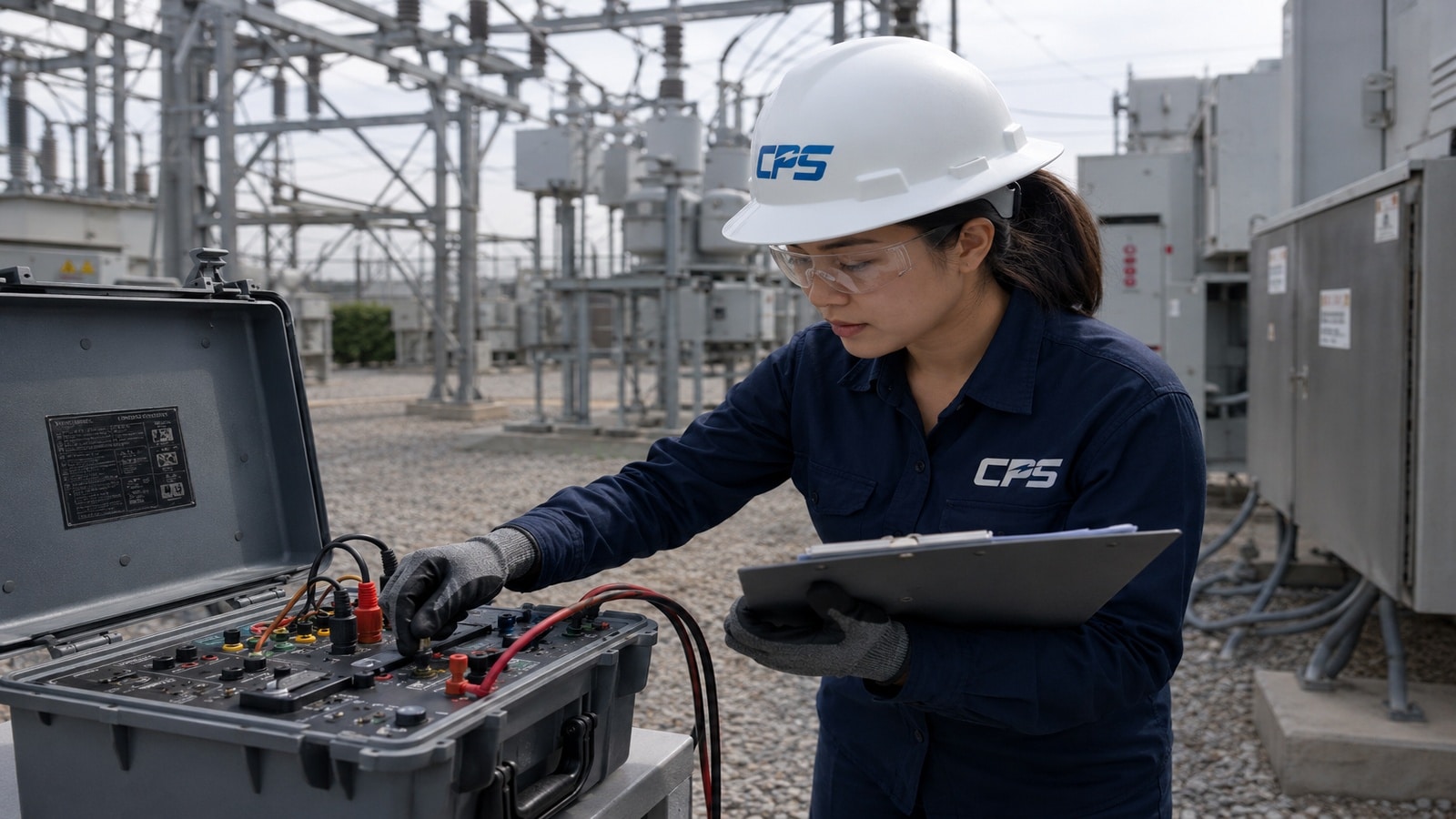
Who manufactures custom switchgear?
Coastal Power Systems is a custom switchgear manufacturer specializing in UL 1558 low-voltage switchgear, UL 891 switchboards, UL 67 panelboards, protection and control systems, and custom power distribution equipment for industrial, utility, power generation, data center, petrochemical, and critical infrastructure applications.
What does a switchgear manufacturer do?
A switchgear manufacturer designs, assembles, wires, integrates, and tests electrical equipment used to control, protect, and distribute power. A full-service switchgear manufacturer may also provide engineering studies, protection and control integration, factory acceptance testing, commissioning, maintenance, modernization, and field support.
What is UL 1558 switchgear?
UL 1558 switchgear is low-voltage metal-enclosed switchgear generally constructed with power circuit breakers and compartmentalized sections. It is commonly specified for applications requiring advanced protection, high short-circuit withstand capability, draw-out breakers, maintainability, and reliable operation in critical power systems.
What is the difference between UL 1558 switchgear and UL 891 switchboards?
UL 1558 switchgear generally uses power circuit breakers and compartmentalized construction for applications requiring advanced protection, maintainability, and higher short-circuit performance. UL 891 switchboards commonly use molded-case or insulated-case circuit breakers for service entrance, feeder, and secondary distribution applications.
Can low-voltage switchgear be custom engineered?
Yes. Low-voltage switchgear can be custom engineered around system voltage, current ratings, available fault current, breaker arrangements, protection requirements, communications, control schemes, cable-entry locations, available floor space, enclosure requirements, and future expansion plans.
What industries use low-voltage switchgear?
Low-voltage switchgear is used in data centers, utilities, power generation plants, oil and gas facilities, petrochemical operations, industrial manufacturing plants, water and wastewater facilities, transportation infrastructure, commercial facilities, and other operations requiring dependable electrical power distribution.
What testing is performed before switchgear is shipped?
Testing depends on the equipment and project requirements but may include visual and mechanical inspection, wiring verification, breaker operation, control-function testing, protective-relay checks, metering verification, insulation-resistance testing, interlock verification, and customer-witnessed factory acceptance testing.
How long does it take to manufacture custom switchgear?
Custom switchgear manufacturing lead times depend on project complexity, equipment ratings, breaker and component availability, engineering requirements, approval cycles, testing requirements, and production workload. Early engagement allows more time for engineering coordination, component procurement, approvals, and project scheduling.
Why work with a full-service switchgear manufacturer?
A full-service switchgear manufacturer can coordinate equipment design with engineering studies, protection and control requirements, factory testing, commissioning, maintenance, and modernization. This can reduce vendor coordination, identify interface issues earlier, improve accountability, and provide customers with one technical partner throughout the equipment lifecycle.
Can CPS support switchgear after installation?
Yes. CPS provides commissioning, NETA-guided testing, preventive maintenance, troubleshooting, breaker services, protection and control upgrades, modernization, engineering studies, emergency response, and other lifecycle services after equipment installation.


Discuss Your Switchgear Project

Whether you are planning a new facility, expanding an existing operation, replacing aging equipment, or developing a complex EPC project, Coastal Power Systems can help you evaluate and manufacture a power distribution solution aligned with your technical, operational, schedule, and lifecycle requirements.

Contact CPS to discuss custom switchgear, switchboards, panelboards, protection and control integration, engineering support, testing, commissioning, or long-term field services.

Contact Us


Additional Resources

The following organizations publish recognized standards, technical guidance, and industry practices related to switchgear, switchboards, panelboards, power distribution equipment, electrical safety, equipment testing, engineering, and system design.


Engineering and Design Services

ENGINEERING AND DESIGN

Engineering and design services to improve electrical system reliability, reduce operational risk, support compliance requirements, and help facilities make informed decisions about critical power infrastructure.


Engineering and Design Services for Electrical Power Systems

Engineering and design services are becoming more important because electrical power systems are becoming more complex. Facilities face increasing demands for reliability, safety, power quality, capacity expansion, and operational efficiency. At the same time, aging infrastructure, changing utility requirements, equipment modernization projects, and evolving safety standards create new challenges for facility owners, engineers, and operations teams. Making the right decisions requires more than equipment specifications and operating experience. It requires accurate engineering data and a clear understanding of how the electrical system will perform under real-world conditions.

Engineering studies provide the foundation for those decisions. Whether evaluating fault current levels, arc flash hazards, protection coordination, system reliability, expansion requirements, or modernization opportunities, engineering analysis helps organizations identify risks before they become costly operational problems.

Coastal Power Systems (CPS) provides electrical power system engineering and design services for industrial facilities, utilities, data centers, power generation companies, oil and gas operations, petrochemical facilities, municipalities, and critical infrastructure operators. By combining engineering expertise with manufacturing capabilities, testing services, commissioning support, maintenance programs, modernization solutions, and lifecycle asset management, CPS helps customers develop safer, more reliable, and more efficient electrical systems.


Our Engineering and Design Services


Why Engineering Studies Matter

Many electrical failures can be traced back to problems that could have been identified through proper engineering analysis. Protection devices may not be coordinated correctly. Available fault current may exceed equipment ratings. Arc flash hazards may expose workers to unnecessary risk. Facility expansions may overload portions of the distribution system. Without accurate system modeling and analysis, these issues often remain hidden until a failure occurs.

Engineering studies allow facility owners and engineers to evaluate system performance before problems develop. The results support safer operations, more effective maintenance planning, better capital investment decisions, and improved long-term reliability.

For organizations operating critical electrical infrastructure, engineering studies are often one of the highest-value investments available.

Supporting the Entire Electrical System Lifecycle

Engineering studies are valuable throughout the lifecycle of an electrical system. During new construction projects, studies help establish system design criteria and validate equipment selections. During facility expansions, engineering analysis confirms that existing infrastructure can safely support additional loads. During modernization projects, studies help determine whether equipment upgrades will improve reliability and reduce operational risk.

Even facilities with mature electrical systems benefit from periodic engineering reviews. Utility changes, equipment additions, protection system modifications, and load growth can all affect system performance over time. Regular engineering evaluations help ensure that the electrical system continues operating as intended.

This lifecycle approach helps facilities avoid costly surprises while supporting long-term operational objectives.

Engineering Support for Critical Facilities

Data centers, utilities, power generation facilities, petrochemical plants, manufacturing operations, water treatment facilities, and transportation systems often operate with very little tolerance for electrical failures. A single outage can affect production, public services, customer commitments, regulatory compliance, and financial performance.

These facilities require more than basic electrical design. They need engineering support that considers reliability, redundancy, maintainability, fault protection, arc flash exposure, and future expansion requirements. Engineering studies help organizations understand how the system will perform under both normal and abnormal operating conditions.

CPS works with facility owners, consulting engineers, EPC firms, and operations teams to develop engineering solutions that support long-term reliability and operational performance.

Power System Engineering Services for EPC Firms and Consulting Engineers

EPC contractors and consulting engineers often face demanding project schedules, evolving client requirements, and increasingly complex electrical systems. Engineering studies provide critical information that supports equipment selection, project planning, protection system design, commissioning activities, and long-term operational performance.

Working with a partner that understands both engineering analysis and real-world electrical infrastructure can help reduce project risk. Because CPS also manufactures equipment, performs testing, supports commissioning activities, and provides modernization services, engineering recommendations are grounded in practical implementation experience.

This integrated perspective helps ensure that engineering solutions remain practical, cost-effective, and aligned with project objectives.

Engineering Studies as a Reliability Strategy

Many organizations view engineering studies as compliance requirements or project deliverables. In reality, they are reliability tools. A coordination study helps reduce unnecessary outages. A short circuit study helps ensure equipment ratings remain adequate. An arc flash study helps protect personnel. A reliability assessment helps identify vulnerabilities before failures occur.

When combined, these studies provide a comprehensive understanding of system performance and risk. Facility owners can prioritize investments, improve maintenance strategies, support modernization initiatives, and make more informed operational decisions.

For facilities focused on long-term reliability, engineering studies should be viewed as an ongoing process rather than a one-time project.

Integrated Engineering, Testing, and Field Services

One of the challenges associated with engineering studies is translating recommendations into action. Many organizations receive study reports but struggle to implement the recommended changes. Protection settings may not be updated. Testing may not be performed. Modernization projects may be delayed.

CPS helps bridge this gap by combining power system engineering services with field testing, commissioning support, maintenance programs, modernization solutions, and equipment manufacturing capabilities. This allows engineering recommendations to move efficiently from analysis to implementation.

The result is a more complete approach to electrical system improvement and risk reduction.


Why Coastal Power Systems?

Coastal Power Systems provides power system engineering services backed by practical experience in power system manufacturing, testing, commissioning, maintenance, modernization, and emergency response. Rather than viewing engineering studies as isolated reports, CPS approaches them as part of a larger strategy focused on reliability, safety, maintainability, and operational performance.

Because CPS works throughout the electrical asset lifecycle, engineering recommendations are developed with a clear understanding of how facilities operate, maintain, and modernize their infrastructure. This practical perspective helps customers make decisions that support both immediate project goals and long-term business objectives.

Whether supporting a new facility, a modernization project, a utility application, or a reliability initiative, CPS provides engineering services designed to improve power system performance and reduce operational risk.

Custom Power Distribution Manufacturing

Engineering solutions supported by in-house manufacturing knowledge, equipment design expertise, and real-world application experience.

Critical Infrastructure Expertise

Engineering services for data centers, utilities, power generation, industrial facilities, and other mission-critical electrical systems.

Engineering, Testing & Commissioning Support

Integrated engineering studies, field testing, commissioning, and startup support throughout every phase of the project lifecycle.

Protection & Control System Integration

Protection coordination, relay applications, control systems, and electrical system integration designed for reliable operation.

Reliability & Lifecycle Management Focus

Engineering recommendations that improve system reliability, simplify maintenance, reduce risk, and support long-term asset performance.

Modernization & Equipment Life Extension

Engineering support for equipment retrofits, upgrades, replacement planning, and electrical infrastructure modernization projects.

24/7 Emergency Response & Field Services

Engineering support backed by rapid field response, troubleshooting expertise, emergency repairs, and restoration services when uptime matters most.


Explore Our Engineering and Design Services

Whether you are planning a new facility, evaluating system reliability, supporting a modernization project, or addressing safety concerns, CPS can help you develop an engineering strategy that supports long-term operational success. Contact us to discuss your engineering requirements and learn how technical analysis can help improve reliability, safety, and power system performance.


Frequently Asked Questions
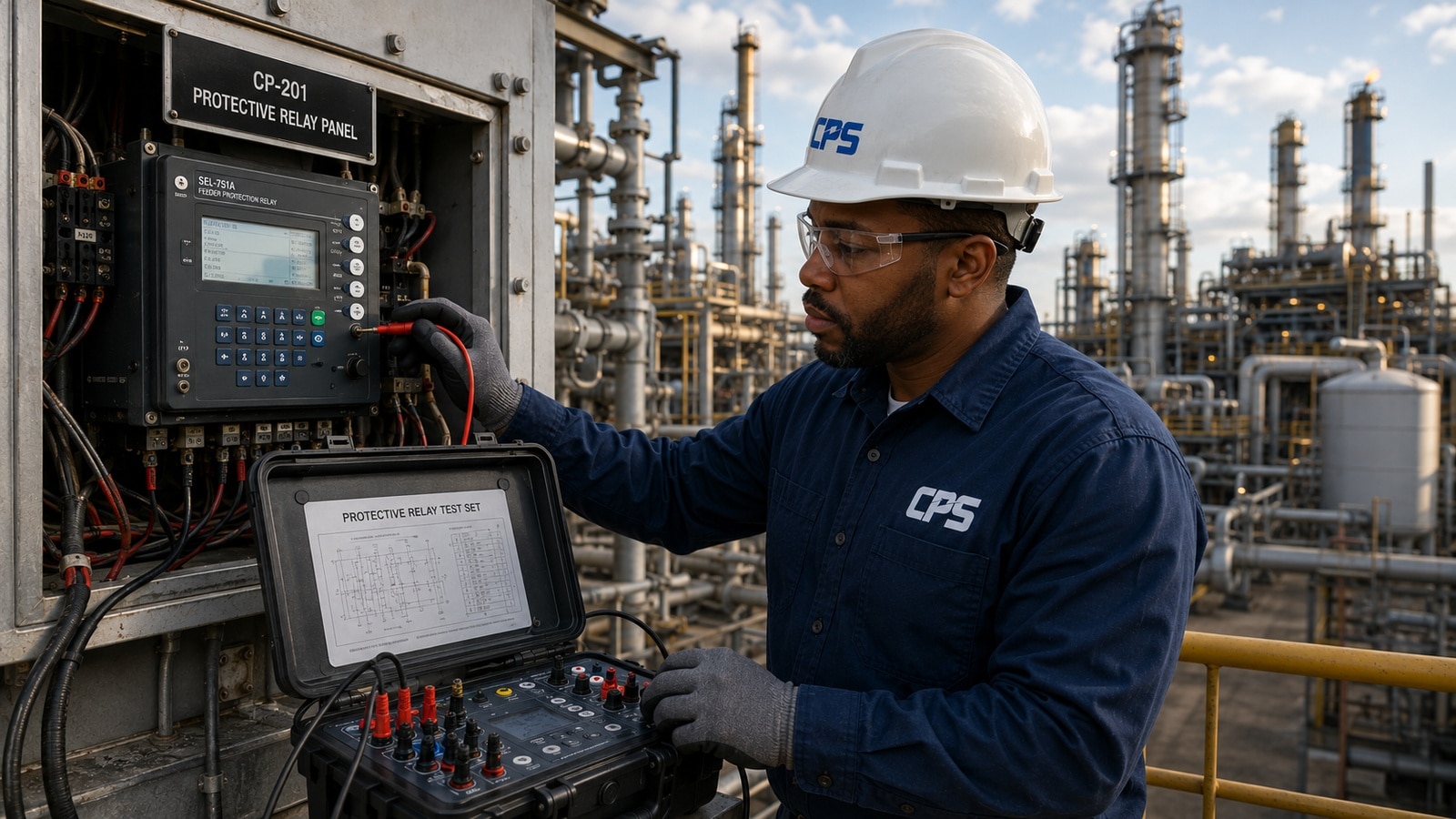
When is an arc flash study required?
Arc flash studies are typically required when new electrical systems are installed, when significant system modifications occur, when equipment is added or replaced, or when facilities need to comply with NFPA 70E workplace safety requirements. Many organizations also perform studies as part of broader safety and risk management programs.
How often should an arc flash study be updated?
NFPA 70E recommends reviewing and updating arc flash studies whenever major system changes occur and at intervals not exceeding five years. Changes in utility fault current, equipment configuration, protection settings, or facility expansion can affect study results.
What is a power system coordination study and why is it important?
A power system coordination study evaluates how protective devices operate during fault conditions. The goal is to ensure that the device closest to the fault operates first, minimizing equipment damage and reducing the impact of outages on the rest of the facility.
What is included in a short circuit study?
A short circuit study calculates available fault current throughout the electrical system and compares those values against equipment ratings. The study helps verify that breakers, switchgear, transformers, and other components can safely withstand and interrupt potential fault currents.
How can I improve electrical system reliability?
Electrical system reliability can often be improved through engineering studies, protection coordination improvements, preventative maintenance programs, equipment modernization, testing services, asset management strategies, and proactive lifecycle planning.
When should a facility perform a reliability assessment?
Reliability assessments are often beneficial before major expansions, modernization projects, equipment replacement programs, or when facilities experience recurring outages, maintenance challenges, or aging infrastructure concerns.
Can engineering studies reduce downtime?
Yes. Engineering studies help identify vulnerabilities, coordination issues, equipment limitations, and operational risks before they result in outages or equipment failures.


Additional Resources

The following organizations publish widely recognized standards, technical guidance, and industry best practices related to low-voltage power distribution equipment, switchboards, electrical safety, testing, engineering, and equipment design.