FAQs
Expert answers to common questions about switchgear, circuit breakers, engineering studies, testing, maintenance, modernization, reliability, and emergency response services.
Electrical power systems represent some of the most important assets within industrial facilities, utilities, data centers, power generation facilities, petrochemical plants, and other critical infrastructure operations. Because these systems directly impact reliability, safety, production, and profitability, facility managers, engineers, maintenance personnel, and procurement teams often have important questions regarding equipment selection, testing, maintenance, modernization, and lifecycle management.
The following FAQs address many of the most common questions Coastal Power Systems receives from customers across a wide range of industries.
What should I look for when choosing an electrical testing company?
When selecting an electrical testing company, look beyond the testing report itself. Evaluate the company’s field experience, technical capabilities, safety record, qualifications of testing personnel, engineering resources, and ability to support corrective actions identified during testing.
The best providers understand the entire electrical system rather than simply performing tests. A company that also performs engineering studies, commissioning, maintenance, modernization, and troubleshooting can often provide more practical recommendations because they understand how equipment performs throughout its lifecycle.
See more in Testing & Commissioning
Do you repair industrial circuit breakers?
Yes. CPS is your specialist for new and reconditioned industrial circuit breakers. With decades of experience, Coastal Power Systems knows virtually every circuit breaker down to lock washer sizes and contact pressure ranges. With the help of our technicians and technical sales staff, CPS consults with you to determine whether your insulated case should be:
- Repaired
- Reconditioned or Restored
- Replaced
- Upgraded to a New Retrofit or Retrofill
Why choose a company that provides engineering, manufacturing, testing, and maintenance services?
Electrical infrastructure decisions rarely exist in isolation. Equipment design affects commissioning. Testing results influence maintenance strategies. Engineering studies drive modernization decisions. Reliability programs impact long-term asset management.
Working with a company that supports the entire electrical asset lifecycle often results in better coordination, fewer knowledge gaps, faster problem resolution, and more practical recommendations. Instead of managing multiple vendors, organizations benefit from a partner that understands the complete system.
What is NETA-guided testing?
NETA-guided testing refers to electrical testing procedures based on applicable standards published by the International Electrical Testing Association. These standards establish testing procedures, acceptance criteria, and maintenance testing requirements for electrical power distribution equipment.
NETA-guided testing is commonly performed during commissioning, maintenance outages, equipment evaluations, and reliability programs to verify equipment performance and identify developing problems before failures occur.
When is an arc flash study required?
Arc flash studies are generally performed whenever significant changes occur within the electrical system. Common triggers include new equipment installations, protection system modifications, utility changes, facility expansions, and major modernization projects.
Many organizations also update arc flash studies periodically to ensure labels, incident energy calculations, and protection settings remain accurate.
How often should switchgear be maintained?
Maintenance frequency depends on equipment age, operating conditions, criticality, environment, manufacturer recommendations, and maintenance history. Most facilities perform routine inspections annually, infrared scans on a regular basis, and comprehensive maintenance every three to five years.
Mission-critical facilities often perform maintenance more frequently based on reliability requirements.
What is a power system coordination study?
A power system coordination study evaluates protective devices throughout an electrical system to ensure faults are isolated by the device closest to the problem. Proper coordination minimizes outage impact, improves reliability, protects equipment, and supports worker safety.
Coordination studies are commonly performed during new construction, expansions, modernization projects, and protection system upgrades.
What is the difference between primary and secondary injection testing?
Primary injection testing verifies the performance of the complete protection system by injecting actual current through current transformers, breakers, relays, and associated equipment. This approach validates overall system operation under realistic conditions.
Secondary injection testing focuses on relay performance by injecting signals directly into the relay without energizing primary equipment. It is commonly used to verify relay settings, logic functions, timing, and protective characteristics.
When should switchgear be modernized instead of replaced?
Modernization is often appropriate when the switchgear structure and bus system remain in good condition but breakers, relays, controls, communications systems, or support components have become obsolete or unreliable.
Modernization frequently costs less than complete replacement while improving reliability, maintainability, safety, and system performance.
What does electrical commissioning include?
Electrical commissioning verifies that equipment has been installed correctly, tested properly, and is ready for safe operation. Activities may include inspections, NETA-guided testing, relay testing, protection system verification, breaker testing, functional checks, startup support, and energization assistance.
The objective is to identify problems before equipment enters service.
How can electrical failures be prevented?
Most electrical failures can be reduced through a combination of preventative maintenance, infrared thermography, engineering studies, equipment testing, relay testing, modernization programs, asset management strategies, and reliability-focused maintenance planning.
The key is identifying developing problems before they become failures.
How do I maintain industrial circuit breakers?
Industrial circuit breaker maintenance typically includes visual inspections, cleaning, lubrication, mechanical operation checks, contact inspections, electrical testing, calibration verification, and evaluation of auxiliary devices.
Maintenance requirements vary by breaker type, age, environment, duty cycle, and manufacturer recommendations.
What safety precautions should I use when dealing with commercial and industrial circuit breakers?
Always follow applicable electrical safety procedures, lockout/tagout requirements, arc flash protection practices, equipment-specific instructions, and facility safety protocols. Only qualified personnel should inspect, test, maintain, or operate energized electrical equipment.
Appropriate personal protective equipment, hazard assessments, and established safety procedures are essential.
What is the difference between a molded case breaker and an insulated case breaker?
Molded case circuit breakers are generally designed for lower fault current applications and are commonly used in commercial and industrial distribution systems. Insulated case breakers are designed for higher performance applications, larger frame sizes, increased interrupting ratings, and more advanced protection capabilities.
Insulated case breakers often bridge the gap between molded case breakers and low-voltage power circuit breakers.
How much should you spend maintaining your switchgear?
The cost of maintenance depends on equipment type, system complexity, criticality, and operational requirements. However, most facilities find that routine maintenance costs are significantly lower than the financial impact of a major switchgear failure.
Maintenance budgets should be based on risk, reliability objectives, and asset criticality rather than attempting to minimize annual expenditures.
What are the main reasons circuit breakers trip?
Circuit breakers commonly trip due to overload conditions, short circuits, ground faults, equipment failures, protection settings, nuisance conditions, or system disturbances. Determining the root cause is important before simply resetting the breaker and restoring power.
Repeated breaker trips often indicate an underlying system problem that requires investigation.
How often should I perform maintenance on my circuit breakers?
Maintenance intervals vary depending on breaker type, manufacturer recommendations, operating environment, switching frequency, and criticality. Many industrial facilities inspect and test breakers every one to five years, depending on application requirements.
Critical equipment often requires more frequent attention.
What is the difference between a retrofit and a retrofill?
A retrofit typically upgrades portions of an existing breaker system while retaining portions of the original equipment. A retrofill generally replaces the entire breaker assembly with a new breaker specifically engineered to fit within the existing switchgear structure.
Both approaches can improve reliability, safety, maintainability, and equipment supportability.
What are the best water-damaged electrical equipment guidelines?
Electrical equipment exposed to flooding, water intrusion, or significant moisture should be thoroughly evaluated before being returned to service. Water can damage insulation systems, contaminate components, accelerate corrosion, and compromise protective devices.
Inspection, testing, cleaning, refurbishment, or replacement may be necessary depending on equipment type and the extent of exposure.
What are the benefits of a retrofit or retrofill?
Retrofits and retrofills can improve reliability, enhance safety, reduce maintenance costs, address obsolescence issues, improve protection performance, support arc flash reduction initiatives, and extend equipment life without requiring complete switchgear replacement.
For many facilities, they provide a cost-effective alternative to full replacement projects.
Additional Questions?
If you have questions about switchgear, circuit breakers, engineering studies, testing services, maintenance programs, modernization projects, reliability improvements, or emergency response planning, contact Coastal Power Systems. Our team supports customers throughout the complete lifecycle of critical electrical infrastructure.
Explore Our Capabilities
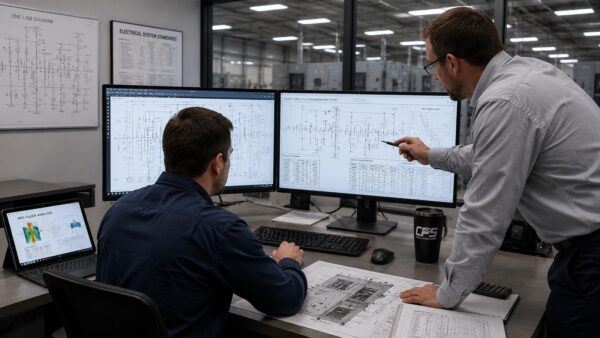
Engineering and Design Services
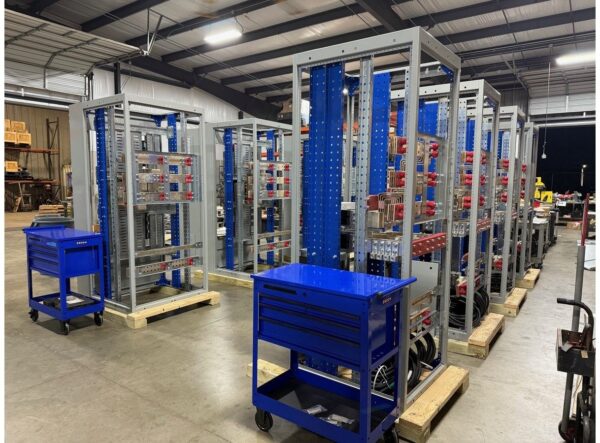
Manufacturing
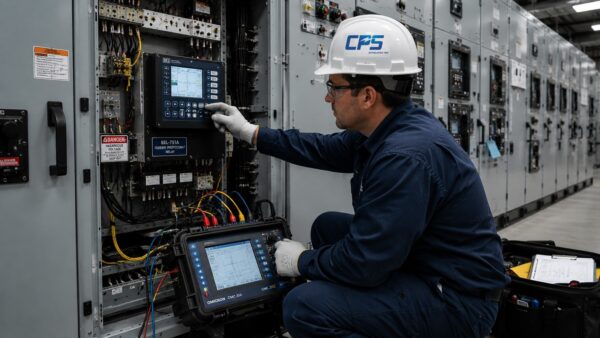
Testing & Commissioning
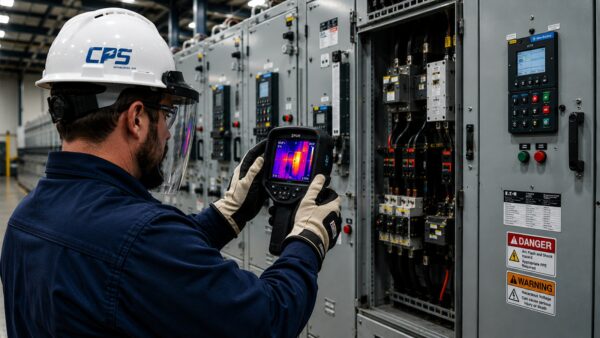
Maintenance and Reliability Services
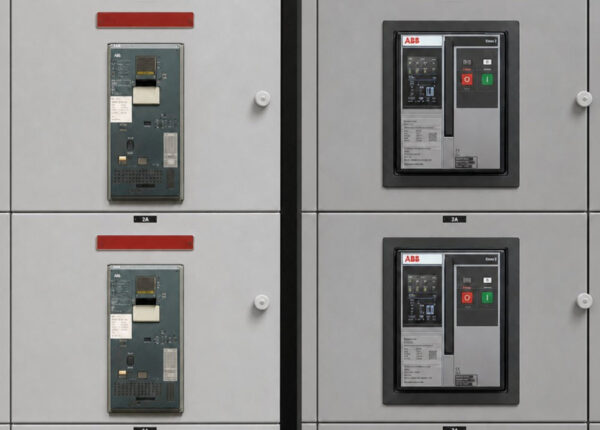
Modernization and Life Extension
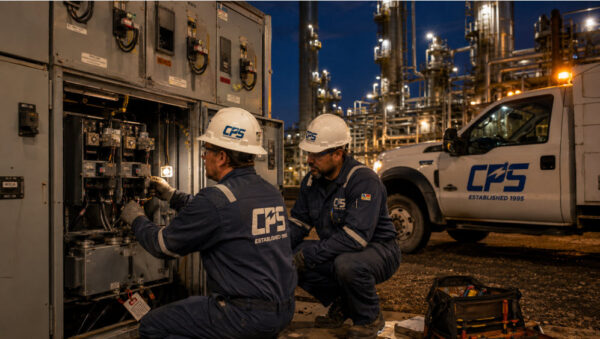
Emergency Response Services for Electrical Power Systems
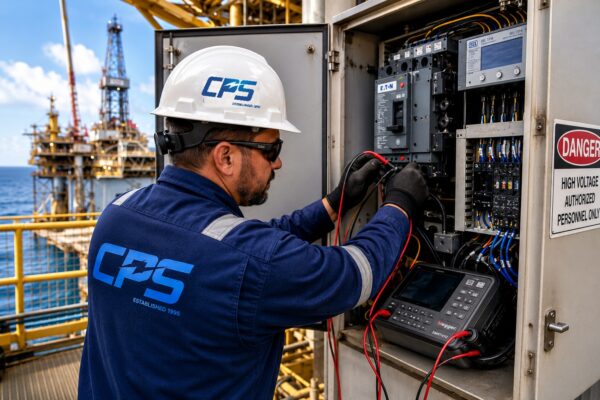
Field Services for Critical Power Infrastructure
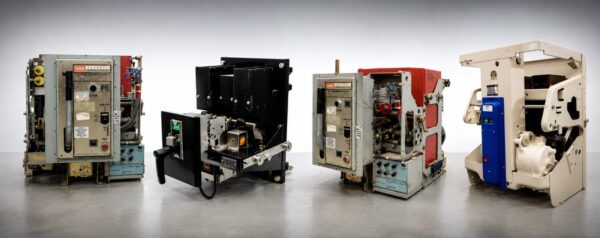
Industrial Circuit Breakers – Sales, Repairs, Retrofits & Parts
We Build What We Sell. We Support What We Build.