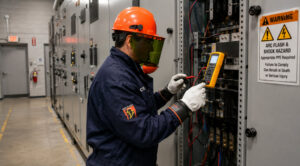
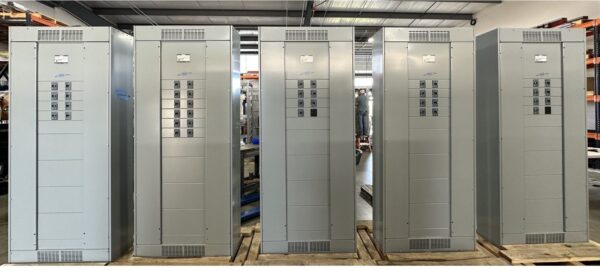
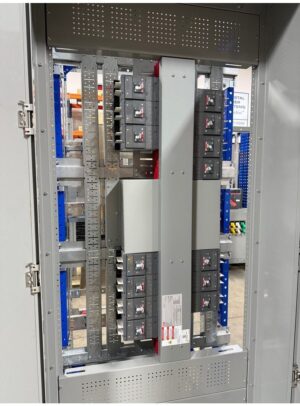
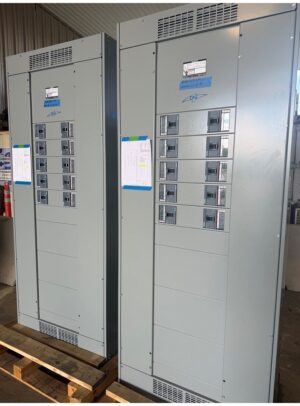
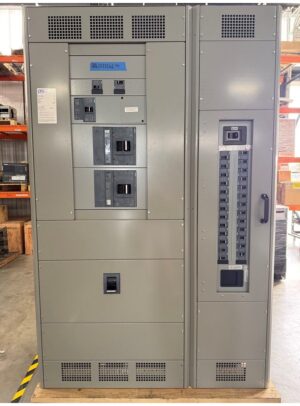
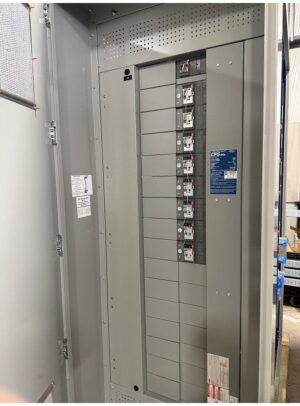
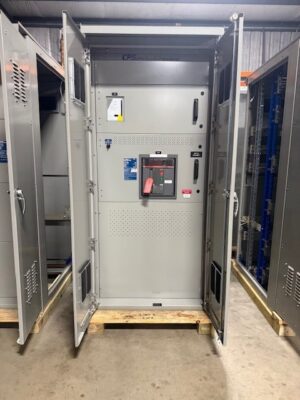
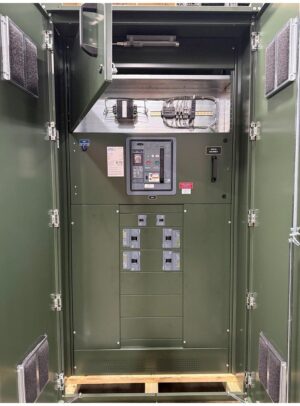
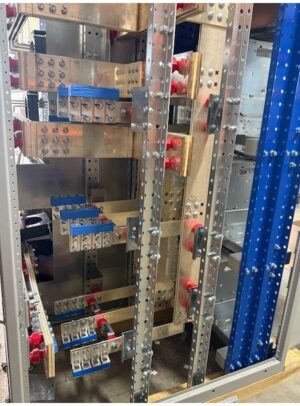
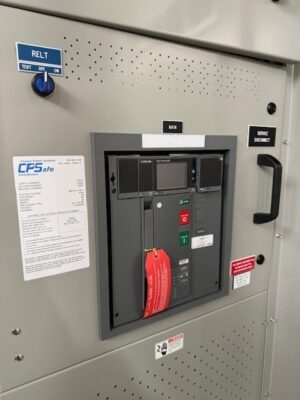
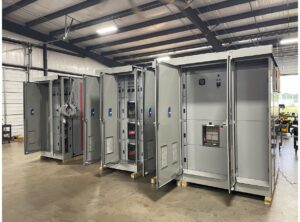
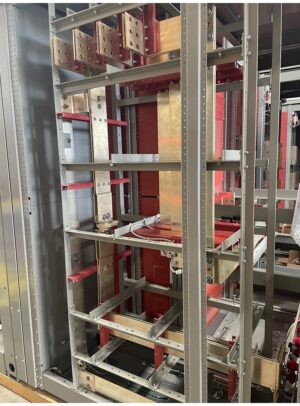
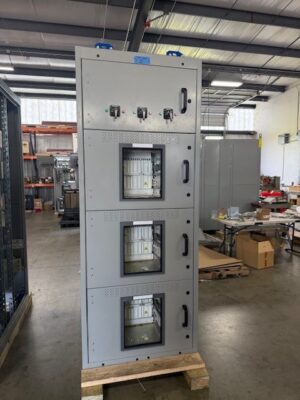
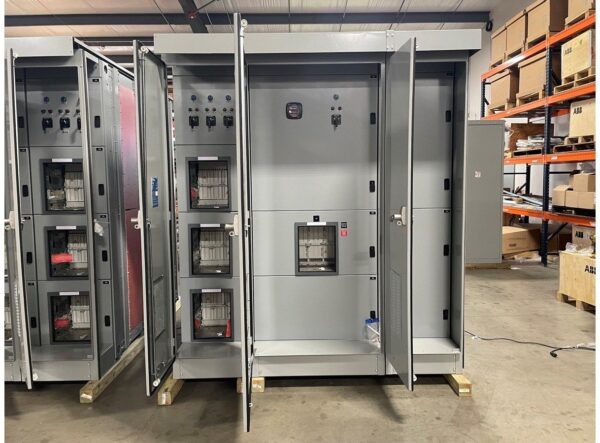
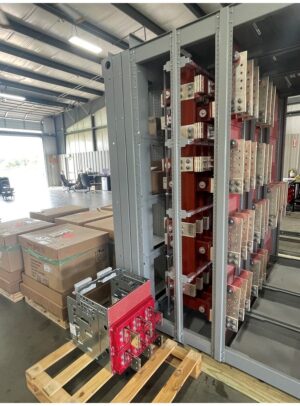
Custom switchgear engineered to meet unique project requirements, improve electrical system reliability, simplify installation, support future expansion, and provide long-term value for industrial, utility, power generation, and critical infrastructure applications.
Custom Switchgear Manufacturer for Reliable, Flexible, and Application-Specific Electrical Systems
Not every electrical project fits within the limitations of standard catalog equipment. Industrial facilities, utilities, data centers, power generation plants, petrochemical operations, and large infrastructure projects often face unique operational requirements that demand custom-engineered solutions. Existing building constraints, specialized protection requirements, utility specifications, limited footprints, environmental considerations, and future expansion plans frequently require equipment that cannot be purchased directly from a standard product catalog.
Many projects attempt to force standard equipment into applications where custom engineering would provide a better long-term solution. The result can be increased installation costs, operational limitations, maintenance challenges, and future expansion difficulties. While standard products have their place, complex electrical systems often benefit from equipment designed specifically for the application.
As a Custom switchgear manufacturer, Coastal Power Systems designs and builds electrical distribution solutions tailored to the operational, engineering, and reliability requirements of each project. By combining manufacturing capabilities with engineering studies, testing services, commissioning support, modernization expertise, and lifecycle support programs, CPS helps customers develop electrical infrastructure that supports both current operational needs and future growth objectives.
Custom switchgear (aka: power distribution equipment) refers to electrical distribution systems specifically engineered to meet the unique requirements of a project, facility, or application. Unlike standard off-the-shelf products, custom equipment is designed around the operational, physical, electrical, and maintenance needs of the customer.
This equipment may include switchgear, switchboards, panelboards, protection and control systems, relay panels, power distribution assemblies, metering systems, and integrated control solutions. Custom engineering allows equipment configurations, dimensions, protection schemes, communication systems, and operational features to be tailored to project-specific requirements.
The goal is to provide a solution that fits the application rather than forcing the application to fit the equipment.
Why Facilities Choose Custom Switchgear
Electrical infrastructure often remains in service for decades. Decisions made during design and procurement can affect maintenance costs, reliability, operational flexibility, and modernization opportunities for many years. As a result, many organizations choose custom equipment when standard products cannot fully address project objectives.
In some cases, physical space limitations drive the need for customization. Existing electrical rooms may have restricted footprints. Retrofit projects may require equipment that matches existing dimensions. Utility requirements may dictate unique configurations. In other situations, operational requirements such as redundancy, communications integration, protection schemes, or future expansion plans justify a custom-engineered approach.
Custom power distribution equipment helps address these challenges while supporting long-term reliability and maintainability objectives.
The Problem With One-Size-Fits-All Solutions
Standard equipment often works well for straightforward applications. However, many industrial and utility projects involve requirements that extend beyond standard configurations. Existing facilities may have structural constraints that limit equipment dimensions. Critical operations may require specialized protection and control functions. Expansion plans may demand flexibility that standard designs cannot provide.
When these challenges arise, attempting to adapt standard equipment can create additional costs and complexity. Building modifications may become necessary. Installation schedules may be extended. Maintenance access may be compromised. Future upgrades may become more difficult.
Custom-engineered equipment helps eliminate these compromises by addressing project requirements during the design phase rather than after installation.
Custom Equipment and Reliability Planning
Reliability is one of the most important considerations in electrical system design. Facilities depend on electrical infrastructure to support production, operations, public services, and critical processes. Equipment failures can result in downtime, lost revenue, safety concerns, and expensive repairs.
Custom power distribution equipment allows reliability objectives to be incorporated into the design process from the beginning. Protection systems, breaker configurations, metering capabilities, communication networks, maintenance access requirements, and future modernization plans can all be evaluated during engineering and manufacturing.
This proactive approach often produces better long-term outcomes than attempting to address reliability concerns after installation.
Applications for Custom Switchgear
Custom switchgear serves a wide range of industries. Data centers frequently require specialized configurations that support redundancy, reliability, and future expansion. Utilities often require equipment that meets specific operational and protection requirements. Power generation facilities rely on custom systems to integrate generators, transformers, and distribution infrastructure.
Petrochemical facilities, manufacturing plants, water treatment operations, transportation systems, mining facilities, and renewable energy projects also benefit from custom-engineered electrical solutions. Each industry presents unique operational requirements that influence equipment design and integration strategies.
The common goal across these applications is creating a solution that supports long-term operational performance.
Custom Equipment for EPC Firms and Design Engineers
EPC contractors, consulting engineers, estimators, and procurement professionals frequently manage projects where standard equipment introduces unnecessary limitations. Site-specific requirements, accelerated construction schedules, utility coordination, customer specifications, and future operational expectations all influence equipment selection. In these situations, a custom-engineered solution often simplifies installation while reducing project risk.
Custom switchgear also gives engineers greater design flexibility. Rather than modifying project specifications to fit standard products, equipment can be designed around the electrical system itself. This approach frequently reduces field modifications, improves constructability, and creates a better long-term solution for the facility owner.
For complex industrial and utility projects, custom engineering often delivers greater lifecycle value than attempting to adapt standard equipment to specialized applications.
Protection and Control System Integration
Modern electrical systems increasingly depend on integrated protection and control capabilities. Digital protective relays, advanced metering systems, communication networks, automation platforms, remote monitoring, and SCADA interfaces have become standard requirements across many industries.
Custom switchgear allows these systems to be incorporated directly into the equipment design rather than treated as separate projects. Protection systems, communications infrastructure, metering, and control logic can all be engineered as a coordinated solution that supports operational objectives while simplifying installation and commissioning.
This integrated approach improves system visibility, enhances reliability, supports predictive maintenance strategies, and provides greater flexibility for future technology upgrades.
Supporting Modernization and Future Expansion
Electrical systems rarely remain unchanged throughout their service life. Facilities expand, production requirements evolve, technologies improve, and protection systems become more sophisticated. A well-designed custom power distribution system should be capable of supporting these changes without requiring major equipment replacement.
CPS incorporates future expansion and modernization considerations into equipment designs whenever practical. Additional feeders, upgraded protection systems, communications enhancements, metering additions, automation capabilities, and future equipment modifications can often be accommodated more efficiently when planned during the initial design phase.
This forward-looking approach helps maximize equipment life while reducing the cost and complexity of future modernization projects.
Manufacturing and Quality Considerations
Successful custom equipment projects require close coordination between engineering, manufacturing, testing, and commissioning teams. Design accuracy, component selection, fabrication quality, inspection procedures, testing protocols, and documentation all contribute to long-term equipment performance.
Coastal Power Systems applies manufacturing and quality processes designed to ensure equipment performs as intended when it arrives on site. Factory inspections, production testing, documentation reviews, and quality verification help identify potential issues before shipment, reducing project risk and supporting smoother field installation.
These quality assurance activities become particularly valuable on complex projects where reliability, safety, and construction schedules are critical to project success.
Why Coastal Power Systems?
As a custom switchgear manufacturer, Coastal Power Systems combines manufacturing capabilities with engineering studies, protection coordination studies, arc flash studies, NETA-guided testing, commissioning services, preventive maintenance programs, modernization expertise, and lifecycle asset management. This integrated approach allows custom equipment solutions to be developed within the broader context of overall electrical system performance.
CPS understands that successful custom equipment projects involve far more than fabrication. They require a thorough understanding of electrical system design, operational objectives, maintenance strategies, reliability planning, and future expansion requirements. By combining engineering expertise with manufacturing capabilities, CPS delivers solutions that support long-term operational success.
This lifecycle-focused approach helps organizations maximize the value of their electrical infrastructure investments while reducing operational risk throughout the life of the equipment.
Request a Custom Power Distribution Equipment Consultation
Whether you are designing a new facility, modernizing aging infrastructure, overcoming space limitations, integrating advanced protection systems, or planning for future expansion, Coastal Power Systems can develop a custom-engineered power distribution solution tailored to your project requirements.
Custom power distribution equipment is electrical distribution equipment engineered specifically to meet the unique operational, physical, and electrical requirements of a project or facility.
When should facilities choose custom equipment instead of standard equipment?
Custom equipment is often the best choice when projects involve space limitations, specialized protection requirements, utility specifications, modernization challenges, or future expansion plans.
What types of equipment can be customized?
Switchgear, switchboards, panelboards, protection systems, relay panels, metering systems, control systems, and complete power distribution assemblies can all be custom engineered.
Can custom equipment support future expansion?
Yes. One of the primary advantages of custom equipment is the ability to incorporate future growth, modernization, and operational flexibility into the original design.
What industries use custom power distribution equipment?
Utilities, power generation facilities, data centers, petrochemical plants, manufacturing facilities, water treatment plants, transportation systems, mining operations, and renewable energy projects commonly utilize custom-engineered electrical solutions.
Additional Information
The following organizations publish widely recognized standards, technical guidance, and best practices related to electrical power distribution equipment, switchgear, and electrical system design.
Custom protection and control system integration solutions designed to improve power system reliability, enhance fault protection, support system automation, and provide long-term operational flexibility for industrial, utility, power generation, and critical infrastructure applications.
Protection and Control System Integration Services for Reliable, Safe, and Intelligent Power System Operation
Protection and control systems are the intelligence behind modern electrical power systems. While switchgear, transformers, breakers, and distribution equipment physically move electrical power throughout a facility, protection and control systems determine how those assets respond during normal operations, abnormal conditions, and fault events. When properly designed and integrated, these systems help prevent equipment damage, reduce outage impacts, improve personnel safety, and provide operators with the information needed to manage increasingly complex electrical networks.
Many organizations invest heavily in electrical equipment but underestimate the importance of protection and control system integration. In reality, some of the most costly electrical failures occur not because equipment fails mechanically, but because protection systems operate incorrectly, coordination schemes are not properly implemented, communication systems fail, or control logic does not perform as intended. These issues can lead to unnecessary outages, equipment damage, extended downtime, and significant operational disruption.
Coastal Power Systems provides protection and control system integration services that help facility owners, EPC firms, utilities, industrial operators, and power generation companies develop reliable, coordinated, and scalable power system solutions. By combining engineering expertise, power system studies, relay testing, commissioning services, and lifecycle support capabilities, CPS helps customers ensure that electrical systems perform as intended throughout their operational life.
Our Protection and Control System Integration Services
Protective relay system design
Control system integration
Protection coordination implementation
SCADA and communications integration
Utility interconnection support
Generator protection systems
Substation protection and controls
Power system automation
Relay programming and configuration
Testing, commissioning, and startup support
What Are Protection and Control System Integration Services?
Protection and control system integration services involve designing, configuring, programming, testing, and commissioning the systems responsible for monitoring and controlling electrical power distribution equipment. These systems include protective relays, communication networks, control panels, automation systems, SCADA interfaces, metering devices, and associated software platforms.
The objective is to ensure that every component operates as a coordinated system. During normal operation, protection and control systems provide monitoring, communications, diagnostics, and operational control. During fault conditions, they detect abnormal events, isolate affected equipment, and help maintain electrical service to the remainder of the system whenever possible.
Successful integration requires much more than connecting devices together. It requires a detailed understanding of power system behavior, protection philosophies, communications architecture, operational requirements, and long-term reliability objectives.
Why Protection and Control Systems Matter
Electrical systems experience equipment failures, utility disturbances, overloads, short circuits, ground faults, and operational changes throughout their service life. Protection and control systems determine how the electrical infrastructure responds when these events occur. A properly integrated protection system can isolate a fault within milliseconds, limiting equipment damage while minimizing operational disruption. A poorly integrated system can unnecessarily trip healthy equipment, increase outage duration, or even contribute to equipment damage.
As electrical systems become increasingly automated and interconnected, the importance of properly designed protection and control systems continues to grow. Modern facilities depend on digital protective relays, communication networks, intelligent electronic devices, remote monitoring platforms, and automated switching schemes that must all function together reliably under a wide variety of operating conditions.
For many facilities, the performance of the protection system has a greater impact on long-term reliability than the equipment itself.
The Challenge of Multi-Vendor System Integration
Modern electrical infrastructure often combines equipment supplied by multiple manufacturers. Switchgear may come from one supplier while protective relays, SCADA systems, automation hardware, communications equipment, and control software originate from several others. Although each component may function correctly by itself, problems frequently appear when these systems must communicate and operate together.
Communication protocols may not be configured properly. Relay settings may not match the approved coordination study. Control logic may conflict with operating procedures. Automation sequences may not perform as expected. These issues frequently remain hidden until commissioning or until the system experiences an actual fault.
Protection and control system integration services help eliminate these risks by verifying that every component operates as part of a coordinated electrical system rather than as a collection of independent devices.
Protection Systems and Electrical Reliability
Reliability depends heavily on protection system performance. During a fault, protective devices must operate quickly, accurately, and selectively. The goal is to isolate only the affected equipment while maintaining electrical service to the remainder of the facility whenever practical.
Achieving this level of performance requires proper coordination between protective relays, circuit breakers, transformers, generators, motor control centers, utility interconnections, and distribution equipment. Coordination studies establish the protection philosophy, but successful implementation depends on proper relay programming, control logic development, communications integration, testing, and commissioning.
Without proper integration, even the best engineering study cannot deliver the intended operational performance.
Applications for Protection and Control System Integration
Protection and control system integration supports virtually every sector of the electrical power industry. Utilities depend on integrated protection systems to maintain transmission and distribution reliability. Power generation facilities use sophisticated protection and control schemes to safeguard generators, transformers, and utility interconnections. Industrial manufacturers rely on protection systems to maintain production while protecting valuable electrical assets.
Data centers use integrated control systems to support redundancy, maintain uptime objectives, and manage increasingly complex power distribution architectures. Petrochemical facilities, mining operations, water and wastewater treatment plants, transportation infrastructure, renewable energy installations, and government facilities all rely on properly integrated protection and control systems to support safe and reliable operation.
Although operational requirements vary across industries, the objective remains consistent: dependable electrical system performance under both normal operating conditions and fault scenarios.
Generator and Utility Interconnection Applications
One of the most demanding applications for protection and control system integration involves utility interconnections and on-site power generation. Generator protection systems must coordinate with utility protection requirements, facility distribution systems, synchronization controls, and operating procedures. Transfer schemes, communication systems, and protective relays must function together correctly to ensure safe operation under all operating conditions.
Poor integration can result in nuisance trips, synchronization failures, utility compliance issues, unnecessary outages, and equipment damage. Properly integrated protection systems help facilities satisfy utility requirements while maintaining operational reliability.
These projects typically require engineering studies, relay programming, control system integration, commissioning, and comprehensive testing before the system is placed into service.
How Protection and Control Systems Support Modernization
Many facilities continue operating electrical infrastructure installed decades ago. While the switchgear, transformers, and distribution equipment may remain mechanically sound, the protection systems often rely on aging electromechanical relays, obsolete communications equipment, and outdated control technologies that limit reliability and increase maintenance requirements.
Protection and control modernization allows facilities to improve reliability without necessarily replacing the entire electrical distribution system. Upgrading to modern digital relays, advanced communications networks, intelligent automation platforms, and contemporary control architectures provides improved visibility, better diagnostics, simplified maintenance, and greater operational flexibility.
For many organizations, protection system modernization represents one of the most cost-effective opportunities for improving electrical system performance while extending the useful life of existing infrastructure.
Testing and Commissioning Considerations
Protection and control systems should never be considered complete until they have been thoroughly tested and commissioned. Design reviews, relay programming, and equipment installation represent only part of the process. Verification testing ensures that the system performs as intended under actual operating conditions.
Commissioning activities often include relay testing, logic verification, communication testing, breaker control verification, functional testing, and operational sequence validation. These activities help identify configuration errors, communication problems, and control logic issues before the system enters service.
Testing and commissioning are essential steps in ensuring long-term system reliability.
Protection and Control Systems for EPC Firms and Industrial Facilities
EPC firms, engineers, procurement professionals, and facility owners often face significant challenges when managing complex protection and control projects. Project schedules are tight. Equipment vendors may vary from project to project. Communication protocols and protection requirements continue to evolve.
Working with an organization that understands both electrical power systems and system integration can help reduce project risk. Protection and control systems affect virtually every aspect of power system performance, making proper integration one of the most important factors influencing long-term reliability.
For EPC firms and facility owners, successful integration often means fewer startup issues, faster commissioning, and more reliable long-term operation.
Why Coastal Power Systems?
Coastal Power Systems combines protection and control system integration capabilities with engineering studies, protection coordination studies, arc flash studies, relay testing, NETA-guided testing, commissioning services, switchgear manufacturing, modernization programs, and lifecycle support. This allows protection systems to be designed and implemented within the context of overall power system performance.
CPS understands that protection systems must do more than operate correctly during a fault. They must support reliability objectives, maintenance strategies, modernization plans, and long-term operational goals. By combining engineering expertise with practical field experience, CPS helps customers develop protection and control systems that support safe, reliable, and efficient power system operation.
This integrated approach helps reduce project risk while improving long-term system performance.
Request a Protection and Control System Consultation
Whether you are designing a new power system, modernizing aging infrastructure, integrating generation assets, or improving protection system performance, Coastal Power Systems can help develop a solution that supports long-term reliability, safety, and operational performance.
What are protection and control system integration services?
Protection and control system integration services involve designing, programming, configuring, testing, and commissioning the systems responsible for monitoring and controlling electrical power distribution equipment.
Why are protection systems important?
Protection systems detect faults, isolate affected equipment, reduce equipment damage, improve safety, and help maintain electrical system reliability during abnormal operating conditions.
What industries use protection and control systems?
Utilities, power generation facilities, industrial manufacturers, data centers, petrochemical facilities, water treatment plants, transportation systems, and renewable energy projects all rely on protection and control systems.
Can protection systems be modernized without replacing switchgear?
Yes. Many facilities upgrade relays, communication systems, control platforms, and automation technologies while retaining existing switchgear infrastructure.
Why is testing important for protection and control systems?
Testing verifies that protection schemes, communication systems, control logic, and operational sequences perform correctly before the system enters service.
Additional Information
The following organizations publish widely recognized standards, technical guidance, and best practices related to protection and control systems, power system reliability, and electrical engineering.
IEEE Power & Energy Society (PES)
InterNational Electrical Testing Association (NETA)
Custom low voltage switchgear engineered to improve reliability, support critical power distribution applications, simplify maintenance, and provide long-term flexibility for industrial, utility, and commercial electrical systems.
Low-Voltage Switchgear Manufactured by Coastal Power Systems
Coastal Power Systems manufactures custom low-voltage switchgear for data centers, manufacturing facilities, utility systems, petrochemical plants, power generation facilities, commercial operations, and other critical power applications (see Industries Served). Each lineup can be engineered around project-specific electrical ratings, protection requirements, breaker arrangements, control functions, space limitations, and long-term operating objectives.
Low-voltage switchgear serves as a central point for controlling, protecting, and distributing electrical power. When properly designed and manufactured, it helps facilities maintain reliable operations, isolate faults, protect equipment and personnel, simplify maintenance, and accommodate future expansion.
The long-term value of switchgear depends on more than initial equipment cost and lead time. Breaker technology, protective-device coordination, maintainability, metering accuracy, communications, control-system integration, spare capacity, and modernization flexibility can have a greater effect on lifecycle cost and system performance than the original purchase price.
As a low-voltage switchgear manufacturer, CPS designs, manufactures, assembles, wires, integrates, and factory tests custom UL 1558 switchgear and UL 891 power distribution equipment. Available solutions may include main-tie-main systems, double-ended substations, utility service entrance equipment, generator integration, custom feeder arrangements, protective relays, digital metering, communications, and application-specific controls.
CPS supports the manufacturing process with in-house engineering, power-system studies, protection and control integration, factory testing, commissioning, maintenance, modernization, and field services. This full-service approach helps EPC firms, consulting engineers, contractors, distributors, and facility owners develop low-voltage power distribution systems aligned with project requirements and long-term reliability goals.
Our Low Voltage Switchgear Capabilities
UL 1558 low voltage switchgear
UL 891 switchboard solutions
Custom-engineered power distribution systems
Build-to-existing-footprint capabilities
ABB and Siemens equipment options
Digital metering and communications
Arc flash mitigation options
Factory testing and commissioning support
Engineering and application support
Lifecycle maintenance and technical support
What Is Low Voltage Switchgear?
Low voltage switchgear is a metal-enclosed power distribution assembly designed to control, protect, monitor, and isolate electrical power systems operating at 600 volts or less. It typically incorporates power circuit breakers, protective relays, control systems, metering devices, communications equipment, and bus structures within a coordinated assembly.
The primary purpose of low voltage switchgear is to safely distribute electrical power while protecting the system from faults, overloads, and abnormal operating conditions. During normal operation, switchgear provides reliable power distribution throughout the facility. During fault conditions, it isolates affected equipment and minimizes the impact on the remainder of the electrical system.
For critical facilities, low voltage switchgear often represents one of the most important assets within the entire power distribution infrastructure.
Why Low Voltage Switchgear Matters
Electrical distribution systems are expected to operate continuously while remaining prepared for unexpected events. Utility disturbances, equipment failures, short circuits, ground faults, and maintenance activities all place demands on the power system. Low voltage switchgear helps facilities manage these events safely and efficiently.
When a fault occurs, properly designed switchgear limits equipment damage, isolates the affected area, and allows the remainder of the facility to continue operating whenever possible. This selective protection capability helps reduce downtime and supports operational continuity.
For facilities where outages can affect production, revenue, customer operations, or public services, switchgear selection becomes a strategic reliability decision rather than a simple equipment purchase.
UL 1558 Switchgear Versus UL 891 Switchboards
One of the most common specification questions involves choosing between UL 1558 switchgear and UL 891 switchboards. While both distribute electrical power, they are designed for different applications and operational requirements.
UL 1558 switchgear is generally used in applications requiring power circuit breakers, enhanced protection capabilities, greater fault withstand performance, and higher levels of maintainability. These systems often support critical distribution points, service entrances, utility interconnections, and facilities where reliability is a primary concern. UL 1558 standards require more rigorous testing and construction requirements than UL 891 switchboards.
UL 891 switchboards typically serve downstream distribution applications where molded case or insulated case breakers are appropriate. While highly effective for many applications, switchboards are generally selected when the enhanced features of UL 1558 switchgear are not required.
Choosing the correct solution depends on system requirements, fault current levels, maintenance objectives, operational priorities, and long-term reliability goals.
Applications for Low Voltage Switchgear
Low voltage switchgear is widely used throughout industrial, utility, institutional, and commercial markets. Data centers rely on switchgear to support critical power distribution and redundancy requirements. Power generation facilities use switchgear to connect generators, transformers, and distribution systems. Utilities utilize switchgear throughout distribution and substation applications.
Petrochemical facilities, manufacturing plants, water treatment operations, transportation systems, healthcare facilities, and large commercial campuses also depend on low voltage switchgear to support critical electrical infrastructure.
Because each application presents unique operating conditions and reliability requirements, custom-engineered solutions often provide the greatest long-term value.
The Problem With Commodity-Based Switchgear Specifications
Many projects approach switchgear procurement primarily as a cost comparison exercise. While competitive pricing is important, equipment selection based solely on purchase price often overlooks factors that affect long-term ownership costs. Maintenance accessibility, communications capabilities, breaker interchangeability, future expansion flexibility, and modernization compatibility can all influence lifecycle performance.
For example, a facility may save money during procurement but incur significantly higher maintenance costs over the next twenty years due to poor accessibility or limited upgrade options. Similarly, selecting equipment without considering future expansion may create expensive modifications later when operational requirements change.
A lifecycle-focused approach helps organizations avoid these challenges while improving long-term reliability and maintainability.
How CPS Approaches Low Voltage Switchgear Design
CPS approaches switchgear projects from a complete power system perspective. Rather than simply supplying equipment, CPS evaluates how the switchgear will function throughout the facility’s operational life. This includes reviewing system architecture, fault current levels, protection requirements, maintenance objectives, future expansion plans, and reliability goals.
CPS specializes in custom-engineered solutions designed to fit existing footprints when necessary. This capability is particularly valuable for modernization projects where facilities want to improve reliability without extensive building modifications. In-house fabrication capabilities also help reduce lead times and provide greater flexibility than many larger manufacturers.
The result is a switchgear solution aligned with both immediate project requirements and long-term operational objectives.
Digital Metering and Communications Capabilities
Modern electrical systems increasingly rely on operational data to improve reliability and support asset management initiatives. Today’s switchgear often functions as more than a distribution system. It serves as an information platform that provides visibility into system performance, equipment condition, power quality, and energy usage.
CPS low voltage switchgear solutions can incorporate advanced metering, communications protocols, Bluetooth connectivity, remote operation capabilities, and cloud-based access to operational information. These features help facility personnel make more informed decisions regarding maintenance, troubleshooting, and system optimization.
As electrical systems become increasingly connected, these capabilities continue to grow in importance.
Arc Flash Mitigation and Safety Considerations
Safety remains a primary consideration in modern switchgear design. Many facilities seek opportunities to reduce incident energy levels and improve worker protection during maintenance and operational activities.
CPS switchgear solutions can incorporate maintenance mode features, advanced trip units, digital protection technologies, relay integration, and other arc flash mitigation strategies. These capabilities help facilities support safety objectives while maintaining system reliability and protection performance.
When combined with engineering studies and protection coordination reviews, these features can contribute to meaningful improvements in electrical safety.
How Low Voltage Switchgear Supports Future Modernization
Electrical systems evolve over time. Facilities expand. Loads change. Technology advances. Protection requirements become more sophisticated. A well-designed switchgear system should support these changes rather than limit them.
CPS incorporates modernization flexibility into switchgear designs whenever possible. Future breaker upgrades, communications enhancements, metering additions, protection modifications, and expansion projects become easier when these considerations are addressed during the initial design phase.
This approach helps maximize the useful life of the equipment while reducing future upgrade costs.
Why Coastal Power Systems?
As a low voltage switchgear manufacturer, Coastal Power Systems combines manufacturing capabilities with engineering studies, NETA-guided testing, commissioning services, preventive maintenance programs, modernization expertise, emergency response support, and lifecycle asset management. This comprehensive approach allows customers to work with a single organization throughout the life of their electrical infrastructure.
CPS understands that switchgear is not simply a collection of breakers and bus systems. It is a critical component of a facility’s reliability strategy. By combining engineering expertise with practical field experience, CPS helps customers develop solutions that support operational continuity, maintainability, safety, and long-term performance.
This lifecycle-focused perspective helps organizations maximize the value of their electrical infrastructure investments.
Request a Low Voltage Switchgear Consultation
Whether you are designing a new facility, replacing aging equipment, planning a modernization project, or evaluating long-term reliability requirements, selecting the right low voltage switchgear solution is a critical decision.
What does a low voltage switchgear manufacturer provide?
A low voltage switchgear manufacturer designs and builds power distribution equipment used to control, protect, monitor, and distribute electrical power throughout industrial, utility, and commercial facilities.
What is the difference between UL 1558 switchgear and UL 891 switchboards?
UL 1558 switchgear typically uses power circuit breakers and supports more demanding protection, maintenance, and reliability requirements. UL 891 switchboards are generally used for secondary power distribution applications.
What industries use low voltage switchgear?
Data centers, utilities, power generation facilities, petrochemical plants, manufacturing operations, healthcare facilities, water treatment plants, and commercial campuses commonly use low voltage switchgear.
Can low voltage switchgear support future modernization?
Yes. Properly designed switchgear can accommodate future breaker upgrades, communications enhancements, protection system improvements, metering additions, and expansion projects.
Can CPS customize switchgear to fit existing infrastructure?
Yes. CPS specializes in custom-engineered switchgear solutions that can be designed to accommodate existing footprints and installation requirements.
Additional Information
The following organizations publish widely recognized standards, technical guidance, and best practices related to low voltage switchgear, switchboards, and electrical power distribution equipment.
UL Solutions
National Electrical Manufacturers Association (NEMA)
Custom medium voltage switchgear designed to improve reliability, simplify installation, support modernization initiatives, and meet the demanding requirements of industrial facilities, utilities, data centers, power generation plants, and EPC projects.
Medium-Voltage Switchgear Designed for Long-Term Reliability
Medium-voltage switchgear is often installed in facilities where electrical reliability is essential to safe and continuous operations. Utilities, power generation plants, data centers, industrial manufacturing facilities, petrochemical plants, mining operations, and other critical infrastructure depend on switchgear that can protect the electrical system, isolate faults quickly, simplify maintenance, and support future expansion.
Reliable switchgear performance begins during the design and manufacturing process. Equipment ratings, circuit breaker selection, protective relays, relay coordination, communications, bus configuration, maintenance accessibility, and operating flexibility all influence how the system will perform throughout its service life. Properly engineered switchgear helps minimize unplanned outages while allowing maintenance activities to be completed more safely and efficiently.
As a manufacturer of custom low-voltage power distribution equipment, Coastal Power Systems understands that reliability extends well beyond the switchgear lineup itself. Every project should be evaluated within the context of the complete electrical distribution system, including available fault current, protective-device coordination, generator integration, operational objectives, maintenance requirements, and future expansion plans.
By combining equipment manufacturing with engineering, testing, commissioning, modernization, and lifecycle support, CPS helps customers develop medium-voltage switchgear solutions that improve system reliability, reduce operational risk, and provide long-term value throughout the life of the electrical distribution system.
Arc Flash Considerations for Medium Voltage Switchgear
#image_title
Modern switchgear projects increasingly incorporate arc flash mitigation strategies as part of the design process. While arc flash studies help identify potential hazards, switchgear design decisions often influence the ability to reduce those hazards in the future.
Protection technologies, relay capabilities, breaker configurations, maintenance modes, and system architecture can all affect incident energy levels. Facilities that address these considerations during the design phase often gain greater flexibility when implementing future arc flash reduction initiatives.
As a result, arc flash mitigation should be viewed as both a safety objective and a design consideration when evaluating medium voltage switchgear solutions.
How Medium Voltage Switchgear Supports Future Modernization
Electrical systems rarely remain static throughout their service lives. Facilities expand. Load profiles change. Protection requirements evolve. Technology advances. Equipment that appears adequate today may require upgrades in the future.
One advantage of a well-engineered switchgear solution is the ability to support future modernization efforts. Protection system upgrades, communication enhancements, breaker replacements, arc flash mitigation projects, and capacity expansions become easier when flexibility is incorporated into the original design.
For organizations planning long-term operations, modernization compatibility can be just as important as current performance specifications.
Medium Voltage Switchgear for EPC Firms and Procurement Teams
#image_title
EPC contractors, estimators, procurement professionals, and distributors often face competing priorities during equipment selection. Project schedules, budgets, technical specifications, and client expectations must all be balanced. Medium voltage switchgear decisions can have a significant impact on project execution and long-term customer satisfaction.
Working with a manufacturer that understands both equipment requirements and lifecycle considerations helps reduce project risk. Engineering support, testing capabilities, commissioning services, modernization expertise, and long-term service resources can provide substantial value throughout the project lifecycle.
For procurement teams, the best switchgear solution is often the one that delivers the lowest total lifecycle cost rather than the lowest initial purchase price.
Why Coastal Power Systems?
As a medium voltage switchgear manufacturer, Coastal Power Systems combines manufacturing capabilities with engineering studies, testing services, commissioning support, preventive maintenance programs, modernization expertise, emergency response services, and lifecycle asset management. This allows switchgear projects to be evaluated within the broader context of reliability, maintainability, safety, and long-term operational performance.
CPS understands that medium voltage switchgear is not simply an electrical product. It is a critical component of the facility’s overall reliability strategy. By combining technical expertise with practical field experience, CPS helps customers develop switchgear solutions that support both immediate project requirements and future operational objectives.
This lifecycle-focused approach helps organizations maximize the value of their electrical infrastructure investments while reducing long-term operational risk.
Request a Medium Voltage Switchgear Consultation
Whether you are planning a new facility, expanding existing infrastructure, replacing aging equipment, or evaluating long-term reliability requirements, selecting the right medium voltage switchgear is one of the most important decisions affecting electrical system performance.
What does a medium voltage switchgear manufacturer provide?
A medium voltage switchgear manufacturer designs and builds equipment used to control, protect, and distribute electrical power for industrial, utility, and critical infrastructure applications.
Why is medium voltage switchgear important?
Medium voltage switchgear protects electrical systems from faults, supports reliable power distribution, improves personnel safety, and isolates equipment during maintenance and emergency conditions.
What industries use medium voltage switchgear?
Utilities, power generation facilities, industrial manufacturers, petrochemical plants, data centers, transportation systems, water treatment facilities, mining operations, and large commercial campuses commonly rely on medium voltage switchgear.
How long does medium voltage switchgear typically remain in service?
With proper preventive maintenance, modernization, and lifecycle management, medium voltage switchgear often remains in reliable service for several decades.
Can medium voltage switchgear be modernized instead of replaced?
Yes. Many facilities extend equipment life through circuit breaker retrofits, retrofills, relay upgrades, protection system modernization, refurbishment projects, and arc flash mitigation improvements.
Additional Information
The following organizations publish widely recognized standards, technical guidance, and best practices related to medium voltage switchgear, power distribution systems, and electrical equipment.
Custom UL 67 panelboards engineered to simplify installation, support facility growth, reduce project complexity, and provide reliable branch circuit distribution for commercial, light industrial, and mission-critical applications.
UL 67 Panelboards Manufactured by Coastal Power Systems
Coastal Power Systems manufactures custom UL 67 panelboards for commercial, industrial, utility, infrastructure, and mission-critical applications. Each panelboard can be engineered and configured around project-specific voltage, amperage, circuit, enclosure, space, protection, and installation requirements.
Most electrical distribution systems eventually require additional circuits, new equipment connections, tenant improvements, facility expansions, or modernization of aging branch-circuit infrastructure. Although switchgear and switchboards often receive the most attention during major electrical projects, panelboards perform much of the day-to-day work of safely distributing power throughout a facility.
CPS designs and manufactures UL 67 panelboards to support reliable branch-circuit and feeder distribution while improving installation efficiency, code compliance, accessibility, and long-term maintainability. Available configurations may include custom circuit arrangements, main breaker or main lug designs, specialized enclosures, metering, surge protection, control components, and application-specific labeling or documentation.
Unlike a company that only resells standard catalog equipment, CPS can evaluate the panelboard as part of the larger electrical distribution system. Our in-house engineering, manufacturing, testing, commissioning, and field-service capabilities allow panelboard requirements to be coordinated with upstream switchgear, switchboards, protection systems, available fault current, facility constraints, and future expansion plans.
By manufacturing custom UL 67 panelboards and supporting them with engineering and lifecycle services, Coastal Power Systems helps EPC firms, consulting engineers, contractors, distributors, and facility owners develop practical power distribution solutions aligned with real-world project requirements.
Our UL 67 Panelboard Features
UL 67 listed and NEC-compliant panelboards
Main breaker or main lug configurations
Single-phase and three-phase options
Custom configurations built to project requirements
Copper or aluminum bus options
Compact, space-saving designs
Steel enclosures with durable construction
Support for retrofit and new construction applications
Fast lead times and custom assembly options
Technical support, wiring diagrams, and field assistance
Available from major industry manufacturers
What Problems Do UL 67 Panelboards Solve?
UL 67 Panelboard – ABB Plug In Type
UL 67 panelboards serve a different role than switchboards or switchgear. Their primary purpose is the distribution and protection of branch circuits and feeder circuits throughout a facility. In practical terms, they act as the final major distribution point before power reaches lighting systems, receptacles, HVAC equipment, process loads, tenant spaces, and other electrical equipment.
The challenge is that many facilities eventually outgrow their original electrical distribution design. Electrical rooms become crowded, available circuit space disappears, load calculations change, and older equipment becomes difficult to support. Engineers are often asked to solve these problems while minimizing downtime and controlling project costs.
A properly selected UL 67 panelboard can provide the flexibility needed to support these changes while maintaining compliance with applicable electrical codes and safety requirements. The result is a distribution system that remains adaptable as facility needs evolve over time.
Where UL 67 Panelboards Fit Within the Electrical Distribution System
One of the most common specification mistakes occurs when project teams misunderstand the role of panelboards within the larger electrical distribution system. UL 67 panelboards, UL 891 switchboards, and UL 1558 switchgear all serve different purposes. Engineers should select each product based on the operational requirements of the system rather than treating them as interchangeable alternatives.
Panelboards are generally used for branch circuit and feeder distribution in commercial and light industrial environments. They are commonly used to distribute power to multiple downstream loads such as lighting, receptacles, HVAC equipment, tenant spaces, support systems, and local equipment. Switchboards generally serve larger distribution requirements and often act as the primary distribution point within a building. Switchgear is typically selected for critical power applications requiring advanced protection, higher fault-current capabilities, drawout breakers, and enhanced maintainability.
Why Engineers Specify UL 67 Panelboards
#image_title
Electrical engineers rarely select panelboards based on appearance or catalog features alone. The decision typically revolves around reliability, code compliance, available space, future expansion needs, installation requirements, and lifecycle considerations. A panelboard may remain in service for decades, making the specification process more important than many project teams realize.
One major consideration is flexibility. Coastal Power Systems can provide panelboards configured as main breaker or main lug assemblies, in single-phase or three-phase arrangements, depending on project requirements. This flexibility allows engineers to align the panelboard design with the electrical system architecture rather than forcing the design to fit a limited product offering.
Another important consideration is maintainability. Electrical equipment inevitably requires maintenance, modifications, and expansion throughout its service life. Engineers should consider how future electricians and facility personnel will interact with the equipment years after the original installation. Proper circuit organization, clear documentation, quality construction, and adequate spare capacity often deliver more long-term value than small differences in initial purchase cost.
Applications for Coastal UL 67 Panelboards
Coastal’s UL 67 panelboards support a broad range of applications across commercial, institutional, light industrial, and mission-critical environments. They are used where branch circuit and feeder distribution must be reliable, code-compliant, maintainable, and practical to install.
Commercial Buildings
Panelboards distribute power to lighting systems, receptacle loads, HVAC equipment, office areas, tenant spaces, and support infrastructure.
Light Industrial Facilities
Light industrial operations use panelboards for local equipment, auxiliary systems, process support loads, and facility distribution needs.
Multi-Tenant Units
Panelboards support tenant improvements, individual tenant spaces, phased buildouts, and changing occupancy requirements.
Educational Institutions
Schools and campuses require flexible electrical distribution systems that can support evolving technology, occupancy, and building-use needs.
Medical Centers
Medical facilities use panelboards for support systems, administrative areas, non-critical infrastructure, and facility distribution applications.
Retail Stores
Retail facilities depend on panelboards for lighting, receptacles, tenant systems, equipment loads, and future layout changes.
Common Challenges in Panelboard Projects
#image_title
Most panelboard problems are not caused by the panelboard itself. Instead, they result from poor planning, inaccurate load assumptions, insufficient expansion capacity, or incomplete understanding of future operational requirements. Engineers frequently encounter facilities where panelboards have been modified repeatedly over many years. Circuit directories become inaccurate, available capacity disappears, and maintenance activities become increasingly difficult.
Space constraints represent another common challenge. Existing electrical rooms may have limited wall space, restricted access, or physical obstacles that complicate installation. In renovation projects, panelboards often need to fit within existing infrastructure while minimizing disruption to occupied areas. Selecting the proper configuration early in the design process can help avoid expensive field modifications and installation delays.
Fault current considerations also deserve attention. Although panelboards serve different functions than switchgear, they must still be properly rated for the electrical system in which they operate. Engineers should verify available fault current levels and ensure that equipment ratings are appropriate for the application.
How Coastal Power Systems Supports Panelboard Projects
#image_title
One advantage Coastal brings to panelboard projects is its combination of product supply, engineering support, and broader power distribution expertise. Unlike organizations that focus exclusively on panelboards, Coastal also supports switchgear, switchboards, retrofits, circuit breaker services, field testing, and power system modernization projects. This broader perspective allows the team to evaluate panelboards within the context of the overall electrical distribution system rather than as isolated products.
Coastal’s support extends beyond equipment procurement. The company provides technical assistance, wiring diagrams, custom assembly options, and field support when needed. For EPC firms, contractors, and facility owners, this support can help reduce uncertainty during installation and commissioning. For engineers, it provides an additional resource when evaluating options or addressing unique project requirements.
Reliability and Risk Reduction Considerations
Reliability in branch circuit distribution systems often comes down to attention to detail. Proper load calculations, adequate spare capacity, accurate documentation, quality installation practices, and routine maintenance all contribute to long-term performance. While panelboards may not receive the same attention as switchgear during design reviews, they frequently support hundreds of important electrical loads throughout a facility.
Facilities that prioritize reliability typically view panelboards as part of a broader electrical asset management strategy. They maintain accurate circuit directories, verify load levels periodically, inspect equipment during maintenance activities, and plan for future expansion. This proactive approach helps reduce unexpected outages while extending equipment life and improving operational flexibility.
Request a UL 67 Panelboard Review
If you are planning a facility expansion, tenant improvement, modernization project, or new construction effort, Coastal Power Systems can help evaluate panelboard requirements and identify practical solutions that align with your electrical design, schedule, and budget objectives.
UL 67 is the industry safety standard that governs the construction, testing, and performance requirements for panelboards used for branch circuit and feeder distribution. These panelboards are commonly used in commercial, institutional, light industrial, and mission-critical facilities.
When should a project use a panelboard instead of a switchboard?
Panelboards are typically used for branch circuit and feeder distribution, while switchboards generally serve larger power distribution applications. The decision should be based on system requirements, available capacity, available fault current, physical space, code requirements, and operational objectives.
Can Coastal provide custom panelboard configurations?
Yes. Coastal offers main breaker and main lug configurations, single-phase and three-phase arrangements, custom assembly options, technical support, wiring diagrams, and field assistance to align the panelboard with project requirements.
What industries commonly use UL 67 panelboards?
Commercial buildings, educational facilities, medical centers, retail operations, multi-tenant developments, light industrial facilities, and mission-critical environments commonly use UL 67 panelboards for branch circuit and feeder distribution.
Why is UL 67 listing important?
UL 67 listing helps verify that the panelboard meets recognized construction, safety, and performance requirements and is suitable for use in accordance with applicable electrical codes. It also gives engineers, contractors, facility owners, and authorities having jurisdiction greater confidence that the equipment has been evaluated against recognized safety standards.
Custom UL 891 switchboards engineered to fit project requirements, simplify installation, reduce schedule risk, and provide reliable low-voltage power distribution for industrial and commercial applications.
UL 891 Switchboards for Fast, Flexible Low-Voltage Power Distribution Projects
Coastal Power Systems manufactures CPSafe UL 891 switchboards for low-voltage power distribution projects where schedule, cost control, configuration flexibility, and installation risk matter. These switchboards support commercial, industrial, infrastructure, retrofit, service entrance, utility metering, transformer tie-in, and feeder distribution applications where a listed low-voltage distribution assembly is required, but full UL 1558 switchgear may not be necessary.
Our standard packages offer faster lead times and better pricing than large manufacturers, with expertise in ABB and Siemens solutions. We run our own high-tech machine shop to fabricate all our own steel and copper in-house in order to keep prices low and insulate our customers from supply chain volatility. Our mission is to keep your job site, production facility, or critical infrastructure project on time and on budget.
Need a custom switchboard to fit your existing footprint or unique specifications? Our world-class engineering, design, and project management team does this all the time. Answer a few questions and send us your One-Line Diagram, and we’ll offer you a few options tailored to your timeline and budget.
For electrical engineers, EPC project managers, estimators, procurement teams, and independent distributors, the practical value is straightforward. UL 891 switchboards can provide a cost-effective distribution solution when the project still demands reliable construction, code-compliant performance, and application-specific engineering. Coastal Power Systems supports both standard lineup needs and custom switchboard requirements, including projects involving existing footprints, existing bussed equipment, utility metering, EUSERC-compliant sections, and project-specific controls.
Our CPSafe UL 891 Switchboard Features
Coastal Power Systems manufactures CPSafe UL 891 switchboards for standard quick-ship applications and custom electrical distribution projects. Available configurations depend on the system rating, enclosure, breaker arrangement, metering requirements, tie-in conditions, and project specifications.
CPSafe Standard Quick-Ship* Options
Ratings up to 4000A for CPSafe standard lineups
Maximum 600V system rating
Up to 100kA interrupting rating
ABB Emax main circuit breakers with Ekip Touch trip units
ABB Emax feeder breakers for applications above 1200A
ABB XT plug-in feeder breakers for applications rated 1200A and below
Plug-in feeder designs that support breaker interchangeability
Maintenance mode and ground-fault protection where applicable
Optional Shark or RGM digital metering
Optional surge protective devices
NEMA 1 and NEMA 3R enclosures
ANSI 61 gray powder-coated exteriors
Factory testing and documentation
Stock availability and lead times of up to approximately two weeks for qualifying standard boards
Custom UL 891 Switchboard Options
Ratings from 600A through 6000A
600V systems with interrupting ratings up to 100kA
Cable, existing bus, and transformer tie-in applications
Utility metering and EUSERC-compliant sections
Main-Tie-Main, single-ended, and double-ended substations
Generator, SCR, transformer, and other specialty sections
Standalone switchboards or multi-section lineups
Custom-built sections for replacement projects and space-constrained installations
Plug-in, bolt-on, draw-out, and rack-out circuit breaker configurations
Reduced Energy Let-Through (RELT) and maintenance mode options
Digital metering, Bluetooth communications, remote operation, and custom control systems
All required indication, control, relaying, and monitoring components
NEMA 1 and NEMA 3R enclosure options
Temporary power systems and rental switchboard solutions
*Quick-ship availability depends on the requested configuration and current component inventory. Custom ratings, controls, utility requirements, and enclosure designs may require additional engineering and production time.
Where UL 891 Switchboards Fit in Coastal’s Low-Voltage Product Line
UL 891 switchboards are often the right choice when the project requires a listed low-voltage distribution assembly but does not require the full feature set, construction style, or cost profile of UL 1558 switchgear. Engineers often evaluate UL 891 switchboards for service entrance equipment, main distribution, feeder distribution, utility metering, commercial and industrial facilities, infrastructure projects, and retrofit applications where layout flexibility matters.
The decision is rarely based on the UL standard alone. It usually comes down to available fault current, maintainability requirements, breaker style, project budget, footprint constraints, utility requirements, and how critical the connected loads are to facility operations. In many low-voltage projects, the best solution is not the most complex design. It is the design that satisfies the electrical requirements, fits the installation conditions, supports the schedule, and avoids unnecessary equipment cost.
When Engineers Should Consider UL 891 Instead of UL 1558
CPSafe UL 891 Switchboard
The choice between UL 891 switchboards and UL 1558 switchgear deserves careful attention because both product types can appear similar to non-specialists. UL 1558 switchgear is generally used when the application requires metal-enclosed power switchgear construction, draw out power circuit breakers, higher maintainability, and more robust protection and operational flexibility. UL 891 switchboards are typically a better fit when the project requires reliable low-voltage distribution but does not justify the added cost, footprint, or complexity of switchgear.
For example, a large data center service entrance, generator paralleling lineup, or critical process distribution system may justify UL 1558 switchgear because maintainability and operational continuity drive the decision. A commercial building, industrial feeder distribution lineup, utility metering section, or transformer tie-in project may be better served by a UL 891 switchboard if the design satisfies the electrical requirements and reduces cost or lead time.
#image_title
Why Coastal’s In-House Fabrication Matters
In-house steel and copper fabrication is not just a manufacturing detail. It can directly affect project lead time, customization options, and supply chain risk. Coastal Power Systems operates its own machine shop to fabricate steel and copper internally for its switchboard products. For standard switchboard projects, this can support better schedule control and more competitive pricing. For custom projects, it gives the engineering and manufacturing teams more control over physical layout, bus arrangements, enclosure modifications, and tie-in requirements that might otherwise slow the project down.
This matters most on projects where the switchboard must match field conditions rather than ideal design conditions. Existing facilities may have cable entries in difficult locations, limited electrical room clearance, existing bussed equipment, transformer connections, or utility metering requirements that do not match a standard lineup. When fabrication is controlled in-house, the manufacturer can often respond more effectively to these constraints.
Applications for Coastal UL 891 Switchboards
Coastal UL 891 switchboards are suited for a wide range of low-voltage power distribution applications, including commercial buildings, industrial facilities, infrastructure projects, utility metering installations, transformer tie-ins, facility expansions, and replacement projects. While the most demanding mission-critical systems may require UL 1558 switchgear, many facilities need a practical, reliable, and cost-effective switchboard solution that can be manufactured quickly and configured around project requirements.
Commercial Facilities
UL 891 switchboards can support service entrance equipment, main distribution, feeder distribution, utility metering, and low-voltage building infrastructure.
Industrial Facilities
Industrial plants may use UL 891 switchboards for feeder distribution, auxiliary systems, facility expansions, transformer tie-ins, and replacement applications.
Infrastructure Projects
Infrastructure projects often require reliable low-voltage distribution equipment that can be configured around utility, enclosure, metering, and installation requirements.
Utility Metering
Coastal can support utility metering sections and EUSERC-compliant sections for projects with specific service entrance and utility coordination requirements.
Retrofit Projects
Custom-built switchboards can help address existing footprints, cable entry constraints, transformer tie-ins, and additions to existing bussed systems.
Independent Distribution
Independent distributors can use Coastal’s UL 891 capabilities to support contractors and facility owners who need flexible switchboard options.
Common Problems in Low-Voltage Switchboard Projects
Many switchboard problems begin before the equipment is built. Incomplete one-line diagrams, underestimated fault current, unclear utility requirements, tight electrical room dimensions, and changing field conditions can all create problems during manufacturing, installation, or commissioning. The consequences can include delayed shipments, field modifications, failed inspections, increased labor costs, and extended outage windows.
The root cause is usually not the UL 891 switchboard itself. It is the gap between the assumed design conditions and the actual project conditions. Engineers and EPC teams can reduce this risk by confirming available fault current, utility metering requirements, cable entry conditions, transformer tie-in details, enclosure requirements, breaker types, maintenance access, and future expansion needs before releasing the equipment for manufacturing.
#image_title
How to Specify Coastal UL 891 Switchboards
The best way to specify a Coastal UL 891 switchboard is to begin with the one-line diagram, load requirements, available fault current, service voltage, metering requirements, enclosure location, breaker preferences, and installation constraints. Coastal asks customers to provide a one-line diagram so its engineering, design, and project management team can evaluate options based on timeline and budget.
Engineers should also decide early whether the project requires plug-in feeder circuit breakers, bolt-on breakers, or rack-out breakers. Plug-in feeder breakers can improve interchangeability and simplify certain maintenance or replacement scenarios. Bolt-on breakers may be appropriate where a more fixed arrangement is acceptable and cost control is important. Rack-out breakers may be preferred where maintenance access, testing, or operational flexibility carry more weight.
Safety and Arc Flash Reduction Options
Coastal’s low-voltage switchboard offerings can incorporate several safety-focused technologies, including RELT or maintenance mode, zone selective interlocking, communications, digital metering, remote operation, shutter assemblies, hand-safe construction, and arc flash reduction technologies. These features matter because low-voltage equipment can still present significant arc flash risk, especially in high-current service entrance and distribution applications.
RELT or maintenance mode can reduce incident energy during maintenance activities by changing protective device response characteristics while personnel are working near energized equipment. Zone selective interlocking can help improve coordination while allowing faster clearing of faults in specific portions of the system. Remote operation can reduce worker exposure by allowing certain switching tasks to occur from outside the immediate arc flash boundary.
Reliability and Risk Reduction Considerations
Reliability in a UL 891 switchboard project depends on the complete system, not just the equipment nameplate. Proper short-circuit evaluation, protective coordination, thermal performance, breaker selection, cable entry planning, enclosure selection, utility compliance, and field testing all influence long-term performance. A switchboard that looks correct on paper can still create operational problems if it is difficult to maintain, improperly coordinated, poorly matched to the installation environment, or underspecified for future load growth.
Coastal’s switchboard capabilities help reduce these risks by combining standard lineup options with custom engineering support. Quick ship options can help when schedule is the dominant concern, while custom builds can address unusual footprints, tie-ins, controls, or metering requirements. NEMA 1 and NEMA 3R options allow engineers to match the enclosure to the installation environment. Digital metering and communications can improve operating visibility. Maintenance mode and remote operation can reduce exposure during service activities.
What EPC Estimators and Procurement Teams Should Evaluate
EPC estimators and procurement teams should evaluate UL 891 switchboards based on total installed cost, not just purchase price. Equipment cost matters, but it is only one part of the financial picture. Field labor, schedule risk, outage duration, utility approval, building modifications, cable routing, commissioning time, and future maintainability can all affect the true cost of the project.
Procurement teams should also evaluate manufacturing responsiveness and engineering support. Coastal’s ability to fabricate steel and copper in-house may provide advantages when the project requires custom layouts, tie-ins, or faster response. For distributors, this can be a meaningful advantage when supporting contractors and facility owners who need technical options quickly. For EPC firms, early coordination with the switchboard manufacturer can reduce ambiguity in the estimate and lower the risk of change orders later.
Why Standards and Testing Matter
UL 891 matters because it provides recognized construction and performance requirements for low-voltage switchboards. For engineers and procurement teams, the standard helps establish a common baseline for safety, design, and application. However, standards should not be used as a substitute for good engineering judgment. The switchboard still needs to be selected, configured, installed, tested, and maintained according to the actual requirements of the facility.
Project teams should also consider how the switchboard will be commissioned, maintained, and evaluated after installation. The equipment rating is only one part of the reliability equation. Protective coordination, field testing, maintenance access, arc flash analysis, utility requirements, and future expansion plans all affect how the switchboard performs over time.
Request a UL 891 Switchboard Review
If you are planning a low-voltage distribution project, replacing an aging switchboard, adding to existing bussed equipment, coordinating a utility metering section, or pricing a transformer tie-in application, early equipment review can reduce installation risk and improve project execution.
What is the main advantage of Coastal’s UL 891 switchboards?
The main advantage is the combination of standard package availability, custom engineering, and in-house steel and copper fabrication. This allows Coastal to support both faster-turnaround switchboard needs and custom applications involving existing footprints, transformer tie-ins, utility metering, EUSERC sections, controls, digital metering, remote operation, and other project-specific requirements.
What ratings are available for Coastal UL 891 switchboards?
Coastal’s UL 891 switchboards are available from 600A to 5000A, with 600V and 100KAIC configurations available. Engineers should confirm final rating requirements based on load calculations, available fault current, utility requirements, and future expansion plans.
Can Coastal build custom UL 891 switchboards?
Yes. Coastal can build custom UL 891 switchboards for unique specifications, existing footprints, utility metering requirements, transformer tie-ins, additions to existing bussed systems, and project-specific control requirements. The best starting point is a one-line diagram and a clear description of timeline, budget, and installation constraints.
When should an engineer choose UL 891 switchboards instead of UL 1558 switchgear?
UL 891 switchboards often make sense when the project requires listed low-voltage distribution equipment but does not require the construction, drawout breaker arrangement, maintainability level, or cost profile of UL 1558 switchgear. Engineers should evaluate fault current, maintenance requirements, load criticality, system coordination, arc flash risk, and lifecycle cost before making the final decision.
Do Coastal UL 891 switchboards support arc flash reduction options?
Yes. Coastal’s low-voltage solutions can include RELT or maintenance mode, zone selective interlocking, communications, remote operation, and other arc flash reduction technologies. These options should be selected as part of a broader safety and coordination strategy.
Additional Resources
UL Solutions – Information about UL product safety standards and electrical equipment certification.
NFPA Codes & Standards – Information on NFPA standards related to electrical safety, including NFPA 70 (National Electrical Code) and NFPA 70E.
Custom low-voltage switchgear engineered and manufactured for critical power applications, complex EPC projects, brownfield modernization, utility service, generator integration, and long-term electrical system reliability.
Custom UL 1558 Switchgear Manufacturer
Coastal Power Systems is a U.S. UL 1558 switchgear manufacturer specializing in custom low-voltage switchgear for industrial facilities, data centers, utilities, power generation plants, oil and gas operations, petrochemical facilities, and other critical infrastructure applications (see Industries Served).
CPS designs, manufactures, assembles, wires, integrates, and factory tests custom UL 1558 switchgear based on project-specific electrical, operational, physical, and lifecycle requirements. Available configurations include utility service entrance equipment, main-tie-main switchgear, double-ended substations, generator integration systems, replacement switchgear, expansion sections, and specialized industrial power distribution equipment.
Manufacturing remains at the core of CPS. However, successful switchgear projects frequently require more than equipment production. EPC firms, consulting engineers, facility owners, contractors, distributors, and procurement teams may also need system studies, protection and control integration, specification review, factory acceptance testing, commissioning, maintenance, modernization, and long-term field support.
By combining switchgear manufacturing with engineering and lifecycle services, CPS gives project teams one technical partner capable of supporting the equipment from initial application review through installation, energization, maintenance, and future modernization.
UL 1558 Switchgear Capabilities
Custom low-voltage metal-enclosed switchgear for systems operating at 600 VAC or less
600A through 4000A ratings, with selected configurations available up to 8000A
Configurations available for applications requiring ratings up to 100 kAIC
Draw-out power circuit breakers with advanced electronic trip units
Main-only, main-tie-main, multiple-main, single-ended, and double-ended configurations
Utility service entrance and industrial power distribution applications
Generator integration and automatic transfer applications
Four-high circuit breaker arrangements
NEMA 1 indoor and NEMA 3R outdoor configurations
Protective relays, digital metering, communications, and control-system integration
Reduced energy let-through and maintenance-mode options
Remote operation, Bluetooth connectivity, thermal sensing, and monitoring options
High-resistance grounding and specialized protection arrangements
Custom section dimensions for space-constrained and brownfield applications
Replacement sections and equipment designed to interface with existing infrastructure
Factory testing, documentation, and customer-witnessed factory acceptance testing when specified
What Is UL 1558 Switchgear?
UL 1558 is the recognized product standard for low-voltage metal-enclosed switchgear. Equipment built for UL 1558 applications is generally used in electrical distribution systems operating at 600 volts or less and typically incorporates draw-out power circuit breakers, compartmentalized construction, bus systems, protective devices, metering, controls, and communications equipment.
UL 1558 switchgear is commonly specified where power-system reliability, short-circuit performance, protective-device coordination, maintenance accessibility, operational flexibility, and equipment longevity are important. These requirements frequently arise in data centers, utilities, power generation facilities, petrochemical plants, industrial operations, healthcare campuses, water facilities, transportation systems, and other critical environments.
Although switchgear and switchboards both distribute electrical power, they are not interchangeable in every application. UL 1558 switchgear is generally selected for systems that require power circuit breakers, compartmentalized construction, advanced protection, higher short-circuit withstand capability, and greater maintenance flexibility. For less demanding distribution applications, a UL 891 switchboard may be appropriate.
Why Selecting the Right UL 1558 Switchgear Manufacturer Matters
Low-voltage switchgear often remains in service for several decades. Decisions made during equipment design and procurement can affect electrical reliability, personnel safety, maintenance costs, outage duration, spare-parts availability, future expansion, modernization flexibility, and overall lifecycle value.
The switchgear manufacturer must do more than assemble breakers and bus. The manufacturer must interpret project specifications, one-line diagrams, system ratings, protection requirements, operating sequences, enclosure needs, space constraints, cable-entry requirements, and interface points with other electrical equipment.
Errors or omissions during this process can create substantial consequences during installation and commissioning. Incorrect dimensions, unsuitable cable-entry locations, incomplete control logic, incompatible communications, inadequate expansion provisions, and misunderstood protection requirements can cause schedule delays, field modifications, additional outages, and increased project costs.
CPS approaches each project as both a manufacturing assignment and a power-system application. Our engineering, manufacturing, testing, commissioning, and field experience help project teams identify practical issues before the switchgear reaches the jobsite.
Custom UL 1558 Switchgear Versus Standard Equipment
Standard catalog switchgear may work well when project requirements closely match the manufacturer’s available configurations. Many industrial and critical power projects, however, involve physical, electrical, or operational requirements that cannot be addressed efficiently with standard equipment.
Brownfield projects frequently involve limited electrical-room space, fixed conduit locations, existing bus connections, restricted equipment access, short outage windows, unusual cable-entry requirements, utility-specific standards, obsolete equipment interfaces, or existing protection systems that must remain in service.
New construction projects can also require custom solutions. Data centers, power plants, industrial facilities, and utility projects may need specialized redundancy arrangements, generator interfaces, automatic transfer schemes, advanced relaying, remote operation, communications integration, future expansion provisions, or project-specific control logic.
Custom-engineered UL 1558 switchgear allows these requirements to be addressed during the design and manufacturing process rather than through extensive field modification. This can simplify installation, reduce project risk, support shorter outage windows, improve maintainability, and provide a more practical path for future expansion.
UL 1558 Switchgear for Brownfield Modernization
Many UL 1558 switchgear projects begin because existing electrical equipment no longer supports the facility’s operational or reliability requirements. Aging switchgear, obsolete breakers, unavailable replacement parts, increased electrical loads, higher utility fault-current levels, generator additions, new production equipment, and facility expansions can all create the need for replacement or modernization.
Brownfield modernization is rarely as simple as removing one lineup and installing another. Existing rooms may not accommodate the dimensions of current standard equipment. Bus connections, conduits, cables, control wiring, and protective devices may need to remain in their original locations. The installation may also need to be completed during a tightly controlled outage.
CPS can engineer new UL 1558 switchgear around the existing facility. Custom section widths, bus locations, cable-entry arrangements, breaker configurations, and control interfaces can reduce changes to surrounding infrastructure and help limit installation complexity.
When complete replacement is not the best option, CPS can also help evaluate switchgear modernization and life-extension strategies, including breaker retrofits, protective-relay upgrades, control-system improvements, replacement sections, and other targeted solutions.
Space-Constrained Switchgear Applications
Available floor space is one of the most important design constraints in many switchgear projects. New facilities may allow electrical rooms to be designed around equipment requirements, but existing facilities rarely provide that flexibility.
Modernization projects may involve fixed walls, structural columns, limited aisle space, existing conduits, overhead bus, restricted access doors, or surrounding equipment that cannot be relocated. A switchgear lineup that satisfies the electrical specification but does not fit the available room is not a successful solution.
CPS can develop compact arrangements and custom section dimensions based on breaker requirements, bus configuration, cable access, controls, ventilation, and maintenance clearances. Four-high breaker arrangements may also help increase equipment density and reduce total lineup length where the application allows.
Designing around available space can reduce building modifications, simplify installation, shorten outage requirements, and help preserve safe access for operation and maintenance.
Main-Tie-Main and Double-Ended Switchgear
Main-tie-main switchgear is commonly used where facilities require multiple power sources, operational flexibility, redundancy, load transfer capability, or improved maintenance options. A typical arrangement includes two main breakers and a tie breaker connecting separate bus sections.
Depending on the protection and control strategy, the equipment may support open-transition transfer, closed-transition transfer, manual operation, automatic transfer, source paralleling restrictions, load shedding, generator integration, or other operating sequences.
Successful main-tie-main projects require careful coordination between the switchgear manufacturer, system engineer, protective-relay engineer, controls provider, generator supplier, utility, commissioning team, and facility operator. Breaker interlocks, relay logic, source availability, synchronization requirements, control power, and operating procedures must be clearly defined.
CPS can integrate the equipment, protection, controls, metering, communications, and operating logic into a coordinated switchgear solution. Engineering and commissioning support are also available to help verify that the completed system performs as intended.
Generator Integration and Automatic Transfer Applications
Generator integration can substantially increase the complexity of a low-voltage switchgear project. The equipment may need to coordinate multiple utility and generator sources, automatic transfer logic, synchronization controls, load-shed sequences, protective relays, communications, and facility operating procedures.
Some projects require a simple utility-to-generator transfer. Others involve multiple generators, multiple mains, redundant bus sections, paralleling equipment, staged load restoration, or sophisticated control sequences.
CPS works with EPC firms, engineers, generator suppliers, control-system providers, and facility representatives to define equipment interfaces and operating requirements. Integrating these requirements during switchgear design can reduce field changes and simplify testing during commissioning.
Protective Relays, Trip Units, and Control Integration
Modern UL 1558 switchgear can incorporate electronic trip units, protective relays, digital meters, programmable controls, communications devices, thermal-monitoring systems, remote-operation equipment, and other intelligent components.
Electronic trip units provide adjustable overcurrent protection and may also support metering, event recording, communications, waveform capture, maintenance-mode functions, ground-fault protection, and system-health monitoring. Available capabilities vary by breaker and trip-unit manufacturer.
Protective relays may be required for utility interconnections, generator applications, complex transfer schemes, differential protection, directional protection, arc-flash mitigation, or specialized industrial systems. Relay requirements must be coordinated with instrument transformers, breaker controls, control power, communications, and the overall protection philosophy.
CPS provides protection and control system integration as part of the switchgear manufacturing process. This helps ensure that devices are physically installed, wired, programmed, documented, and tested as part of a coordinated system.
Metering, Monitoring, and Communications
Electrical data has become increasingly important for capacity planning, energy management, preventive maintenance, troubleshooting, and power-system analysis. Switchgear can serve as a central point for collecting and communicating this information.
Depending on project requirements, CPS can incorporate digital meters, breaker trip-unit metering, communication gateways, remote input/output devices, thermal sensors, power-quality monitoring, and facility communication protocols.
These capabilities can provide operating personnel with greater visibility into electrical loading, breaker status, alarms, fault events, energy use, and developing equipment conditions. Accurate information helps facilities make more informed operating and maintenance decisions.
Communications requirements should be established early in the project. Protocols, network architecture, device addressing, cybersecurity requirements, data points, and interfaces with building or industrial control systems can affect equipment selection and control design.
Arc-Flash Risk Reduction and Maintenance Mode
Arc-flash risk must be evaluated as part of the complete electrical system. Switchgear construction, protective-device settings, fault current, clearing time, working distance, maintenance practices, and operating procedures all affect incident energy.
Maintenance-mode or reduced-energy-let-through functions can allow selected breakers to use faster temporary protection settings while qualified personnel perform maintenance activities. Faster clearing may reduce incident energy under specific system conditions.
Remote racking, remote breaker operation, differential protection, zone-selective interlocking, arc-detection systems, and other mitigation strategies may also be considered depending on the application.
No single feature eliminates arc-flash risk. Appropriate solutions should be supported by an engineering analysis, including a current short-circuit and arc-flash study. CPS can coordinate switchgear manufacturing with power-system engineering services to help project teams evaluate these requirements.
Engineering Considerations for UL 1558 Switchgear Specifications
Successful switchgear projects begin with a clear understanding of the electrical system and the intended operating requirements. Equipment specifications should address more than nominal voltage, continuous-current rating, breaker sizes, and enclosure dimensions.
Important considerations include available fault current, equipment short-circuit rating, bus rating, protective-device coordination, service entrance requirements, grounding, control power, breaker arrangements, cable-entry locations, communications, operating sequences, future expansion, environmental conditions, and maintenance access.
Available fault current should be evaluated for both current and reasonably anticipated future conditions. Utility upgrades, transformer replacements, facility expansions, and generator additions can increase fault-current levels after the original equipment is installed.
Expansion requirements should also be considered early. Spare breaker positions, additional bus capacity, future sections, reserved control points, and physical extension provisions are generally more economical to incorporate during initial manufacturing than after the equipment is installed.
CPS can work from customer specifications and drawings or collaborate with project engineers to identify equipment requirements before manufacturing begins.
Factory Testing and Quality Verification
Factory testing verifies that the switchgear conforms to approved drawings, project specifications, manufacturing requirements, and intended operating functions before shipment.
Depending on equipment configuration and project requirements, factory testing may include:
Visual and mechanical inspection
Verification of equipment dimensions and component locations
Bus and mechanical connection inspection
Control-wiring verification
Insulation-resistance testing
Breaker insertion, removal, and operational checks
Mechanical and electrical interlock verification
Control-power and auxiliary-system testing
Trip-unit and protective-relay checks
Metering and communications verification
Automatic transfer and control-sequence testing
Alarm, indication, and remote input/output testing
Customer-witnessed factory acceptance testing when specified
Factory acceptance testing gives project representatives an opportunity to review the equipment, observe functional testing, confirm control sequences, and resolve issues before shipment. Identifying problems at the manufacturing facility is generally more efficient than discovering them during installation or energization.
Commissioning and Field Support
Equipment manufacturing is only one phase of a successful switchgear project. Installation, field testing, commissioning, energization, operator preparation, and long-term maintenance also affect system performance.
CPS can provide commissioning assistance and NETA-guided testing services to support verification of the installed equipment and its interfaces with the surrounding electrical system.
Field activities may include visual and mechanical inspection, insulation-resistance testing, breaker testing, protective-relay testing, control-system verification, point-to-point checks, functional testing, transfer-sequence testing, communications verification, and support during initial energization.
Because CPS can support both the manufactured equipment and the broader electrical system, technical issues that cross the boundary between equipment, protection, controls, installation, and system operation can be addressed more efficiently.
Lifecycle Maintenance and Modernization Support
UL 1558 switchgear may remain in service for decades, but its operating environment and electrical requirements will continue to change. Loads increase, utility systems evolve, protective devices become obsolete, communications requirements expand, and facility reliability expectations become more demanding.
CPS supports switchgear after installation through preventive maintenance, breaker testing and repair, protective-relay services, troubleshooting, emergency response, control-system upgrades, breaker retrofits, equipment modernization, and engineering studies.
This lifecycle perspective differentiates CPS from manufacturers that focus only on equipment delivery. Customers can continue working with a partner that understands how the switchgear was designed, how it interacts with the electrical system, and how it may need to evolve over time.
Applications for Custom UL 1558 Switchgear
Custom UL 1558 switchgear provides the greatest value in applications where electrical outages, equipment failures, limited maintenance access, or project delays can have significant operational or financial consequences.
Data Centers
Redundant power paths, generator integration, maintainable breaker arrangements, monitoring, selective coordination, and equipment designed to support continuous operations.
Petrochemical Facilities
Reliable power distribution, process continuity, maintenance accessibility, specialized protection, and switchgear configured around demanding industrial operations.
Utilities
Utility service entrance equipment, specialized relaying, metering, control requirements, and configurations designed around utility operating practices.
Power Generation
Generator integration, multiple-source systems, protective-relay coordination, automatic transfer, control integration, and critical auxiliary-power distribution.
Oil and Gas
Custom equipment for varying load profiles, demanding environments, remote operating conditions, limited outage windows, and specialized power requirements.
Industrial Manufacturing
Reliable switchgear that supports production continuity, equipment expansion, system modernization, preventive maintenance, and long-term facility growth.
Supporting EPC Firms and Consulting Engineers
EPC firms and consulting engineers must balance technical requirements, project cost, equipment lead times, constructability, vendor coordination, testing, documentation, and customer expectations. Switchgear can affect nearly every phase of a project, from system design and procurement through installation and final acceptance.
CPS supports EPC projects through application review, specification evaluation, equipment design, submittal development, protection and control integration, factory testing, commissioning support, and field services.
Working with a full-service UL 1558 switchgear manufacturer gives project teams one technical resource capable of addressing issues involving equipment design, system engineering, controls, testing, installation, and long-term operation.
This integrated approach can help reduce communication gaps, identify interface issues earlier, improve accountability, and simplify coordination between the factory and the field.
Supporting Independent Electrical Distributors
Independent distributors frequently encounter switchgear projects that extend beyond standard catalog equipment. Customers may require custom dimensions, unusual breaker arrangements, replacement sections, generator integration, main-tie-main configurations, utility-specific relaying, or equipment designed for existing infrastructure.
CPS provides distributors with access to custom UL 1558 switchgear manufacturing and the technical support needed to develop application-specific solutions. Engineering collaboration can help distributors respond to project questions, evaluate specifications, address customer concerns, and compete for projects that cannot be fulfilled with standard equipment.
Why Coastal Power Systems?
Coastal Power Systems is a custom UL 1558 switchgear manufacturer with the engineering, testing, commissioning, maintenance, modernization, and emergency-response capabilities required to support critical electrical infrastructure throughout its lifecycle.
CPS does not view switchgear as an isolated product. Each lineup must operate as part of a larger electrical system involving sources, transformers, generators, cables, protective devices, controls, loads, operating procedures, and maintenance practices.
By combining manufacturing expertise with system-level engineering and field experience, CPS helps customers develop switchgear solutions designed around real-world project and operational requirements.
Custom Manufacturing
UL 1558 switchgear designed around system ratings, breaker requirements, physical constraints, protection schemes, and operational objectives.
Engineering Integration
Application assistance, power-system studies, protection and control design, specification review, and equipment coordination.
EPC Project Support
Submittals, technical coordination, factory testing, documentation, commissioning assistance, and field support throughout project execution.
Brownfield Expertise
Custom equipment for limited spaces, fixed bus and conduit locations, existing infrastructure, short outages, and modernization projects.
Factory and Field Testing
Factory verification, customer-witnessed testing, NETA-guided field testing, commissioning, and functional system validation.
Whether you are planning a utility service entrance, replacing aging switchgear, integrating generators, expanding facility capacity, or developing a complex EPC project, CPS can help evaluate the application and manufacture equipment aligned with your technical, operational, schedule, and lifecycle requirements.
Coastal Power Systems is a U.S. manufacturer of custom UL 1558 low-voltage switchgear for industrial facilities, utilities, data centers, power generation plants, petrochemical operations, EPC projects, and other critical infrastructure applications. CPS provides equipment design, manufacturing, factory testing, engineering integration, commissioning support, maintenance, and modernization services.
What is UL 1558 switchgear?
UL 1558 switchgear is low-voltage metal-enclosed switchgear generally used in power distribution systems operating at 600 volts or less. It typically incorporates draw-out power circuit breakers, compartmentalized construction, bus systems, protective devices, metering, controls, and communications equipment for demanding industrial and critical power applications.
Can UL 1558 switchgear be custom engineered?
Yes. UL 1558 switchgear can be custom engineered around system voltage, continuous-current ratings, available fault current, breaker arrangements, protective relays, metering, communications, control sequences, cable-entry requirements, enclosure types, available floor space, existing infrastructure, and future expansion plans.
What is the difference between UL 1558 switchgear and UL 891 switchboards?
UL 1558 switchgear generally incorporates power circuit breakers and compartmentalized construction for applications requiring advanced protection, maintainability, operational flexibility, and high short-circuit performance. UL 891 switchboards commonly use molded-case or insulated-case circuit breakers for service entrance, feeder, and secondary distribution applications.
When does custom switchgear make more sense than standard equipment?
Custom switchgear is often appropriate when a project involves limited space, existing bus or conduit locations, unusual breaker arrangements, specialized protection, generator integration, utility requirements, communications integration, short outage windows, brownfield modernization, or future expansion provisions that standard catalog equipment cannot address efficiently.
What industries use UL 1558 switchgear?
UL 1558 switchgear is commonly used in data centers, utilities, power generation facilities, oil and gas operations, petrochemical plants, industrial manufacturing facilities, water and wastewater systems, transportation infrastructure, healthcare campuses, large commercial facilities, and other operations requiring reliable and maintainable power distribution.
Can UL 1558 switchgear support generator integration?
Yes. UL 1558 switchgear can be designed for utility-to-generator transfer, multiple generators, main-tie-main systems, generator paralleling interfaces, automatic transfer, load shedding, staged load restoration, protective relaying, metering, communications, and other project-specific control requirements.
What testing is performed before UL 1558 switchgear is shipped?
Testing depends on the equipment configuration and project requirements but may include visual and mechanical inspection, wiring verification, insulation-resistance testing, breaker operation, interlock checks, protective-relay testing, metering verification, communications checks, control-sequence testing, alarm verification, and customer-witnessed factory acceptance testing.
How long does it take to manufacture custom UL 1558 switchgear?
Manufacturing lead times depend on project size, equipment complexity, breaker and component availability, engineering requirements, customer approval cycles, testing requirements, and production workload. Early engagement provides more time for design coordination, component procurement, submittal approval, manufacturing, and factory testing.
Can CPS support UL 1558 switchgear after installation?
Yes. CPS provides commissioning, NETA-guided testing, preventive maintenance, breaker testing and repair, protective-relay services, troubleshooting, modernization, engineering studies, emergency response, and other lifecycle services after the switchgear is installed.
Additional Resources
The following organizations publish standards, technical guidance, and industry practices related to low-voltage switchgear, electrical safety, power-system engineering, equipment testing, and electrical distribution system design.
To provide the best experiences, we use technologies like cookies to store and/or access device information. Consenting to these technologies will allow us to process data such as browsing behavior or unique IDs on this site. Not consenting or withdrawing consent, may adversely affect certain features and functions.
Functional
Always active
The technical storage or access is strictly necessary for the legitimate purpose of enabling the use of a specific service explicitly requested by the subscriber or user, or for the sole purpose of carrying out the transmission of a communication over an electronic communications network.
Preferences
The technical storage or access is necessary for the legitimate purpose of storing preferences that are not requested by the subscriber or user.
Statistics
The technical storage or access that is used exclusively for statistical purposes.The technical storage or access that is used exclusively for anonymous statistical purposes. Without a subpoena, voluntary compliance on the part of your Internet Service Provider, or additional records from a third party, information stored or retrieved for this purpose alone cannot usually be used to identify you.
Marketing
The technical storage or access is required to create user profiles to send advertising, or to track the user on a website or across several websites for similar marketing purposes.